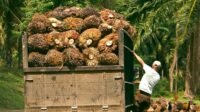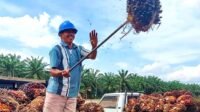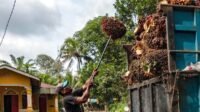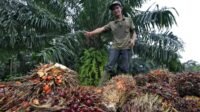
PALMOILMAGAZINE, JAKARTA – For oil palm farmers, tending their plantations is not just about securing today’s harvest, but about safeguarding their family’s future. Indonesia’s smallholder replanting program (PSR) offers financial assistance, high-quality seedlings, and hands-on training to help farmers boost productivity and improve their livelihoods.
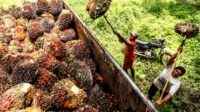
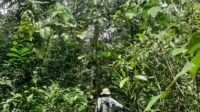
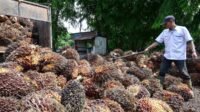
Sukasno has cultivated oil palm in Meranti Village, Jambi, since 1991. For decades, the crop has sustained his household—covering daily expenses, funding his children’s education, and allowing him to set aside savings for the future.
But as his oil palm trees aged and yields declined, Sukasno faced a difficult decision. Replanting required significant capital, and during the three-year immature phase, he would lose his primary source of income while waiting for the new palms to bear fruit.
Also Read: South Sumatra FFB Climbs in Early February, Benchmark Age Reaches IDR 3,577.58/Kg
A turning point came when his farmer group, Gapoktan Sumber Urip, began exploring a partnership with PT Kresna Duta Agroindo (KDA) under the government-backed Palm Oil Replanting Program (Peremajaan Sawit Rakyat/PSR). The initiative aligns with the sustainability framework of Sinar Mas Agribusiness and Food, known as Collective for Impact, which aims to train 100,000 smallholders in good agricultural practices by 2035.
Through outreach sessions with PT KDA and government officials, farmers learned they could receive IDR 50 million for every two hectares replanted—financial support designed to help them rebuild their plantations.
“At first, we were hesitant,” Sukasno recalled. “Before the PSR program started, our farmer group leaders organized meetings to explain everything transparently, including the funding support. We even asked whether the funds had to be repaid.”
Also Read: GAPKI Urges Productivity Boost as Biodiesel Demand Outpaces Palm Oil Supply
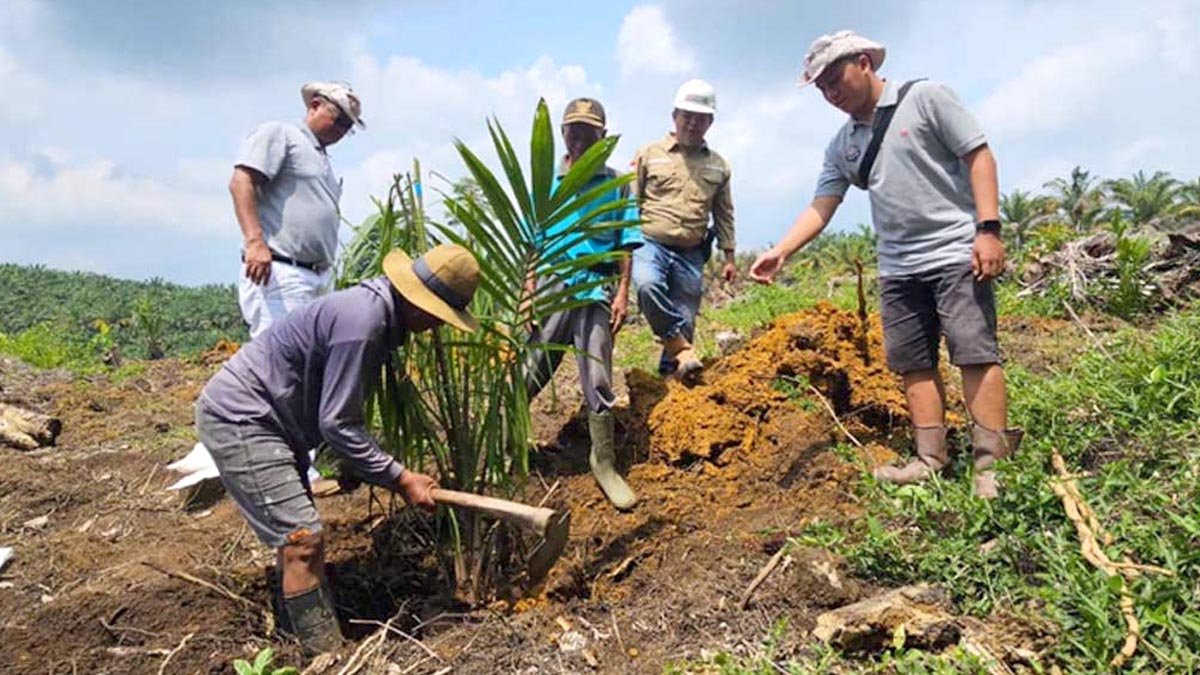
Beyond financial assistance, the program delivered critical technical knowledge. Sukasno received structured training on proper land layout, correct planting techniques, and precise fertilization schedules. He also learned about tumbang ciping—a method of cutting felled oil palm trunks into smaller sections to ease clearing, transport, or natural decomposition as organic matter in the field.
The results have been striking. As an independent farmer, Sukasno previously harvested around 600–700 kilograms per plot. Today, as a program partner, his yields have doubled to 1,200–1,400 kilograms per harvest.
“In the past, we applied fertilizer without knowing the correct dosage,” he said. “Now, with regular guidance from field assistants, we know exactly what to do—and the results speak for themselves.”
Also Read: Indonesia’s Palm Oil Dominance Strengthens Its Influence in Global Trade
A similar story comes from Suwarno, head of Gapoktan Sumber Urip. He began replanting under the program in 2020 and has since completed three phases: the first now five years old, the second four years old, and the third just entering its first year.
For Suwarno, the most significant benefit has been access to high-yield Dami Mas seedlings and structured plantation management. This includes land preparation, scheduled fertilization, and continuous mentoring from company field staff.
Farmer group discussions now extend beyond oil palm. Members are encouraged to diversify through intercropping food crops and vegetables, supported by training from the local Food Crops and Horticulture Office. Upland rice cultivation has also been promoted, providing interim income while waiting for young oil palms to mature.
Support for farmers goes beyond corporate involvement. Agricultural extension officers, including Amin Harahap from the regional Food Crops and Horticulture Office, provide ongoing training in sustainable farming techniques, quality seed usage, and responsible land management. The collaboration between company, government, and farmers has created a support system that strengthens resilience and long-term growth.
To join the program, farmer groups must meet clear criteria. They must collectively manage at least 50 hectares or consist of a minimum of 20 members. Required documents include copies of national ID cards, family cards, and proof of land ownership—whether informal land certificates (sporadik), land registration letters (SKT), or formal land titles. The land must be free from legal disputes. In line with regulations set by the Directorate General of Plantations (Dirjenbun), farmer groups must also be located within 10 kilometers of the nearest village boundary adjacent to the company’s plantation area.
With transparent requirements and coordinated support, farmers feel more confident in planning for a better future—transitioning from independent smallholders to empowered partners in a more sustainable palm oil sector. (P2)