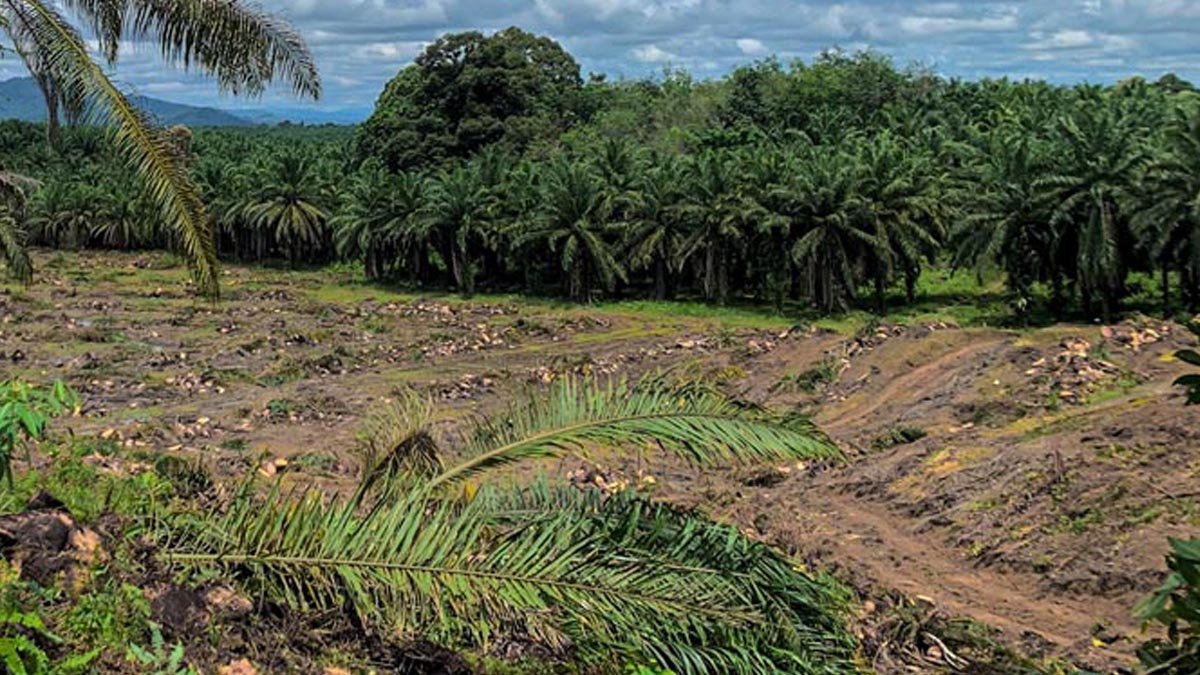
PALMOILMAGAZINE, KUALA LUMPUR – Malaysia’s palm oil industry faces medium- to long-term productivity risks if plantation companies continue delaying the replanting of aging oil palm trees, even as national crude palm oil (CPO) prices reached record highs in 2025.
According to Datuk Carl Bek-Nielsen, Chairman of the Malaysian Palm Oil Council (MPOC), elevated CPO prices have paradoxically discouraged replanting efforts. Strong profit margins have incentivized growers to retain old trees in order to continue harvesting, rather than replacing them with higher-yielding varieties.
“When prices are strong, there is always the temptation to delay replanting by another year. One year easily turns into two. That is why replanting keeps being postponed when margins and profitability are favorable,” he said, as reported by The Edge Malaysia on Monday (16/2/2026).
Also Read: Study Finds Oil Palm–Sengon Agroforestry Could Achieve 98% Farmer Adoption Within 13 Years
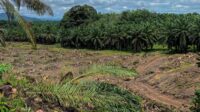
Bek-Nielsen, who is also CEO and Vice Chairman of United Plantations Bhd, cited data from the Malaysian Palm Oil Board (MPOB) showing that approximately 1.7 million hectares — nearly 30% of Malaysia’s total planted oil palm area — are now 19 years old or older. This share is projected to rise to 35%, or more than two million hectares, by 2027.
Aging oil palm trees naturally produce lower yields due to higher rates of unharvested fruit bunches, increased disease risks, and declining plant density. Over time, this will inevitably weigh on national CPO output.
Productivity Gains Without Deforestation
Despite these risks, Bek-Nielsen emphasized that Malaysia still has substantial room to boost production without expanding into new forest areas. Through systematic replanting and improved agronomic practices, CPO output could increase from around 20.3 million tons to 26 million tons — a potential gain of 5.7 million tons.
The key, he stressed, lies in replacing aging low-yield trees with superior high-yield planting materials, combined with stricter plantation management.
“Replanting with high-yielding material is the biggest game changer. Simply replacing old trees with new genetic material can significantly lift CPO yield per hectare,” he noted.
Under this approach, Malaysia’s target to raise productivity by one ton per hectare to 4.5 tons per hectare by 2035 remains realistic, provided replanting programs and good agricultural practices are implemented consistently.
Malaysia’s record CPO production of 20.28 million tons in 2025 was largely driven by the resolution of its labor shortage crisis, enabling more efficient harvesting across plantations.
Also Read: Malaysia Nears Full MSPO Coverage, Advances Digital Traceability to Meet EUDR Standards
Ready for EUDR, Watchful on Supply Tightening
On regulatory developments, Bek-Nielsen stated that Malaysia’s palm oil sector is prepared for the implementation of the European Union Deforestation Regulation (EUDR), which has been postponed until the end of 2026. While European buyers remain cautious amid policy uncertainties, he insisted that EUDR does not pose a threat to Malaysian palm oil.
He argued that Malaysia’s sustainable palm oil sector is well positioned after more than two decades of sustainability initiatives. In fact, he suggested that EUDR could present greater challenges for other commodities such as cocoa and coffee.
On price outlook, Bek-Nielsen projected CPO prices to range between RM3,900 and RM4,300 per ton this year, assuming the ringgit remains above RM3.90 against the US dollar and weather conditions remain supportive.
He also noted that Indonesia’s recent seizure of over four million hectares of land previously used illegally for oil palm plantations and mining activities could tighten global supply, potentially lending additional support to CPO prices in the near term. (P2)