PALMOILMAGAZINE, Kuala Lumpur — Malaysia’s palm oil industry is entering what industry leaders describe as a “critical” phase, marked by slowing growth, stagnant productivity, and weakening profitability.
The warning was delivered by Mohd Haris Mohd Arshad, Group Managing Director of SD Guthrie Bhd, during a panel discussion at the 37th Palm & Lauric Oils Price Outlook Conference (POC) 2026 on Tuesday.
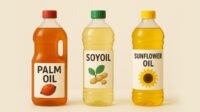
According to Mohd Haris, mounting pressures risk undermining palm oil’s long-standing advantage as the world’s lowest-cost vegetable oil. He pointed to structural challenges, including aging plantations and intensifying competition from other vegetable oils — particularly soybean oil. In recent years, global soybean oil production growth has reportedly expanded at a pace six times faster than palm oil.
Also Read: Indonesia–U.S. Seal USD 38.4 Billion in Strategic Trade and Investment Agreements
“The industry is caught between a rock and a very hard place,” he said, as Palmoilmagazine.com quoted from The Edge Malaysia on Wednesday (11/2/2026), referring to rising domestic costs and increasingly aggressive global competition.
Structural Bottlenecks at Home
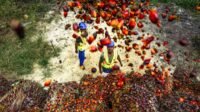
Domestically, Malaysia’s replanting rate remains around 2% per year — well below the optimal level. Many oil palm trees continue to produce beyond their peak productive age, weighing on overall yields. For long-term sustainability, industry experts argue the replanting rate should be closer to 5% annually.
Beyond aging trees, Mohd Haris highlighted the sector’s heavy reliance on foreign labor as a persistent structural vulnerability. To address this, he called for accelerated mechanization across plantations.
Also Read: High CPO Prices Delay Replanting, Raising Long-Term Output Risks for Malaysia
By automating non-harvesting tasks — such as field maintenance, fertilization, and pest control — companies could manage larger land areas with fewer workers. This approach would help reduce labor costs and improve operational efficiency. He also emphasized the importance of adopting high-yielding planting materials capable of faster maturation to lift overall plantation output.
Trade Dynamics and Regional Competition
During the same panel session, speakers discussed the potential impact of the European Union–Indonesia Comprehensive Economic Partnership Agreement (CEPA) on regional competitiveness. Some reports suggest the deal could provide Indonesian refined palm oil with a price advantage of around 9%–12.8% over Malaysian products in the European market.
However, Mohd Haris argued that trade agreements are only one of many competitiveness factors. Companies with cross-border operations, such as SD Guthrie — which operates in Malaysia, Indonesia, and Papua New Guinea — retain flexibility to adjust shipment destinations based on prevailing market conditions and trade arrangements.
Also Read: KPBN Inacom CPO Edges Higher on Friday (Feb 19), Malaysian Palm Oil Futures Slip on Weaker Soyoil
A more cautious tone came from Fakhrunniam Othman, CEO of FGV Holdings Group, who adopted a “wait-and-see” stance on CEPA’s impact. He stressed that purchasing decisions are not driven solely by price considerations.
“Business relationships, product quality, trade terms, and supply reliability remain decisive factors. There are many elements that can still reassure supply chains and demand,” he said.
Meanwhile, negotiations for a free trade agreement between the European Union and Malaysia are ongoing. Belvinder Sron, CEO of the Malaysian Palm Oil Council and moderator of the panel, expressed optimism that a deal could be concluded by 2027.
Other panelists included Jeremy Goon, CEO of FFM Bhd and Chief Sustainability Officer of Wilmar International Ltd, as well as Lee Jia Zhang, Chief Operating Officer of Kuala Lumpur Kepong Bhd.
According to Reuters, the combination of structural constraints, cost pressures, and shifting global trade dynamics will ultimately determine whether Malaysia’s palm oil industry can navigate this critical phase — or gradually lose its strategic position in the global vegetable oil market. (P2)