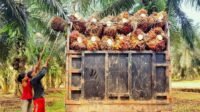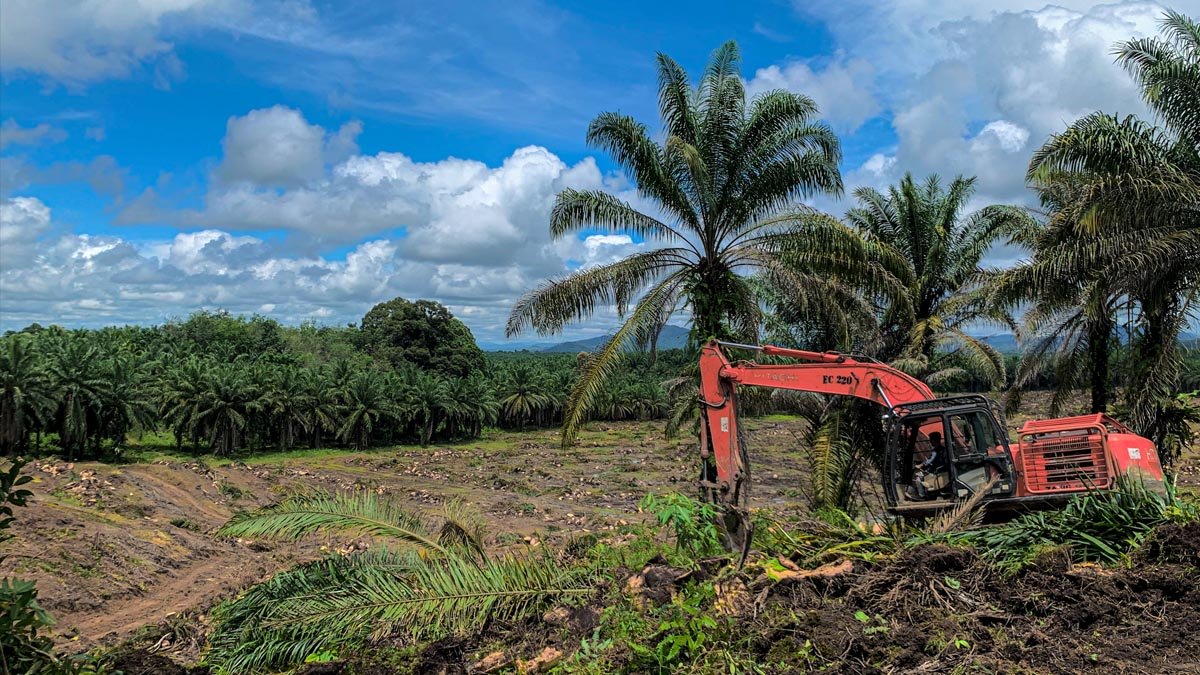
PALMOILMAGAZINE, JAKARTA — The Indonesian Oil Palm Farmers Union (SPKS) has urged the government to increase funding for the Smallholder Palm Oil Replanting Program (PSR) from IDR60 million to IDR90 million per hectare, arguing that higher financial support is crucial to accelerate replanting efforts among smallholders.
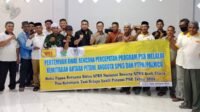
SPKS Chairman General Sabarudin said many smallholder farmers remain hesitant to participate in the PSR program due to concerns over losing income during the replanting period, which can last between one and four years before new trees become productive.
“We are calling on the government to raise PSR funding to IDR90 million per hectare so farmers have sufficient financial support during the replanting phase. Without economic security, it is understandable that farmers are reluctant to join the program,” Sabarudin said in an official statement on Tuesday (March 17, 2026).
Also Read: KPBN CPO Price Falls to IDR 15,825/kg on March 17 as Malaysian Market Extends Decline
According to SPKS, uncertainty over farmers’ income during the replanting period remains one of the key factors slowing down PSR implementation.
The organization also emphasized that increasing PSR funding is essential to ensure fairer allocation of palm oil funds managed by the Plantation Fund Management Agency (BPDP), which are sourced from export levies on palm oil. These levies indirectly affect fresh fruit bunch (FFB) prices at the farm level.
Each year, the export levy is estimated to generate between IDR30 trillion and IDR50 trillion. However, a significant portion of these funds is currently allocated to support biodiesel subsidies.
“This means the funds largely benefit biodiesel companies, most of which are major business groups. Therefore, it is only fair to increase PSR funding to create a more balanced distribution of palm oil funds,” Sabarudin added.
SPKS noted that biodiesel subsidies funded by palm oil export levies reach around Rp40 trillion annually.
The group stressed that the PSR program plays a strategic role in maintaining the long-term sustainability of Indonesia’s palm oil production. Many smallholder plantations are now over 25 years old, leading to declining productivity and an urgent need for replanting.
Also Read: Indonesia Palm Oil Farmers Reject 12.5% CPO Export Levy Hike, Warn of IDR 1.2 Trillion Annual Loss
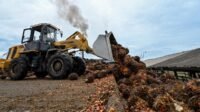
Currently, smallholder plantations produce an average of below 12 tons of fresh fruit bunches (FFB) per hectare per year. Through the PSR program, productivity is expected to increase to around 20–25 tons per hectare annually.
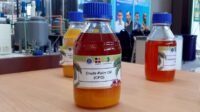
SPKS warned that slow progress in PSR implementation could lead to a decline in Indonesia’s crude palm oil (CPO) production in the future, potentially disrupting key government programs such as the biodiesel mandate and national cooking oil supply.
Moreover, accelerating the PSR program could help reduce pressure to expand new plantation areas. SPKS believes that successful replanting of smallholder plantations would enable Indonesia to achieve its target of producing 100 million tons of CPO annually without large-scale land expansion. (P2)