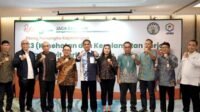
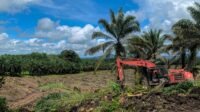
PALMOILMAGAZINE, JAKARTA – The Indonesian Palm Oil Farmers Organization (POPSI) has raised two key aspirations regarding the governance of the national palm oil sector: ensuring fair partnerships for farmers and maintaining a strong commitment to environmental sustainability.
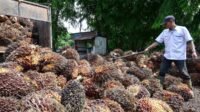
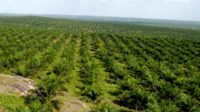
POPSI Chairman, Mansuetus Darto, stressed that the government must establish partnership policies that prioritize communities, particularly in managing confiscated palm oil land currently handled by state-owned PT Agrinas. At present, Agrinas manages nearly one million hectares of seized plantations, yet no partnership model with local farmers has been implemented—unlike the common practices in the plantation sector.
“The state’s move to seize illegal palm oil concessions is a victory for the people against harmful monopolistic practices. However, the government must not ignore the local communities who remain impoverished after losing access to their land,” Darto said in an official statement received by Palmoilmagazine.com on Tuesday (Sept 2, 2025).
Also Read: BRIN Explores Palm Oil Waste for High-Performance Supercapacitors
POPSI has proposed a cooperative-based model in which local communities manage 80% of the land, while PT Agrinas oversees the remaining 20%. According to the organization, this scheme would strengthen farmers’ roles in the national palm oil supply chain, improve transparency in governance, and directly contribute to community welfare.
Beyond partnership, POPSI reaffirmed its commitment to environmental sustainability, urging the government to restore all illegal palm oil plantations located within protected or conservation forest zones through reforestation programs. This step, they argue, is crucial for restoring ecological functions, preventing further environmental degradation, and ensuring legal certainty for sustainable development.
“Palm oil is the livelihood of millions of farmers. But sustainability must not be compromised. We call on the government to take decisive action: establish fair partnership models for communities, and restore forests encroached by illegal palm oil with reforestation,” Darto emphasized.
POPSI believes these efforts will not only empower farmers and safeguard food and energy sovereignty but also protect forests as vital ecological buffers for future generations. (P2)