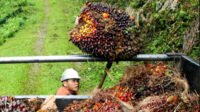
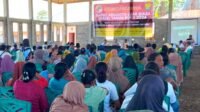
PALMOILMAGAZINE, JAMBI — For palm oil farmers, tending their plantations is not merely about today’s harvest—it is about cultivating hope for their families’ future. Through the Smallholders Replanting Program (PSR), farmers now receive tangible support in the form of funding, high-quality seedlings, and technical training aimed at improving productivity and long-term welfare.
One success story comes from Sukasno, a palm oil farmer from Meranti Village, Jambi, who has been cultivating oil palm since 1991. His life changed dramatically after partnering with PT Kresna Duta Agroindo (KDA) under the PSR program. Before joining, Sukasno struggled to provide for his family and fund his children’s education. When his palm trees aged and yields declined, he faced a difficult dilemma—high replanting costs and loss of income during the waiting period for new palms to bear fruit.
Hope arrived when his farmer group, Gapoktan Sumber Urip, formed a partnership with PT KDA. The program aligns with Sinar Mas Agribusiness and Food’s “Collective for Impact” sustainability framework, which aims to train 100,000 smallholders by 2035. Through outreach by the company and local government, farmers learned that they could receive financial assistance of up to IDR 50 million for every two hectares of replanted land.
Also Read: PUSTAKA ALAM Questions Accuracy of Satgas PKH’s Palm Oil Land Reacquisition Data
“At first, I was skeptical. But once I understood that PSR funds aren’t loans and saw how committed the company was to assisting us, I became convinced,” Sukasno told Palmoilmagazine.com on Thursday (October 16, 2025).
Beyond financial aid, Sukasno gained valuable knowledge on Good Agricultural Practices (GAP)—from planting superior seedlings and maintaining proper spacing to applying fertilizer accurately and on schedule. He also learned about “tumbang ciping,” a sustainable land-clearing technique where old palm trunks are cut into small pieces to enrich the soil with organic matter.
The results speak for themselves. Sukasno’s harvests have nearly doubled—from 600–700 kilograms per plot to 1,200–1,400 kilograms per harvest.
“We used to fertilize without knowing the right dosage. Now, with regular guidance from field assistants, our yields have improved tremendously,” he said with pride.
Also Read: Indonesian Government Prepares Palm Oil DMO Scheme to Support B50 Biodiesel Program
A similar story comes from Suwarno, the head of Gapoktan Sumber Urip, who began replanting in 2020 and has since completed three phases. According to him, the greatest benefit of the PSR program is access to Dami Mas superior seedlings and structured technical assistance, including land preparation, fertilizer scheduling, and regular monitoring.
The group also practices intercropping, planting food crops such as upland rice and vegetables between young oil palm rows. Supported by the Department of Food Crops and Horticulture, this initiative helps farmers earn additional income while waiting for new palms to mature.
Government agricultural extension officers like Amin Harahap also play an important role by offering continuous training on eco-friendly farming, sustainable land management, and seed selection. This collaboration between companies, government agencies, and farmers stands as a model for inclusive development in the plantation sector.
To qualify for the PSR program, farmer groups must meet administrative requirements, including having at least 20 members or managing a minimum of 50 hectares collectively, providing valid identification and land ownership documents, and ensuring the land is free from disputes. According to the Directorate General of Plantations (Dirjenbun), eligible plantations must also be located within 10 kilometers of a village adjacent to a company’s plantation area.
With transparent processes and comprehensive guidance, the PSR program has restored farmers’ confidence in building a more secure future.
Today, both Sukasno and Suwarno are reaping the rewards of partnership. Once independent farmers struggling on their own, they are now empowered smallholders with access to knowledge, technology, and financial resources.
“I want my children to see that being a palm oil farmer can bring prosperity and a better future,” Sukasno concluded with conviction. (P2)