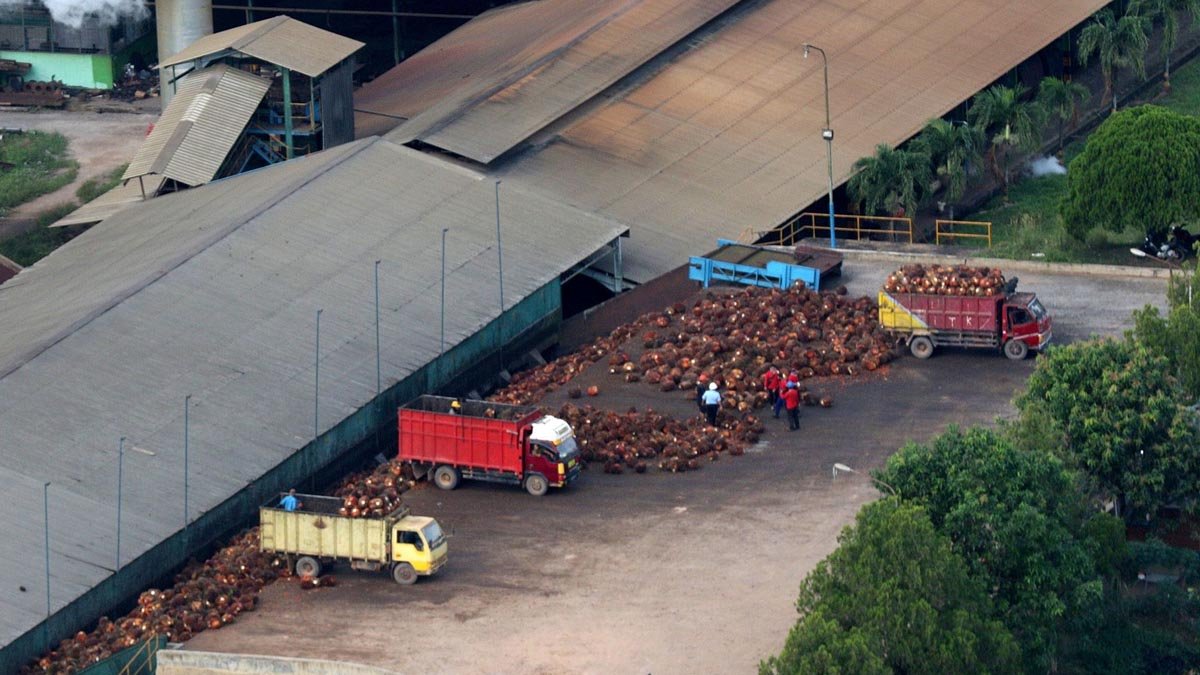
PALMOILMAGAZINE, JAKARTA — Restrictions on oil palm cultivation in West Java should not be viewed simply as a question of whether planting is allowed or prohibited. What matters more, according to smallholder representatives, is whether the industrial ecosystem—especially palm oil mill capacity—is in place to support farmers.
Chairman of the Indonesian Palm Oil Smallholders Association (POPSI), Mansuetus Darto, said farmers would be the most vulnerable party if oil palm expansion proceeds without adequate downstream infrastructure.
“Oil palm restrictions should not be framed as a black-and-white issue of allowed or not allowed. The real issue is the processing capacity of existing palm oil mills. If planted area exceeds mill absorption capacity, farmers are the ones who bear the risk,” Darto said in a statement on Tuesday (6/1/2026).
Also Read: North Sumatra Palm FFB Prices Edge Down for January 7–13 Period
He warned that an imbalance between smallholder plantation area and mill capacity could depress fresh fruit bunch (FFB) prices. In more severe cases, harvests may not be absorbed at all due to limited mill intake.
Darto acknowledged that restrictions in West Java are understandable, given that the province is not a natural oil palm-growing ecosystem. Currently, West Java has only one operating palm oil mill, supported by a nucleus estate of around 15,681 hectares, based on 2023 data.
“Under these conditions, absorption space for smallholder FFB is extremely limited. That means small farmers have very narrow market access for selling their harvest,” he said.
Also Read: KPBN Inacom CPO Prices Edge Higher on Friday (9/1), Malaysian Palm Oil Futures Slip on Profit-Taking
He argued that risks would increase if farmers are allowed to plant oil palm freely without sufficient information, without clear partnerships with mills, and without a supporting industrial ecosystem. In such circumstances, farmers’ bargaining power would be very weak.
“What is the point of harvesting oil palm if mills cannot absorb it? Even if they do, prices will be low. In the end, farmers will have used up their land, but the crop they planted will not provide viable economic returns,” Darto said.
He also suggested that the debate over restricting oil palm in West Java may not be driven purely by technical or farmer-protection considerations, noting the possibility of political branding.
Also Read: Malaysian Palm Oil Futures Contracts Fall Due to Profit-Taking, Weekly Prices Remain Up
“It is possible this policy is also being used as political branding to appear environmentally friendly,” he said.
Beyond politics, Darto cautioned that industrial interests could also be at play, as restricting oil palm planting outside core regions could serve to keep raw material supplies concentrated in estates owned by large companies.
Nevertheless, he said the West Java governor may already understand the structural risks farmers face if oil palm is developed without sufficient processing support. Any policy on oil palm, he stressed, must begin with protecting farmers rather than imposing administrative bans.
“If the real objective is to protect farmers from losses, then what must be built is a clear business ecosystem—whether oil palm is truly viable or not in that region. Farmers must not become victims of policies that come without solutions,” he said.
Darto concluded that oil palm development—wherever it takes place—must balance ecological sustainability, economic viability, and justice for farmers. Without that balance, he warned, oil palm could become an economic trap for communities hoping to depend on the crop for their livelihoods. (P2)