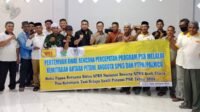
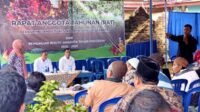
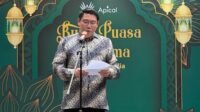
PALMOILMAGAZINE, SERUYAN — The Seruyan chapter of the Palm Oil Smallholders Union (SPKS) is intensifying its organizational consolidation while pushing to accelerate the Smallholder Palm Oil Replanting Program (PSR) among its members. The commitment was reaffirmed during the SPKS Seruyan Regional Assembly (Musda), which served as a forum to strengthen farmer unity and sharpen the organization’s strategic direction.
Beyond replanting, SPKS Seruyan is also targeting improvements in plantation governance through the acceleration of Indonesian Sustainable Palm Oil (ISPO) certification. At the same time, the organization has expressed support for the development of jurisdictional certification at the Seruyan regency level, as part of broader efforts to improve regional palm oil governance.
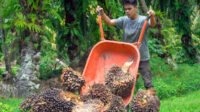
SPKS Seruyan Chair Arif Mansur said assistance for PSR has become the organization’s top priority. He noted that many smallholder plantations in Seruyan are already beyond their productive age, with average tree ages exceeding 20 years.
Also Read: Agrinas Palma Manages 1.7 Million Hectares, Posts IDR 4.3 Trillion Revenue in First Year
“SPKS is encouraging farmers to take advantage of the government’s PSR funding of IDR 60 million per hectare. This is a major opportunity, especially since many of our members’ plantations are old and their productivity is declining,” Arif told Palmoilmagazine.com, Tuesday (27/1/2026).
He stressed that PSR is not merely about replacing aging trees, but a strategic effort to build sustainable income for smallholders. With more productive plantations, farmers are expected to gain stronger economic security and resilience against price volatility.
Arif also highlighted the wider economic impact of replanting. According to him, rejuvenating smallholder plantations will stimulate local economies by creating demand for agricultural inputs such as certified seeds, fertilizers, and supporting services.
“Replanting creates a multiplier effect. Fertilizer trade, farm equipment, and rural labor all move together. This clearly opens job opportunities and drives local economic circulation,” he said.
Promoting Sustainable Practices, Not Land Expansion
Alongside PSR acceleration, SPKS Seruyan continues to strengthen sustainable plantation management among its members. The organization regularly conducts capacity-building programs, including training on regenerative agriculture and the use of organic fertilizers.
SPKS emphasized that improving smallholder welfare must come from higher productivity and better agronomic practices—not from land expansion.
“Productivity must increase in the right way. We want farmers to prosper from the land they already have, not from clearing new land,” Arif asserted.
Also Read: SPKS Urges BPDP to Redirect Palm Oil Funds to Support Flood-Hit Farmers in Aceh and Sumatra
National SPKS Pushes for Fair Partnerships
The Seruyan assembly was also attended by SPKS National Chair Sabarudin, who underscored that strengthening farmer organizations is a key national agenda, alongside efforts to deepen cooperation with local governments and plantation companies.
He said more equitable and sustainable partnerships are essential to ensure smallholders have stronger positions in accessing programs, technical assistance, and plantation governance frameworks.
“Nationally, SPKS is focused on strengthening collaboration with regional governments and companies to build partnerships that are fair and sustainable,” Sabarudin said.
In Seruyan, PSR acceleration has been prioritized due to the relatively low productivity of smallholder plantations. Yet the replanting program carries significant economic value for village and regional development.
“The PSR program has major economic value for rural and regional development, and it directly contributes to improving smallholder welfare,” he added.
Sabarudin also reaffirmed SPKS’s support for the Seruyan Regency Government’s commitment to developing jurisdictional palm oil certification. The initiative is expected to strengthen governance while systematically improving smallholder welfare at the regency level.
Land Legality Remains a Critical Challenge
Beyond replanting and certification, SPKS is also urging faster resolution of land legality issues affecting smallholders operating within designated forest areas. Sabarudin said land status remains a major barrier preventing farmers from accessing government programs, including PSR, and formal banking services.
“Many smallholders are still constrained by land legality issues. This continues to block access to PSR and banking facilities,” he emphasized.
Through the regional assembly, SPKS Seruyan reaffirmed its commitment to consolidating its organization, expanding PSR assistance, and strengthening plantation governance through certification. With these steps, SPKS hopes smallholders in Seruyan will become more empowered, productive, and better positioned within the development of a sustainable palm oil sector. (P2)