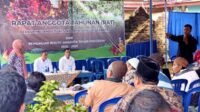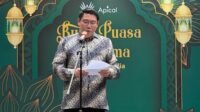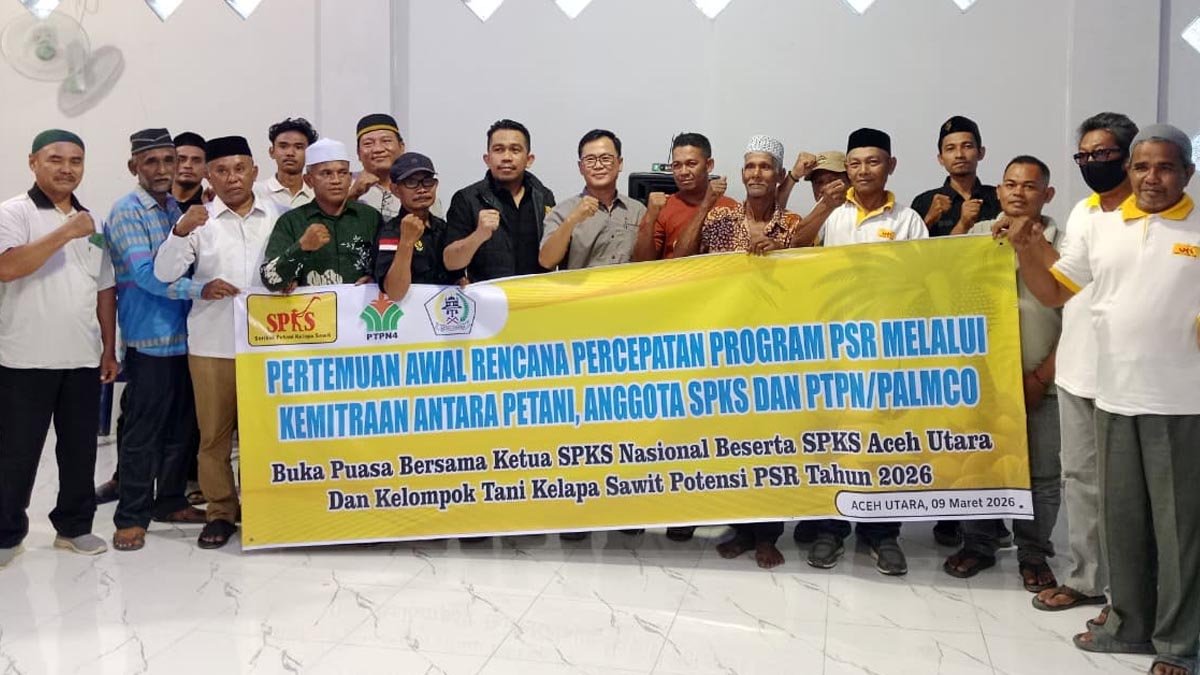
PALMOILMAGAZINE, ACEH UTARA – The Serikat Petani Kelapa Sawit (SPKS) held a meeting with oil palm farmers in Aceh Utara Regency while also organizing an iftar gathering and providing assistance to orphans on Monday (9/3/2026).
Beyond strengthening community ties, the event served as a platform to introduce a planned collaboration between SPKS and PT Perkebunan Nusantara IV (PTPN IV) aimed at accelerating the implementation of the Smallholder Palm Oil Replanting Program (PSR).
The gathering was attended by SPKS National Chairman Sabaruddin, SPKS Aceh Chairman Abubakar, representatives from PTPN IV, as well as local oil palm farmers and community leaders.
Sabaruddin explained that the activity reflected the organization’s commitment to supporting farmers while strengthening communication with its members.
“We hope that activities like this will encourage oil palm farmers to continue progressing and improving their welfare, particularly in Aceh Utara,” he said in an official statement from SPKS, quoted by Palmoilmagazine.com on Tuesday (10/3/2026).
According to him, the socialization of the partnership with PTPN IV aims to accelerate the implementation of the PSR program among smallholder farmers. Many farmers, he noted, still lack a full understanding of the procedures required to apply for the program.
In addition to limited information, farmers often face administrative challenges, particularly related to obtaining official recommendations confirming that their plantations are located outside designated forest areas.
The process of securing these documents can take considerable time and involve significant costs for farmers.
“Through farmer organizations like SPKS and cooperation with PTPN, we hope coordination with relevant institutions can be improved so that farmers can access the PSR program more easily and quickly,” he explained.
Also Read: Independent Smallholders in Jambi Secure RSPO Certification After Bold Financing Effort
Sabaruddin further stated that the cooperation between SPKS and PTPN IV covers several strategic areas. These include accelerating PSR implementation through partnership schemes and assisting farmers in obtaining sustainability certifications such as Indonesian Sustainable Palm Oil (ISPO) and Roundtable on Sustainable Palm Oil (RSPO).
The partnership also opens opportunities for marketing cooperation, enabling farmers to sell their fresh fruit bunches (FFB) directly to palm oil mills without going through intermediaries.
With this approach, farmers are expected to receive more competitive prices for their harvests.
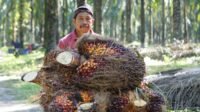
Sabaruddin added that most independent oil palm farmers manage relatively small plots of land, typically ranging between two and four hectares, which serve as the primary source of livelihood for their families.
Therefore, he hopes the government will provide stronger protection and support to ensure smallholder farmers can more easily access plantation development programs, including the PSR initiative.
Such support, he emphasized, is essential to help smallholders continue to grow and improve their economic well-being. (P2)