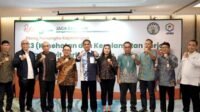
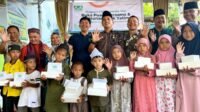
PALMOILMAGAZINE, SAMARINDA — The Provincial Government of East Kalimantan and the Nusantara Nature Conservation Foundation (YKAN) have officially extended their strategic partnership to manage natural resources sustainably. The renewed agreement, signed on Monday (July 21) at the Ruhui Rahayu Hall in the East Kalimantan Governor’s Office, will be in effect through 2030.
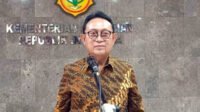
Governor of East Kalimantan, Rudy Mas’ud, expressed his appreciation for YKAN’s ongoing contributions to environmentally conscious development in the region. “This continued collaboration is crucial to strengthening the partnerships we’ve built. We hope it supports East Kalimantan’s vision of a Golden Generation through sustainable development,” Rudy said in a statement received by Palmoilmagazine.com on Wednesday (July 23, 2025).
The renewed agreement builds upon a previous five-year partnership (2020–2025), which focused on green development, management of protected and marine conservation areas, and improving community welfare through nature-based solutions.
Also Read: East Kalimantan Strengthens Green Economy Transition through Sustainable Palm Oil
YKAN currently runs two flagship programs in East Kalimantan: forest ecosystem conservation and marine ecosystem preservation. The province is home to 13 million hectares of forest, housing more than 1,500 species of flora and fauna—many of them endemic.
On the marine side, the focus lies in the Derawan Islands and surrounding waters in Berau Regency. Since 2016, this region has been designated as a Coastal and Small Islands Conservation Area (KKP3K-KDPS), covering 285,548 hectares. It harbors extraordinary marine biodiversity, with 397 marine species identified—162 of which have high conservation value.
“The rich biodiversity of East Kalimantan, both on land and at sea, must be preserved to ensure long-term benefits for future generations,” said YKAN Executive Director Herlina Hartanto. She emphasized that multi-stakeholder support—from communities to government and development partners—is key to success.
Between 2020 and 2025, the collaboration produced notable outcomes. One of them was active participation in the Green Growth Compact (GGC), through 13 model initiatives aimed at reducing emissions across multiple sectors, including peatland and wetland protection.
In the social forestry sector, YKAN worked with local communities, the Forestry Office of East Kalimantan, and the Social Forestry Working Group. This led to the development of the province’s first Integrated Area Development (IAD) plan and expanded social forestry coverage by 63,000 hectares in Berau Regency.
In the plantation sector, YKAN helped draft a roadmap for defining High Conservation Value Areas (ANKT). They also supported innovation from Wehea Protected Forest by developing skincare products made from orangutan food plant extracts—based on research with Mulawarman University.
YKAN has further supported the provincial government’s initiative to nominate the Sangkulirang-Mangkalihat Karst area as a UNESCO Geopark. Their support includes developing local geosite management bodies, capacity building, and public awareness campaigns.
In marine conservation, YKAN has assisted with the management of the KKP3K-KDPS since its inception and advocated for the establishment of a Regional Technical Implementation Unit (UPTD). This UPTD is now transitioning into a Regional Public Service Agency (BLUD) to ensure sustainable financing.
Another key innovation has been the Shrimp-Carbon Aquaculture (SECURE) program in Berau, combining shrimp farming with carbon absorption. YKAN also provides support for ecotourism, women’s economic empowerment, and capacity building for fisheries actors.
For village-based empowerment, YKAN has initiated the SIGAP Village Academy and assisted micro and small enterprises in adopting eco-friendly practices.
Through this renewed agreement, the East Kalimantan Government and YKAN reaffirm their shared commitment to conserving nature for the benefit of future generations.
“As a development partner, we are committed to continuing our support for East Kalimantan’s sustainable future—ensuring nature thrives while benefiting local communities,” Herlina concluded. (P2)