PALMOILMAGAZINE, KUALA LUMPUR — The Malaysian government continues to strengthen its palm oil and plantation commodity sectors through a series of research- and innovation-based strategies. In presenting the 2026 National Budget to Parliament, Prime Minister Datuk Seri Anwar Ibrahim emphasized that science and evidence-based data remain Malaysia’s most powerful tools in countering Western anti-palm oil campaigns.
“Through scientific findings, Malaysia has successfully turned the tide against Western criticism of palm oil. Our exports have now grown, particularly to China and India,” said Anwar, who also serves as Minister of Finance, as quoted by Palmoilmagazine.com from Bernama, Sunday (October 12, 2025).
To reinforce these efforts, the government has allocated RM63 million to intensify campaigns against anti-palm oil sentiment and accelerate the adoption of sustainable certification — including among independent smallholders.
Also Read: Indonesia Prepares B50 Biodiesel Implementation, Aiming to End Diesel Imports by 2026
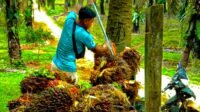
A key priority of the 2026 Budget is to drive local innovation and mechanization in the palm oil industry. The government has earmarked RM20 million to support start-ups collaborating with the Malaysian Palm Oil Board (MPOB) and major plantation companies in developing automation and mechanization technologies aimed at reducing dependency on foreign labor.
Anwar also reaffirmed his administration’s commitment to safeguarding the welfare of smallholder farmers, whom he described as the “backbone of Malaysia’s agricultural sector.” A total of RM120 million has been set aside to support the replanting of aging palm trees, boost rubber smallholder productivity, and revitalize idle rubber plantations.
Beyond palm oil and rubber, other key commodities — including cocoa, pepper, and kenaf — are also receiving government attention. The plan includes the distribution of 1.1 million high-quality cocoa seedlings and farmer training programs. Meanwhile, fertilizer and pesticide subsidies will be provided to ease the burden on pepper farmers, and kenaf development will be promoted as a new growth driver for Malaysia’s agricultural commodities.
In addition, the Malaysian Rubber Board (MRB) will establish a RM600 million research excellence center to ensure the long-term sustainability of the national rubber industry. MRB will also implement latex production incentives and revive abandoned plantations.
According to Anwar, these measures underscore Malaysia’s determination to transform its commodity sectors into modern, resilient, and globally competitive industries.
“We are not just aiming to survive — we intend to lead through innovation and sustainability,” he asserted. (P2)