PALMOILMAGAZINE, JAKARTA — Amid ongoing debates surrounding the palm oil industry, Simon Bruslund, Director of Global Development at Copenhagen Zoo, emphasized that sustainability should not stop at certification. He argued that protecting biodiversity and promoting sustainable practices in the palm oil sector require genuine collaboration among governments, businesses, and the global community.
Speaking at an international forum, Simon reflected on the evolution of sustainability initiatives such as the RSPO (Roundtable on Sustainable Palm Oil) and ISPO (Indonesian Sustainable Palm Oil). While both have paved the way toward better practices, he believes significant challenges remain.
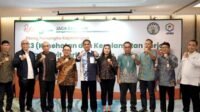
“When RSPO first emerged, palm oil was often labeled as the most hated crop in the world,” Simon said during the Palm Oil in the Land of Orangutans discussion and film screening attended by Palmoilmagazine.com. “But that view isn’t entirely fair. Many people in Indonesia and beyond are already working hard to improve field practices. What we need now is to understand that palm oil can be sustainable — balancing both economic and ecological values.”
Also Read:
He highlighted the importance of data-based land-use planning and real impact monitoring, noting that the industry must move beyond merely meeting formal standards to assessing tangible conservation outcomes. “Too often, we measure activities instead of impact. We know how many trainings are held, but not whether river water is cleaner or orangutan populations are recovering,” he stated.
Simon also pointed out that managing High Conservation Value (HCV) areas remains a major challenge under RSPO and ISPO schemes. Many companies have designated conservation zones but have yet to take active steps toward ecosystem restoration. “We must shift from compliance to restoration — from reducing damage to repairing nature,” he said.
He further stressed the importance of maintaining landscape connectivity to prevent habitat fragmentation. Citing the case of isolated orangutan groups, Simon warned that “if a small population of just five individuals is cut off from others, extinction happens quietly.”
Also Read:
Beyond policies and corporate commitments, Simon urged personal accountability. “It’s too easy to blame governments. Their role is to create the space for citizens to act. We all share responsibility for the planet,” he asserted.
He closed with a striking reflection: “We often wait for the fire line before acting, when in fact, we already hold the match ourselves. It’s time to stop waiting and start moving together.”
Through his message, Simon Bruslund called on the world to view palm oil not as an environmental villain, but as part of the global sustainability solution — if managed with transparency, collaboration, and intergenerational responsibility. (P2)