PALMOILMAGAZINE, BOGOR — President Prabowo Subianto’s decision to revoke the business licenses of 28 companies found to have violated forest area utilization rules in Aceh, North Sumatra, and West Sumatra has drawn strong responses from civil society groups. Sawit Watch welcomed the move, but stressed that permit revocation must not stop at a purely administrative level.
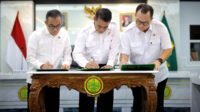
The presidential order, issued on January 21, 2025, covers 22 forest utilization permit holders (PBPH) and six companies operating across mining, plantation, and timber forest product utilization sectors (PBPHHK).
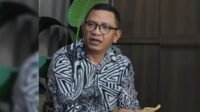
Sawit Watch Executive Director Achmad Surambo said the decision marks an important first step, but warned that the government must now ensure transparent, firm, and people-centered follow-up actions.
Also Read: After Sumatra Disaster Audit, Prabowo Strips 28 Companies of Operating Licenses
“We appreciate the government’s decisive response to recent ecological disasters. But permit revocation is only the beginning, not the final solution,” Surambo said in a statement received by Palmoilmagazine.com, Monday (26/1/2026).
Sawit Watch: Sanctions and Environmental Restoration Are Mandatory
According to Sawit Watch, the revocation of these permits confirms serious violations of environmental sustainability principles. Surambo argued that the state must move beyond stopping business activities and enforce substantive legal accountability.
“These revocations prove that the companies violated environmental protection principles. But revoking permits alone is not enough. The government must pursue corporate criminal and civil liability and impose sanctions for the environmental damage that has occurred,” he said.
Sawit Watch also emphasized that companies must be held financially responsible for restoring damaged ecosystems. Without concrete follow-up measures, Surambo warned, the policy risks becoming a procedural formality.
Also Read: Indonesia Maps 3.32 Million Hectares of Oil Palm Inside Forest Areas, Figure Nears 4 Million
Five Largest Concessions Identified
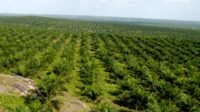
Based on Sawit Watch’s preliminary analysis of revoked concession areas, five PBPH companies held the largest tracts of forest land affected.
PT Sumatera Riang Lestari topped the list, with concessions reaching approximately 217,559 hectares—around 32% of the total mapped area. It was followed by PT Toba Pulp Lestari Tbk (168,042 hectares), PT Gunung Raya Utama Timber (107,006 hectares), PT Aceh Nusa Indrapuri (around 97,769 hectares), and PT Teluk Nauli (approximately 83,294 hectares).
Sawit Watch said the data indicate that the revocations largely target large-scale forest control, particularly concessions dominated by pulpwood and logging-based corporations.
Also Read: Agrinas Palma Manages 1.7 Million Hectares, Posts IDR 4.3 Trillion Revenue in First Year
Data Transparency Seen as Non-Negotiable
Surambo stressed that the revocations should not be viewed as isolated incidents, but as symptoms of a deeper structural governance crisis. For that reason, he said, full data transparency is essential.
“The public must know where these concessions are located, the history of conflicts and environmental damage, and how the state plans to manage these former concession areas,” he said.
Without open data and comprehensive evaluation, he warned, ex-concession lands could generate new problems, including renewed conflicts and the silent transfer of control to other corporations.
Don’t Let It Become a ‘Change of Clothes’
Sawit Watch also warned against a recurring pattern in which revoked concessions are simply reassigned to other large corporations—or to the same actors under new corporate identities.
“Our biggest concern is that these lands will quickly be handed back to other major companies or to ‘old players’ operating under new names. This is an old pattern that must be broken,” Surambo said.
He urged the government to impose a strict status quo on all revoked areas until comprehensive environmental and social audits are completed.
Call for Redistribution to Communities and Smallholders
Sawit Watch argued that former concession lands should be prioritized for Indigenous peoples, local communities (IPLC), and smallholder farmers who have long been marginalized and trapped in agrarian conflicts.
“Land must be returned to the people as the main subjects of natural resource management, not merely objects of exploitation. Agrarian Reform Land Objects (TORA) schemes must be immediately implemented in these revoked areas,” Surambo said.
Workers Risk Becoming Double Victims
Beyond environmental and land issues, Sawit Watch highlighted the social risks faced by workers. Zidane, Sawit Watch’s labor specialist, warned that permit revocations often lead to mass layoffs without proper fulfillment of workers’ rights.
“License revocations frequently result in mass dismissals without severance pay. The government must ensure that seized corporate assets are used to settle outstanding obligations and protect workers’ normative rights,” he said.
He stressed that workers must not become “double victims”—first of ecological disaster, then of enforcement policies that lack adequate social protection.
Beyond Revocation
Surambo concluded that the revocations reinforce long-standing civil society warnings that reckless investment can trigger ecological and social disasters. Sawit Watch urged the government not to stop at permit withdrawals, but to proceed with full audits, environmental restoration, and redistribution of land control to communities.
“If this land simply changes hands, the people of Sumatra will only be waiting for the next disaster. We will continue to monitor how these revocations are executed on the ground to ensure justice for the environment and affected communities,” he said. (P2)