PALMOILMAGAZINE, MEDAN – The impacts of global climate change are no longer abstract projections but scientifically established realities. Shifting rainfall patterns, intensifying extreme weather events, and evolving regional climate systems have significantly heightened disaster risks across Indonesia, particularly in Sumatra. In response to these mounting challenges, a cross-sector collaborative approach is increasingly viewed as essential to building long-term regional resilience.
Vice Rector III of Universitas Sumatra Utara (USU), Prof. Dr. Poppy Anjelisa Zaitun Hasibuan, emphasized the urgency of synergy among academia, government, industry, and local communities to anticipate future disaster risks.
“We must formulate a collaborative framework to strengthen regional resilience against disasters. Universities should promote evidence-based policy approaches, where recommendations are grounded in rigorous research, empirical data, and multidisciplinary analysis—not merely surface-level observations,” Prof. Poppy stated during the opening of a scientific discussion at the USU campus on Tuesday (10/2/2026).
Also Read: BPDP Targets 50,000 Hectares Replanting to Boost Smallholder Yields and Regional Growth
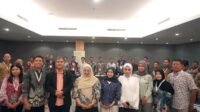
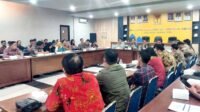
The forum, themed “The Dialectics of Indonesian Palm Oil: Global Climate Change as a Trigger of Disasters in Sumatra,” featured three prominent speakers: two Professors from USU’s Faculty of Agriculture—Prof. Dr. Abdul Rauf and Prof. Dr. Diana Chalil—alongside Dr. Ardhasena Sopaheluwakan, Deputy for Climatology at Badan Meteorologi, Klimatologi, dan Geofisika (BMKG).
The event brought together a broad spectrum of stakeholders, including government representatives, smallholder palm oil farmers, and industry associations. Among those present were Kacuk Sumarto, Chairman of Rumah Sawit Indonesia (RSI), and Timbas Prasad Ginting, Chairman of GAPKI Sumatera Utara.
Prof. Poppy described the discussion as both strategic and sensitive, particularly given the significant social and economic losses suffered by communities due to hydrometeorological disasters at the end of 2025.
Also Read: Palm Oil Replanting Program Transforms Smallholders into Productive and Sustainable Partners
“This forum is not merely an academic space but also a collective reflection on the major challenges we face as a nation and as a society in Sumatra. We aim to reconcile various accusations directed at oil palm plantations as drivers of ecological imbalance with scientific evidence and factual realities,” she said.
According to her, the hydrometeorological disasters that struck late last year caused tangible social, economic, and ecological consequences. However, global climate change does not operate in isolation. It interacts with local factors such as land-use planning, hydrological systems, spatial development policies, and natural resource management practices.
Within this context, the palm oil plantation sector often becomes the center of public scrutiny. Critics argue that plantation expansion has contributed to ecosystem disruption and heightened flood vulnerability. On the other hand, the industry remains a critical pillar of Indonesia’s economy, supporting millions of livelihoods, including smallholders and plantation workers.
Also Read: UMS Academic Warns of Shift from Natural Forests to Oil Palm Plantations
“A healthy dialectic is not about assigning blame, but about achieving comprehensive understanding and constructive solutions,” Prof. Poppy stressed.
She expressed hope that the scientific forum would serve as a platform for objectively examining the relationship between global climate change, land-use dynamics, and disaster events in Sumatra. More importantly, it should help identify risk factors that can be mitigated through sound policies, technological innovation, and more sustainable environmental management practices.
“With evidence-based policymaking, decisions will not only respond to public opinion pressures but will also effectively safeguard communities and the environment. Universities play a strategic role as guardians of critical reasoning, producers of knowledge, and bridges for dialogue among stakeholders,” she concluded. (P2)