PALMOILMAGAZINE, JAKARTA – As the quality of agricultural land continues to decline, production costs rise, and smallholder farmers face increasing market uncertainty, experts say Indonesia urgently needs to transform its agricultural system. Regenerative agriculture is increasingly viewed as a strategic approach to restore land health while opening new economic opportunities for farmers.
This issue was highlighted during Webinar Series Episode 1 titled “Land Restoration as an Economic Opportunity in the Transition Toward Regenerative Agriculture,” organized by Kaleka Indonesia and attended by Palmoilmagazine.com on Wednesday (11/3). The discussion brought together academics, field practitioners, farmer organization leaders, and supply chain actors to explore how land restoration can go hand in hand with improved productivity and stronger economic value.
Regenerative agriculture is an approach that goes beyond reducing the environmental impact of farming. It focuses on actively improving soil health, increasing biodiversity, strengthening water cycles, and building farming systems that are more resilient to climate change.
Also Read: Indonesia Strengthens Mandatory ISPO as CPO Production Projected to Reach 48.12 Million Tons
The approach is also considered capable of reducing farmers’ dependence on synthetic chemical inputs by encouraging the use of local resources and more adaptive cultivation practices.
However, the adoption of regenerative agriculture in Indonesia still faces several challenges. These include limited access to production inputs, knowledge gaps among farmers, and the lack of business models that can sustainably support the economic viability of smallholder farmers.
Agricultural Soil Conditions Remain Vulnerable
One of the speakers, Dr. Heru Bagus Pulunggono from the Department of Soil Science and Land Resources at the Faculty of Agriculture, IPB University, explained that the overall condition of agricultural soils in Indonesia generally shows low fertility levels.
“Most soils in Indonesia are acidic with relatively low fertility levels, while high rainfall causes nutrients to be easily washed away. Under these conditions, farming practices that focus solely on maximizing production without proper land management will accelerate soil degradation. Therefore, a more sustainable approach—combining improvements in soil physical, chemical, and biological properties with environmentally friendly farming practices—is essential to maintain productivity,” he explained.
Land Restoration Practices from the Field
From a practical perspective, environmental activist and manager of the Megamendung Organic Forest, Rosita Istiawan, shared her experience in rehabilitating degraded land through organic approaches.
She explained that since 2000, her team has successfully restored approximately 30 hectares of former tea plantation land—once characterized by highly acidic and barren soil—into a thriving forest area containing tens of thousands of trees.
“In the past, the land we managed was dry and extremely acidic. We planted trees one by one, carefully nurturing them and applying intercropping techniques with vegetables to maintain soil moisture without using chemical inputs. After years of consistent effort, the once-critical land has transformed into more than 30 hectares of organic forest,” Rosita said.
Also Read: Indonesia Sets March Biodiesel Price at IDR 13,980 per Liter Following CPO Benchmark
She added that any dead tree is immediately replaced to ensure the forest continues to grow. The area now hosts endemic tree species from across Indonesia, all cultivated without chemical inputs.
According to Rosita, the restoration has also generated significant ecological benefits for the surrounding environment, including the reemergence of water sources that had previously disappeared.
Strengthening Farmer Institutions Is Crucial
Meanwhile, Mansuetus Darto from Tani Baik emphasized that strengthening farmer institutions and improving market connectivity are critical to ensuring that sustainable farming practices deliver real economic benefits for smallholders.
“Since the industrial revolution, many farmers have been encouraged to adopt conventional agricultural systems that prioritize increased production through technology and chemical inputs. Yet long before that, our farmers already practiced farming methods that maintained ecological balance and soil fertility. In essence, regenerative agriculture is not a new concept—it is traditional knowledge that needs to be revived,” he said.
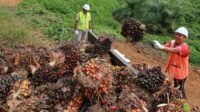
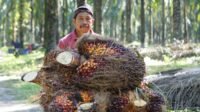
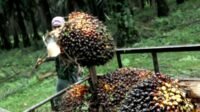
From the program implementation perspective, Mila Oktavia Mardiani, Food Systems Coordinator at Kaleka, shared insights from the Gawi Bapakat program supporting independent oil palm smallholders in Seruyan Regency, Central Kalimantan.
According to Mila, the program integrates regenerative agriculture practices with efforts to strengthen sustainable commodity supply chains.
“The soil’s function as a growing medium, water reservoir, and habitat for biodiversity has significantly declined due to land-use changes. Through the Gawi Bapakat program, farmers receive assistance at both farm and landscape levels to protect and restore ecosystems that support agricultural production,” she explained.
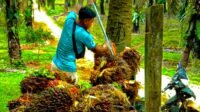
She added that the implementation of regenerative practices in small-scale monoculture oil palm systems has shown promising results, with production increases of around 12%.
“By shifting from dependence on inorganic fertilizers toward the use of local waste materials—such as crop residues, weeds, and household organic waste—as raw materials for organic fertilizers, farmers can independently improve the efficiency of their plantation management,” Mila concluded. (P2)