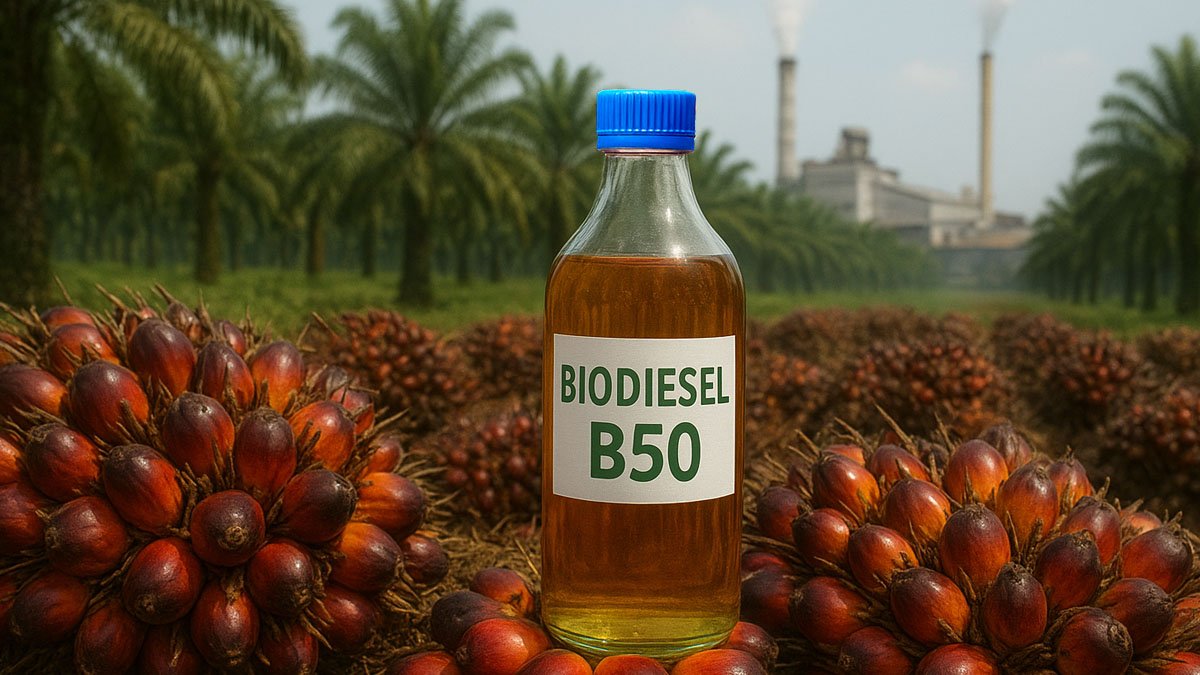
PALMOILMAGAZINE, JAKARTA – Indonesia’s planned rollout of the B50 biodiesel mandate in the second half of 2026 must be accompanied by stronger upstream palm oil fundamentals, particularly higher productivity. Without this, pressure on crude palm oil (CPO) supply is expected to intensify.
Quoting Antara, a researcher from the University of Indonesia (UI), Dr. Eugenia Mardanugraha, emphasized that boosting productivity is critical to maintaining balance between domestic demand and exports.
“Palm oil productivity must increase to keep pace with rising demand, both for domestic consumption—including biodiesel—and exports. Without productivity gains, pressure on CPO supply will grow and could lead to imbalances between domestic and global needs,” she said.
Also Read: Indonesia’s B50 Push May Create Diesel Oversupply While Fuel Prices Stay Unchanged
Strengthening Upstream Fundamentals Is Key
According to Eugenia, government policy should prioritize fundamental improvements in the upstream sector. These include replanting programs, adoption of high-yield seeds, efficient cultivation practices, and stronger support for smallholders.
“With stronger upstream fundamentals, rising demand driven by energy policies can be matched by higher production, ensuring energy security and maintaining stability in the palm oil industry in a balanced and sustainable way,” she explained.
Also Read: Indonesia to Launch B50 Biodiesel in July 2026, Saving 4 Million KL of Fuel
She added that upstream strengthening is not only essential for sustaining productivity, but also for ensuring the industry’s readiness to meet growing export demand alongside domestic needs such as food and oleochemicals.
Risk of CPO Allocation Competition
Eugenia also warned of potential “crowding out,” where competition for CPO allocation emerges between export markets and domestic programs like biodiesel.
“This creates a crowding-out risk, where CPO allocation will be contested between export interests and domestic mandate fulfillment,” she noted.
If the B50 policy is implemented in the near term, the most likely adjustment would be a reduction in CPO export volumes, as domestic needs would take priority.
In addition, volatility in global crude oil and CPO prices could further complicate policy decisions.
Reformulating the DMO Policy
The implementation of B50 is expected to significantly increase domestic CPO demand, requiring adjustments to the effectiveness of the Domestic Market Obligation (DMO) policy.
Currently, DMO remains relevant as a tool to secure domestic supply, particularly for strategic needs such as cooking oil and biodiesel. However, its design needs strengthening.
Also Read: India Cuts Vegetable Oil Imports as Energy Crunch Disrupts Demand
“DMO should be positioned as a firm domestic-first obligation, where producers are required to allocate a certain volume for the domestic market at a regulated price, independent of export decisions,” she said.
To maintain producer incentives, Eugenia also proposed a performance-based mechanism. Under this scheme, the DMO-to-export ratio could be made more flexible, with better-performing producers receiving lower DMO obligations.
“In this way, DMO remains relevant in the B50 era, but it needs to be reformulated—not only as a supply control tool, but also as an instrument to encourage production growth and maintain balance between domestic and export needs,” she concluded. (P2)