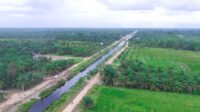
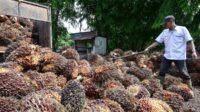
PALMOILMAGAZINE, JAKARTA — President Prabowo Subianto raised concerns over alleged legal violations involving around 5 million hectares of palm oil plantations, including those located within protected forest areas. He stated that the government had successfully reclaimed 3.1 million hectares of illegally managed land. The remarks were delivered during his state address at the Annual Session of the People’s Consultative Assembly (MPR) on Friday (August 15, 2025).
Responding to the statement, Sawit Watch Executive Director Achmad Surambo questioned the government’s claims, noting that many issues remain unresolved.
“For example, what is the long-term plan for these reclaimed forest areas? How will asset recovery be carried out? To what extent have administrative fines been collected? And how much has the state actually lost due to these illegal operations?” Surambo said in an official statement quoted by Palmoilmagazine.com on Monday (August 18, 2025).
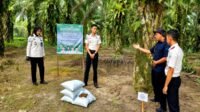
Surambo pointed out that the Task Force for Forest Area Enforcement (Satgas PKH) has so far only focused on land reclamation, while other mandates—such as asset recovery and administrative fine collection—have seen little progress.
“Yet, Presidential Regulation No. 5/2025 on Forest Area Enforcement clearly mandates both responsibilities as part of Satgas’ work,” he stressed.
Also Read: PalmCo Strengthens Smallholder Partnerships to Accelerate Palm Oil Replanting
He also highlighted the social impact of the enforcement. According to him, limited dialogue and lack of outreach have created anxiety among local communities, especially those living or farming within forest zones.
“Palm oil workers fear losing their jobs after company lands were seized and marked with state ownership signs. With no clarity from company management, these workers are left in uncertainty,” Surambo explained.
Sawit Watch, he added, has filed a judicial review with the Constitutional Court challenging several articles in Law No. 18/2013 on the Prevention and Eradication of Forest Destruction (UUP3H). The petition, submitted in late 2024, particularly targets Articles 12A, 17A, and 110B.
“We believe the provisions in those articles remain vague. This review is intended to provide legal clarity and fairness, especially for vulnerable groups. The future of palm oil plantations within forest areas should be directed toward Social Forestry programs, Agrarian Reform Object Land (TORA), or Conservation Partnerships,” Surambo said.
He further urged the government to develop a technical plan for asset recovery in forest areas.
“Former forest lands should be restored to their original function. At the same time, the process of collecting administrative fines must be conducted more openly and transparently so that the public can monitor progress,” he emphasized. (P2)