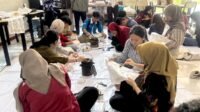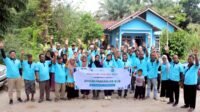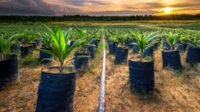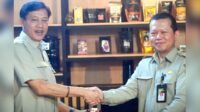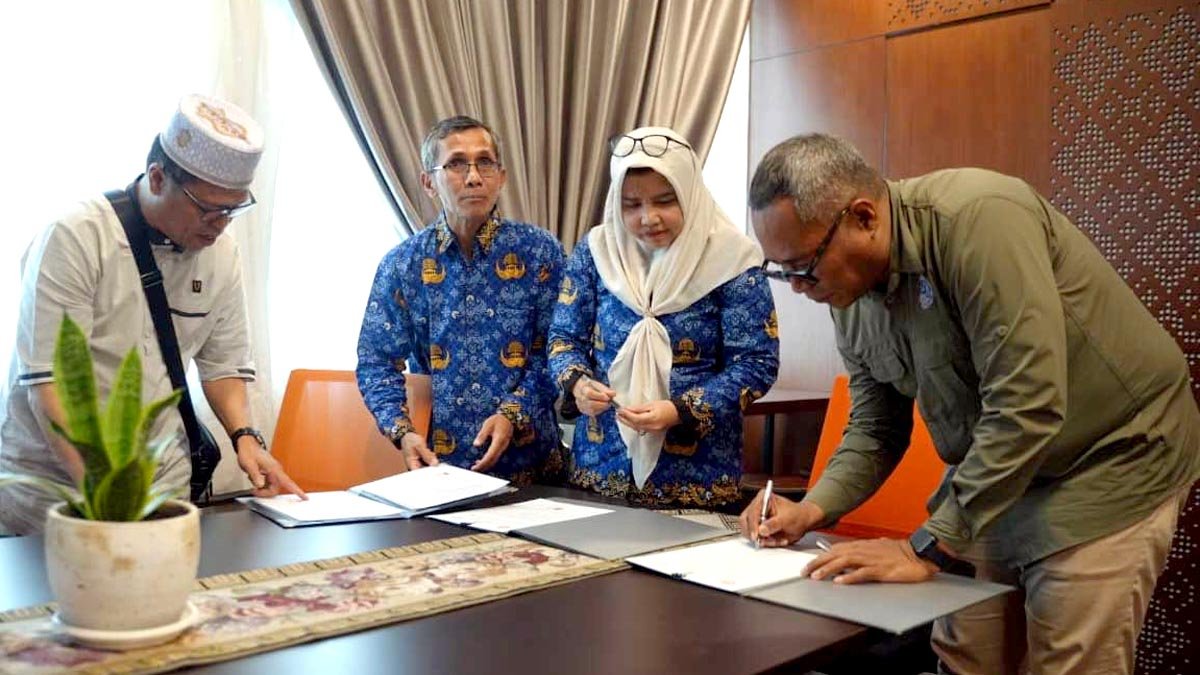
PALMOILMAGAZINE, MENDALO – Jambi University (UNJA) and the Indonesian Nature Rehabilitation Initiatives Foundation (YIARI) have signed a Memorandum of Understanding (MoU) to develop an integrated palm oil and food crop planting model aimed at optimizing land use through a multi-business scheme.
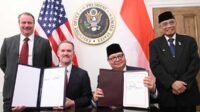
The agreement was formalized on February 19, 2026, at the 7th Floor of the UNIFAC Building, UNJA Mendalo Campus. The signing ceremony was attended by UNJA Vice Rector for Planning, Cooperation, and Information Systems Prof. Revis Asra; Dean of the Faculty of Agriculture Dr. Forst. Bambang Irawan; Vice Dean for Academic Affairs and Cooperation Prof. Mursalin; and YIARI Chairman Silverius Oscar Unggul along with their respective teams.
Prof. Revis Asra emphasized that land optimization is a strategic response amid growing concerns over national food security.
Also Read: IPB Professor Rejects Redefinition of Oil Palm as Forest Tree, Cites Environmental Risks
“Amid strengthening food security challenges, effective land optimization will not only improve productivity but also enhance overall resource efficiency,” he said, as quoted by Palmoilmagazine.com from UNJA on Monday (February 23, 2026).
Dean of the Faculty of Agriculture Dr. Forst. Bambang Irawan highlighted the potential of integrating food crops into Industrial Plantation Forest (HTI) concessions from the first year of cultivation. He argued that such an approach could help meet national food demand without expanding into new land areas.
By maximizing existing production spaces, he noted, pressure to open new land could be significantly reduced.
“If HTI concessions are combined with food crops from the outset, Indonesia’s food challenges could be addressed without clearing additional land. In Jambi alone, the land potential could reach approximately 60,000 to 70,000 hectares,” he explained.
Through this collaboration, UNJA and YIARI aim to strengthen cross-sector synergy in advancing land optimization, improving resource efficiency, and supporting both food security and sustainable forest management in Jambi Province. (P2)