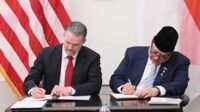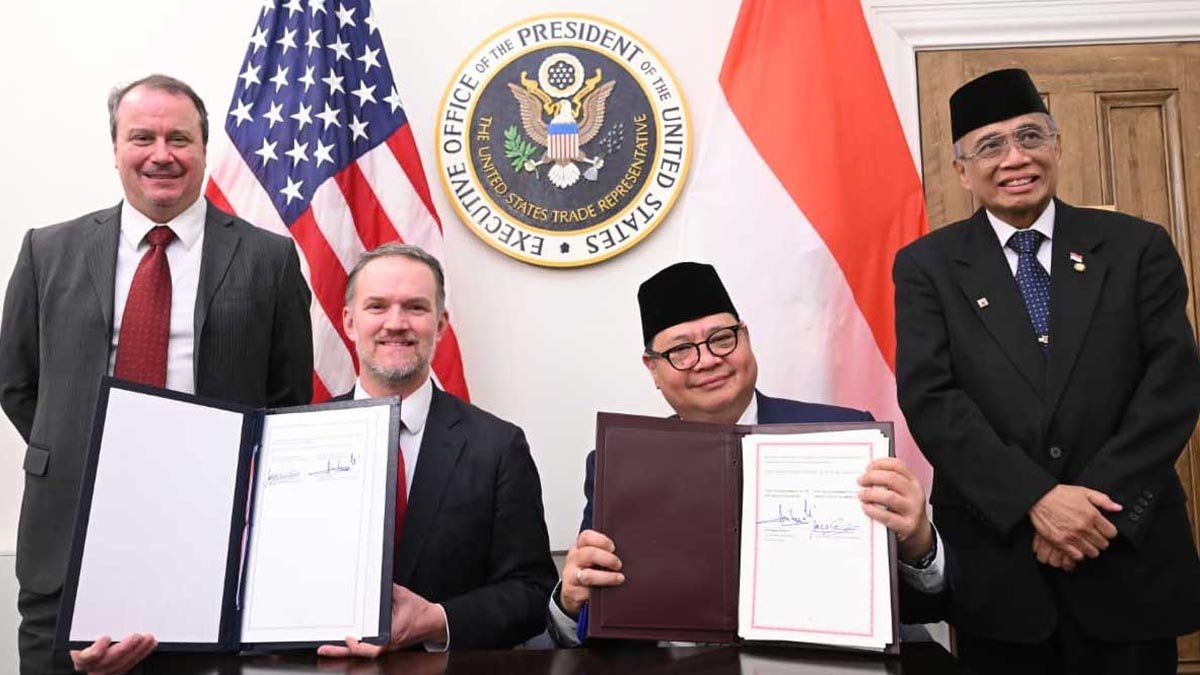
PALMOILMAGAZINE, WASHINGTON DC – The Governments of Indonesia and the United States have reached a strategic agreement to reduce import tariffs to zero on a wide range of Indonesian export products under the framework of the Agreement on Reciprocal Trade (ART).
Coordinating Minister for Economic Affairs Airlangga Hartarto stated that the ART document covers 1,819 Indonesian tariff lines—spanning both agricultural and industrial sectors—that will receive zero-percent tariff treatment in the US market.
“Under the ART, there are 1,819 Indonesian tariff lines, including palm oil, coffee, cocoa, spices, rubber, electronic components such as semiconductors, and even aircraft components—all subject to zero-percent tariffs,” he said, as quoted by Palmoilmagazine.com from the Cabinet Secretariat on Saturday (February 21, 2026).
Also Read: APKSM Strengthens Smallholder Readiness for ISPO and RSPO Certification in West Kotawaringin
Indonesian textile and apparel products will also benefit from zero tariffs through a tariff rate quota (TRQ) mechanism. The policy is expected to positively impact around four million workers in the sector.
Airlangga added that, when including family members, the broader economic benefits could reach up to 20 million Indonesians.
Reciprocal Commitments on Agricultural Products
As part of the reciprocal arrangement, Indonesia has committed to granting zero-percent tariffs on several key US products, particularly agricultural commodities such as wheat and soybeans.
According to Airlangga, this measure aims to maintain price stability for imported raw materials used in Indonesia’s domestic food industry.
Also Read: KPBN and Bursa Malaysia CPO Prices Strengthen Amid Rising Crude Oil Prices and Middle East Tensions
“Indonesian consumers pay zero percent tariffs on goods produced from soybeans or wheat, such as instant noodles, tofu, and tempeh. This ensures that the public does not bear additional costs for imported raw materials from the United States,” he explained.
Digital Trade and Transaction Security
At the multilateral level, both countries also agreed not to impose customs duties on electronic transmissions, in line with their positions at the World Trade Organization (WTO).
Indonesia further advocated for regulated cross-border data transfers in accordance with national laws, while ensuring equal consumer data protection standards in digital trade activities.
The government will also implement strategic trade management measures to prevent misuse of trade for non-peaceful purposes.
Also Read: India Cancels South American Soybean Oil Contracts Amid Price Surge
The agreement is scheduled to take effect 90 days after the completion of legal processes in both countries, including consultation with Indonesia’s House of Representatives (DPR RI), and may be adjusted through mutual written consent.
“This agreement is also aimed at achieving Indonesia Emas. It represents a new golden age for both Indonesia and the United States,” Airlangga concluded. (P2)