In the meeting with Commission IV Indonesian Legislators on 13 June 2023, Minister of Environment and Forestry, Siti Nurbaya told that the fine target from forestry criminal ‘mercy’ would be reaching Rp 50 trillion this year. The ‘mercy’ fine has been taken by Palm Oil Governance Taskforce that President Joko Widodo established some time ago, which was led by Coordinator Minister in Maritime and Investment, Luhut Binsar Pandjaitan.
Apart from the responsibility substitution to Palm Oil Governance Taskforce, Ministry of Environment and Forestry was never transparent to get ‘mercy’ fine for all these years. The regional governments and forestry stakeholders were hardly not involved. It was hardly no publication from the ministry about what companies as law subject that got criminal ‘mercy’, such as, paying levies on forest resources and reforestation fund and non – tax revenue fine.
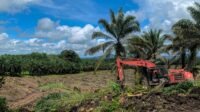
In many occasions the Minister mentioned in national scale 3,3 million hectares were having no permit in forest areas. If from the numbers, the fine sanction is calculated by having formulation regulated in the Laws 24 / 2022, the potential revenue would be tens to hundreds trillion rupiah. The numbers would be from, if one hectare that has not permit would get fine 15 million – 50 million rupia, the potential revenue from pay levies on forest resources and reforestation fund and non-tax revenue would be about Rp 49,5 trillion to Rp 165 trillion.
—
The big potential revenue, of course, would not be balance with ecosystem damages and social impacts in the field. That is why, the policy of ‘mercy’ in forestry sectors, at least, could be maximizing the revenue and be used to recover the damages so that the villagers, indigenous people and other that got impact would get positive.
Transparency in ‘mercy’ process is very important in order not to raise public speculation about ‘kongkalikong’, the fraud, and hidden lobbies to minimize fine numbers. Not transparent process that Ministry of Environment and Forestry dealt with should not happen again in Palm Oil Governance Taskforce for it is a public secret that in this political year heading to general election, many parties would potentially take advantages for the political interests. Public suspicion would be crystalized – what if the policy of ‘mercy’ is used to get sources of fund for political parties or individuals in political parties.
Critical Issue in Palm Oil Industries
Concerning about the numbers of law subject, particularly corporate and mining in forest areas to be solved by paying levies on forest resources and reforestation fund and non-tax revenue, the future process by Palm Oil Governance Taskforce should be aimed to improve palm oil and forestry governance in Indonesia.
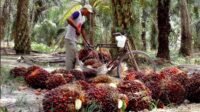
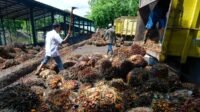
These are unseparated issue because forest damage issues in Indonesia are always identical with palm oil expansion massively. The latest European regulation that rejects food materials from natural forest conversion would press palm oil industries in Indonesia.
Policy of ‘mercy’ for stakeholders in forestry areas through fine – payment scheme in paying levies on forest resources and reforestation fund and non-tax revenue would be the legal breakthrough to deliver law certainty for stakeholders and maximize the loss of revenue from forestry areas. But the breakthrough could not influence international public trust on palm oil supply in Indonesia.
One important point if the government wants to make policy of ‘mercy’ get appreciation as part of the way to improve palm oil and forestry governance is by delivering space for other stakeholders to involve in. The basic thing is to create the transparent process that starts from announcement who the legal subjects are which have done business without having permit in forestry areas, how wide they have and numbers of fine to each legal subject.
Transparency is needed to know the forest canopy and tree stalk that have been cut off to calculate taxes, both in fine scheme in Chapter 110A and 110B. There are vulnerable spots that are potentially misused to calculate numbers of fine. If there is transparency, hopefully it would influence the public trust that the government is serious to improve palm oil and forest governance in Indonesia. (*)
By: Ahmad Zazali, SH., MH. / Managing Partner AZ Law Office & Conflict Resolution
Chairman of Pusat Hukum dan Resolusi Konflik (PURAKA)