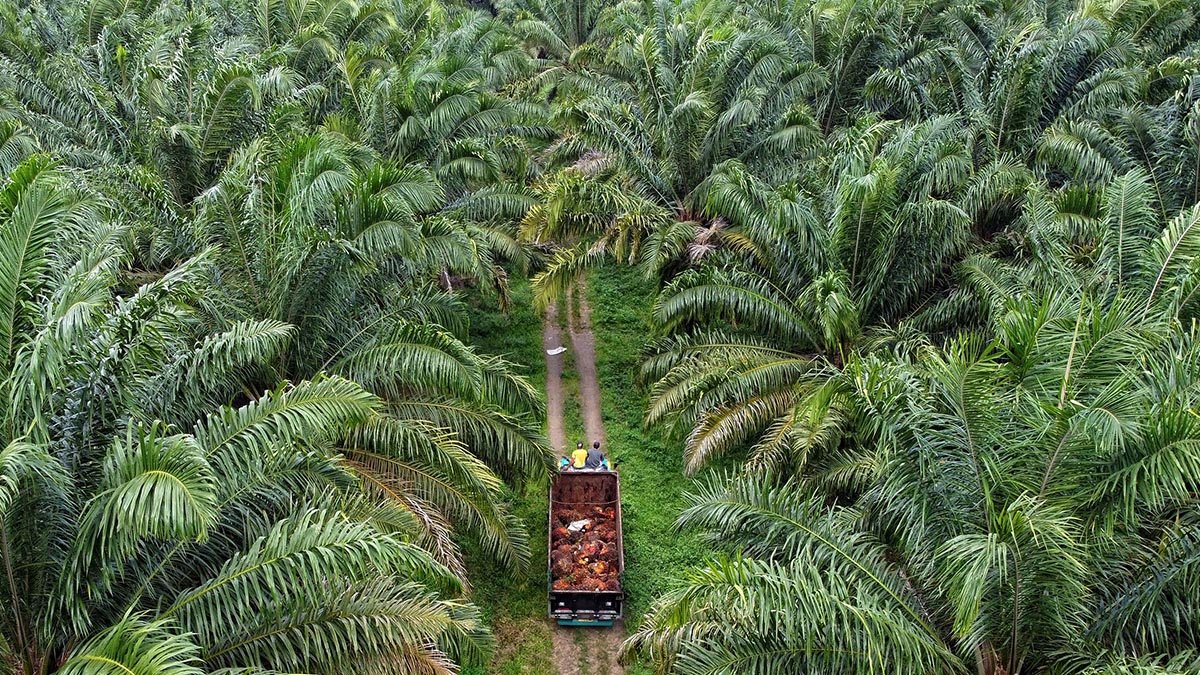
PALMOILMAGAZINE, BOGOR – The growing debate over redefining oil palm from an agricultural crop into a “tree” has drawn sharp attention from academics. Professor Bambang Hero Saharjo of the Faculty of Forestry and Environment at IPB University cautioned that such a shift could pose serious risks to forest protection and environmental governance in Indonesia.
According to Prof. Bambang, oil palm remains scientifically classified as a palm species within the agricultural sector—not a forestry plant. He stressed that no existing regulation has altered its legal or scientific status to that of a forest tree.
“As of today, oil palm is still categorized as a palm crop in agriculture, and no regulation has reclassified it as a forestry plant. I stand by my position that oil palm is not part of the tree category in forestry terms,” he stated, as quoted by Palmoilmagazine.com from IPB University on Saturday (February 21, 2026).
Also Read: APKSM Strengthens Smallholder Readiness for ISPO and RSPO Certification in West Kotawaringin
His remarks underline a fundamental conceptual difference between oil palm plantations and forests—whether in management objectives, biological characteristics, or ecological functions.
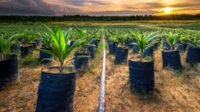
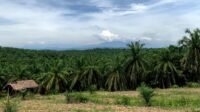
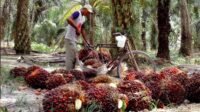
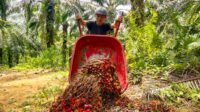
From a management perspective, oil palm plantations are designed for intensive production with regular harvest cycles. Forests, by contrast, are managed for long-term ecosystem sustainability and broader environmental protection functions.
Biologically, oil palm is a monocot plant without cambium, meaning its trunk does not increase in diameter as it grows. It does not branch, has fibrous roots, and forms a relatively uniform canopy structure.
Forestry trees, on the other hand, generally have branches, possess cambium that enables trunk thickening, develop taproots, and create layered, heterogeneous canopy systems.
These structural differences translate into ecological consequences. Prof. Bambang explained that oil palm plantations have significantly lower capacity for carbon sequestration, soil protection, flood control, and biodiversity support compared to natural forests.
Equating oil palm plantations with forestry trees, he argued, constitutes a category error that could carry serious policy implications.
Also Read: KPBN and Bursa Malaysia CPO Prices Strengthen Amid Rising Crude Oil Prices and Middle East Tensions
He further warned that redefining oil palm as a “tree” risks distorting the definition of deforestation. Under Indonesian regulations, legal deforestation occurs through formal Forest Area Function Change (PPFKH) mechanisms authorized by the central government, while illegal deforestation involves forest destruction or illegal logging subject to criminal penalties.
If oil palm is treated as a “tree,” plantations could be perceived as equivalent to forests—or even framed as reforestation efforts.
“This could justify changes in forest land use, distort environmental assessments such as Environmental Impact Assessments (AMDAL) and Strategic Environmental Assessments (KLHS), and open the door to disguised deforestation,” he explained.
Also Read: Central Kalimantan FFB Prices Rise IDR 3,476.49/kg in Early February 2026
In the long term, such a shift could undermine hydrological functions, heighten flood and drought risks, accelerate peatland subsidence, and gradually erode biodiversity.
From an environmental ethics standpoint, Prof. Bambang described the proposed redefinition as conceptual manipulation that borders on greenwashing. He warned that equating oil palm plantations with forests contradicts scientific prudence and risks sacrificing ecological integrity—and the interests of future generations—for short-term economic gains. (P2)