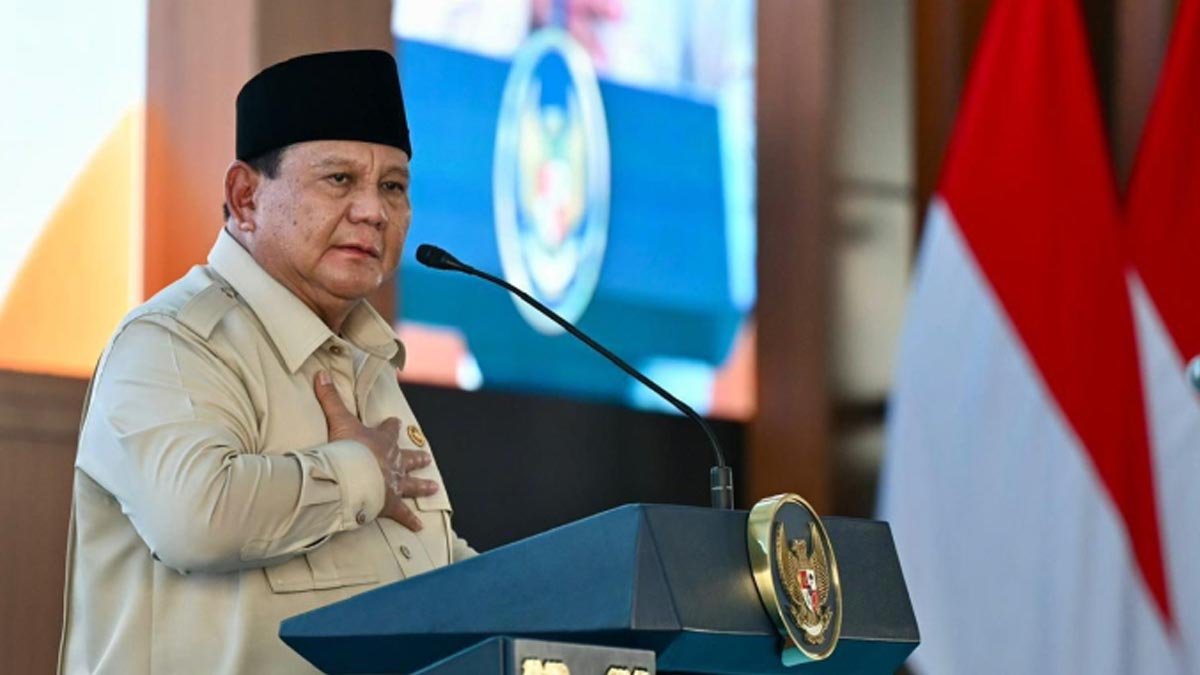
PALMOILMAGAZINE, NGANJUK, EAST JAVA — President Prabowo Subianto has praised Agriculture Minister Andi Amran Sulaiman and the Ministry of Agriculture for strengthening Indonesia’s agricultural sector, saying the country is now increasingly viewed by other nations as a strategic partner for food and fertilizer supplies amid global uncertainty.
The statement was delivered during the inauguration of the Marsinah Museum and a community shelter in Nganjuk, East Java, on Saturday (May 16, 2026).
In his remarks, President Prabowo stressed that Indonesia’s natural resources must be protected and managed for the prosperity of its people. Amid escalating geopolitical tensions, particularly the conflict in the Middle East, Indonesia has demonstrated growing resilience in the food and agriculture sectors.
Also Read: Indonesia Expands Urea Exports to Australia as Subsidized Fertilizer Prices Fall 20%
“Many countries are already struggling and panicking because of the war in the Middle East. The Strait of Hormuz is closed. Twenty percent of the world’s fuel passes through the Strait of Hormuz, meaning fertilizer supplies are affected because many fertilizers are derived from oil and gas,” President Prabowo said, as quoted by Palmoilmagazine.com from the Agriculture Ministry’s on Sunday (May 17).
According to the President, the global situation has placed mounting pressure on food and fertilizer supplies worldwide. However, Indonesia is now in a position to assist other countries facing shortages.
“I received a report from the Agriculture Minister that many countries are requesting fertilizer from Indonesia. We are not euphoric or arrogant, but we are now among those able to provide assistance,” he said.
Also Read: Prabowo Subianto Targets Palm-Based SAF Expansion with Massive Refinery Investment
President Prabowo revealed that countries including Australia, the Philippines, India, Bangladesh, and Brazil have requested fertilizer supplies from Indonesia.
“Australia asked for our help. We are exporting 500,000 tons of urea fertilizer to Australia. The Philippines has also requested supplies, as have India, Bangladesh, and Brazil. My instruction is to help them all,” he said.
The President also noted that more countries are beginning to look to Indonesia for rice supplies, emphasizing that such a position would not have been possible without years of agricultural strengthening and efforts toward food self-sufficiency.
Also Read: Government Prioritizes BPDP Support for ISPO-Certified Palm Oil Smallholders
“Imagine if we had not achieved self-sufficiency or moved quickly to address agricultural problems,” he added.
Prabowo specifically commended Minister Amran for his tireless work ethic and deep understanding of farmers’ challenges, noting his background as the son of a farmer.
“We are fortunate to have an excellent Agriculture Minister. He comes from a farming family. Every time I call him, he is always on the ground somewhere. He is an outstanding minister. Thank you,” President Prabowo said.
Also Read: Astra Agro Introduces Students to Sustainable Palm Oil Business and Corporate Governance
The President also praised the broader Agriculture Ministry team, including Deputy Agriculture Minister Sudaryono, for their contribution to strengthening the national agricultural sector.
“The team is also excellent. The deputy minister is excellent too. Being from farming families, they understand the realities and cannot be misled,” he said.
Previously, Indonesia marked a significant milestone through its urea fertilizer export agreement with Australia, starting with a commitment of 250,000 tons and targeted to increase to 500,000 tons, valued at approximately IDR 7 trillion on May 14, 2026. The deal highlighted the growing competitiveness of Indonesia’s fertilizer industry while reinforcing the country’s position as a strategic supplier amid global supply chain disruptions.
The export agreement also signaled Indonesia’s transformation from a country focused primarily on domestic needs into one increasingly contributing to regional and global food security. (P3)