PALMOILMAGAZINE, JAKARTA – The narrative that palm oil damages the environment resurfaced in public discourse following a series of flash floods in West Sumatra, North Sumatra, and Aceh in late 2025. The issue gained traction across digital platforms, often without comprehensive scientific evidence to support the claims.
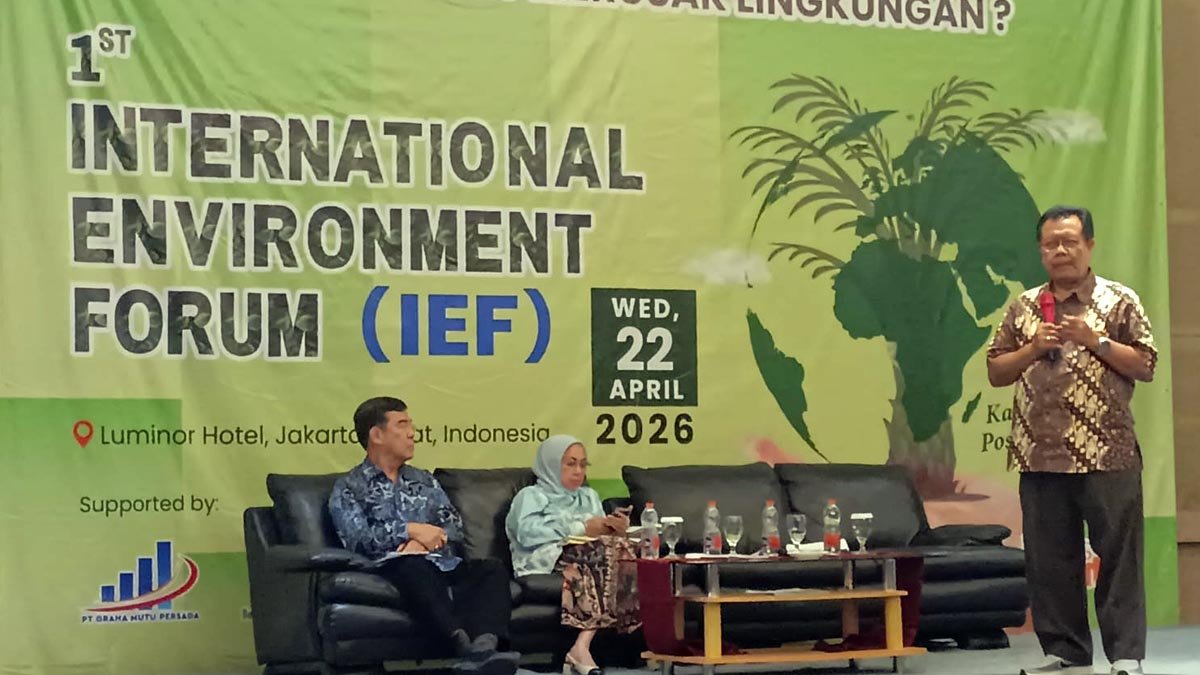
Marking Earth Day on April 22, Media Perkebunan organized the 1st International Environment Forum (IEF) 2026 to examine the issue through a scientific and data-driven approach. The forum was supported by the Plantation Fund Management Agency (BPDP) and brought together students, academics, practitioners, and industry stakeholders from both Indonesia and abroad.
According to data from the Directorate General of Estates under the Ministry of Agriculture, Indonesia’s oil palm plantation area reached 16.83 million hectares in the 2025–2026 period. The commodity remains the country’s largest non-oil and gas foreign exchange earner, contributing approximately IDR 440 trillion in 2024, while providing employment for around 16 million people.
Also Read:Indonesian CPO Prices Rise Slightly on Wednesday (April 22), Global Markets Continue to Strengthen
IEF 2026 Committee Chair Hendra J. Purba emphasized the importance of the forum as a platform for scientific discussion aimed at correcting public perceptions.
“This forum is expected to serve as an academic space for young generations to communicate that the narrative ‘palm oil harms the environment’ is not entirely accurate and must be assessed based on field data,” he said during the opening of the event, attended by Palmoilmagazine.com, on Tuesday, April 22, 2026.
Former Director General of Estates (2016–2019), Bambang, stressed that negative perceptions of palm oil should be addressed through data-driven education. He noted that oil palm has significantly higher productivity compared to other vegetable oil crops, requiring less land to produce the same volume of oil.
Also Read: West Kalimantan Palm FFB Prices Climb to IDR 3,827/kg in Mid-April Period
“Students must be able to educate the public that palm oil is more land-efficient than other vegetable oil commodities,” he said.
He also highlighted palm oil’s role in the energy transition, particularly ahead of the implementation of the B50 biodiesel program aimed at reducing dependence on fossil fuels.
Director of Plantation Product Downstreaming, Kuntoro Boga Andri, underscored Indonesia’s strategic position in the global supply chain.
“Palm oil plays a significant role in both food and energy. Indonesia contributes around 62% of global palm oil supply and over 54% of global vegetable oil, with productivity five to ten times higher than other crops,” he explained.
Also Read: Malaysian CPO Extends Three-Day Rally on Strong Soybean Oil Prices
He added that the national palm oil industry is regulated under the Indonesian Sustainable Palm Oil (ISPO) certification, as stipulated in Minister of Agriculture Regulation No. 33/2025, covering environmental and sustainable land management aspects.
“The sustainability standards we apply are universal and globally recognized,” he noted.
From an academic perspective, Sudarsono Soedomo highlighted that the causes of flash floods in Sumatra cannot be simplified to oil palm land use alone. He pointed to extreme rainfall as the primary driver.
“Rainfall reached 411 mm within one to two days, which typically accumulates over two to three months. This is an extreme event that, according to hydrological experts, may occur once every 400–500 years,” he explained.
Also Read: Agrinas Palma Nusantara Advances Cooperative-Based Downstreaming for Smallholder Palm Oil
He added that while forests play an important ecological role in water infiltration and runoff control, their capacity is limited under extreme weather conditions.
“Flooding is a systemic phenomenon. Oversimplifying the cause as palm oil does not solve the root problem and may mislead policy decisions,” he stressed.
The IEF 2026 forum concluded that the spread of non-data-based information could harm strategic national industries, including smallholder farmers. It emphasized the importance of science-based approaches in understanding environmental issues, particularly in assessing the relationship between palm oil and natural disasters.
“Emotion-driven narratives lead to misperceptions, while real solutions must be grounded in data and sound policy,” Sudarsono concluded. (P2)