
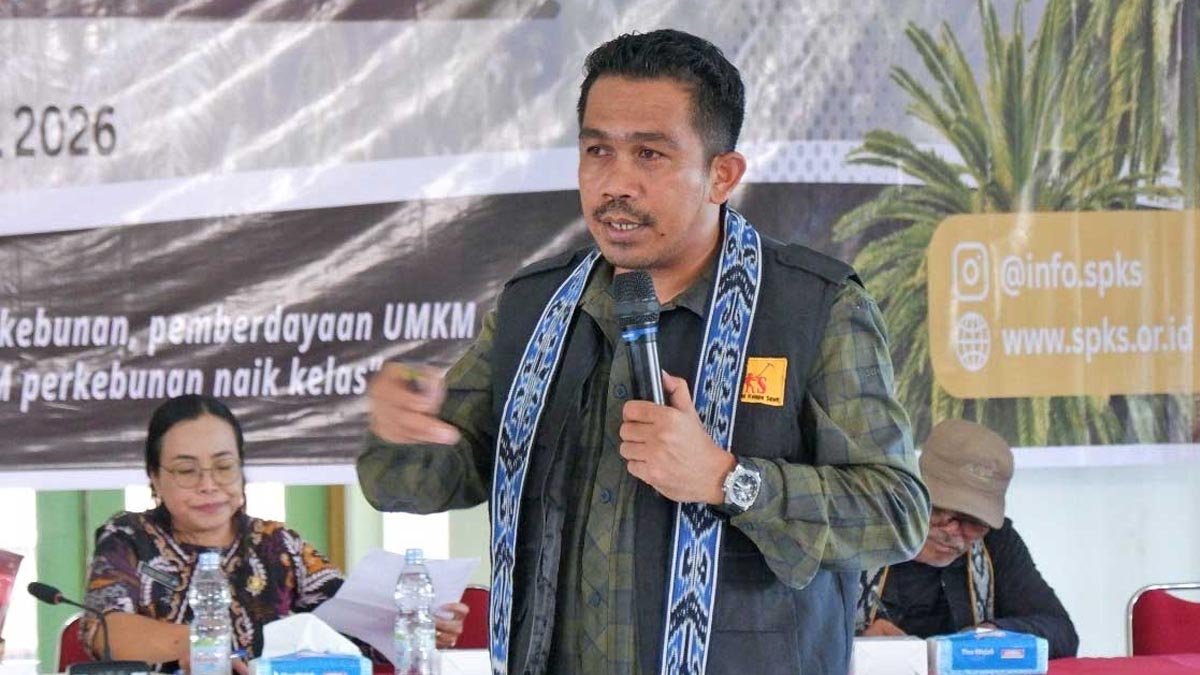
PALMOILMAGAZINE, SEKADAU — Serikat Petani Kelapa Sawit (SPKS) is calling on the central government, particularly the Ministry of Finance, to increase the allocation of palm oil revenue-sharing funds (Dana Bagi hasil/DBH), arguing that producing regions receive a disproportionately small share despite the sector’s significant contribution to state revenues.
SPKS Chairman Sabarudin stated that palm oil-producing regions currently receive only a fraction of the economic value generated by the industry, even as government revenues from export levies and duties continue to rise.
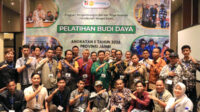
“Palm oil revenue sharing is the right of producing regions. However, the funds returned to these regions remain minimal compared to the overall trade value and state income from the sector,” he said during a regional assembly (Musda) of SPKS in Sekadau, West Kalimantan, on April 17, 2026.
Also Read: Andalas Forum VI: ISPO Gains Momentum, Indonesia Targets Global Market Trust
He emphasized the need for a more equitable distribution of palm oil revenues so that producing regions can directly benefit from development driven by the industry.
Currently, the DBH scheme is regulated under Government Regulation No. 38/2023 and updated through Ministry of Finance Regulation No. 10/2026, with funding sourced from state revenues such as export duties and levies on palm oil.
However, SPKS argues that the current fiscal framework does not adequately reflect fairness. In 2026, export duties for crude palm oil (CPO) reached US$148 per metric ton, while export levies stood at around US$123.7 per metric ton, equivalent to 12.5% of the April 2026 CPO reference price.
Also Read: KPBN CPO Remains Withdrawn on Friday (April 17), Bursa Malaysia Extend Losses on Weak Demand
Sabarudin noted that around 90% of palm oil levy funds—estimated at approximately IDR 50 trillion annually—are allocated to biodiesel subsidies. While acknowledging the importance of the program, he stressed that producing regions should also receive a fair portion of the benefits.
As an example, Sekadau Regency receives only about IDR 3 billion per year from the DBH scheme, a figure far below the hundreds of billions of rupiah generated from palm oil trade in the region, along with its significant tax contributions.
SPKS also raised concerns over the accuracy of data used in determining DBH allocations. According to Sabarudin, outdated data could lead to unequal distribution.
Also Read: Agrinas Palma Nusantara Partners KPBN to Boost CPO Market Efficiency
“We urge the Ministry of Finance to use the latest data from regional governments or the Ministry of Agriculture, and to involve local authorities in the verification process,” he said.
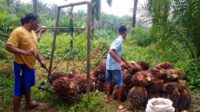
Increasing DBH allocations is also seen as critical for infrastructure development, particularly for improving access roads connecting plantations to palm oil mills. Poor infrastructure has long driven up transportation costs for farmers, reaching as high as IDR 1,000 per kilogram.
“If DBH is increased and allocated to road improvements, logistics costs can be reduced, fruit quality maintained, and farmers can secure better prices,” he added.
Also Read: GAPKI Pushes for Palm Oil Industry Synergy Through the 6th Andalas Forum
Beyond infrastructure, SPKS is advocating for the use of DBH funds to strengthen smallholder governance, including accelerating farmer registration through cultivation registration certificates (STDB) and enhancing capacity to meet Indonesian Sustainable Palm Oil (ISPO) standards.
The organization believes that improved data systems and certification are essential to boosting the competitiveness of smallholder palm oil in global markets while ensuring long-term sustainability.
“Palm oil-producing regions have made a major contribution to the national economy. It is time for the central government to provide a fairer share through increased revenue-sharing funds,” Sabarudin concluded. (P2)