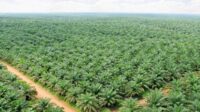
PALMOILMAGAZINE, JAKARTA – Indonesia’s palm oil industry is entering one of the most critical phases in its modern history as global regulatory pressure, domestic energy transition policies, and stagnant smallholder productivity increasingly reshape the future of the sector.
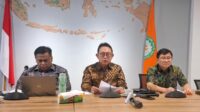
Against this backdrop, the 2026 National Working Meeting of the Indonesian Palm Oil Association (GAPKI), held in Solo from May 20–22, has become far more than an annual organizational gathering. The forum is now viewed as a strategic moment to determine whether Indonesia’s palm oil industry can maintain its position as a globally strategic commodity or risk being left behind by rapid global changes.
The industry is currently facing mounting pressure from multiple directions. Internationally, stricter sustainability regulations such as the European Union’s deforestation-free supply chain rules, increasingly aggressive environmental campaigns, and intensifying trade competition in major markets like India and China continue to challenge the sector.
Domestically, the industry is grappling with equally complex issues, including downstream energy expansion, stagnant productivity among smallholder plantations, concerns over export levy management, and lingering legal uncertainty affecting investment confidence.
The situation became more significant following President Prabowo Subianto’s speech at the House of Representatives in Jakarta on May 20, where he outlined plans for a centralized “single-gate” export policy for strategic natural resource commodities.
Under the proposed government regulation on strategic commodity export governance, major export products such as crude palm oil (CPO), coal, and ferrous alloys would no longer be exported directly by private businesses. Instead, exports would be channeled through state-owned enterprises appointed by the government.
For many industry players, the development signals a potentially major shift in Indonesia’s commodity trade architecture.
As a result, GAPKI’s meeting in Solo is being seen not merely as an administrative consolidation forum, but as a platform to redefine the strategic direction of Indonesia’s palm oil industry — whether it will continue operating defensively in response to global criticism or begin positioning itself more confidently as a leading global strategic industry.
For years, Indonesia’s palm oil sector has largely operated in defensive mode. Whenever international criticism emerged, responses often centered on rebuttals, clarifications, or economic nationalism narratives. However, global markets are increasingly moving toward stricter standards focused on supply chain transparency, carbon footprints, traceability, and sustainability compliance.
Also Read: Prabowo Pushes Indonesia to Set Global Palm Oil Prices Instead of Following Foreign Markets
In this context, traceability has become unavoidable. The industry can no longer rely solely on sustainability claims but must provide measurable proof from plantations to export terminals.
GAPKI, alongside the government and the Plantation Fund Management Agency (BPDP), is therefore being urged to accelerate the development of a credible supply chain traceability system recognized by international markets.
At the same time, palm oil diplomacy must evolve beyond certification debates. Indonesia is increasingly expected to pursue more aggressive trade strategies as traditional markets impose tighter regulatory barriers. Expanding into emerging regions such as Africa, Central Asia, and other non-traditional markets is becoming increasingly important.
Also Read: Indonesia Recovers IDR10.2 Trillion and Reclaims 5.8 Million Hectares in Forest Crackdown
This transition presents a broader challenge: whether Indonesian palm oil can move beyond its image as a low-cost commodity and become a globally respected strategic product supported by sustainability credentials.
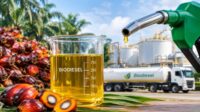
Domestically, the government’s biodiesel ambitions toward B40 and eventually B50 are creating a classic food-versus-energy dilemma. Palm oil is expected to support both energy security and food supply simultaneously, while national production growth remains relatively limited.
Industry observers believe the Solo meeting is particularly important because Indonesia’s crude palm oil supply balance must now be calculated more carefully and transparently.
Also Read: KPBN CPO Prices Fall Again on Friday (May 22), While Malaysian Palm Oil Market Rises
The sector, they argue, should avoid becoming overly focused on downstream energy expansion at the expense of domestic cooking oil stability or export commitments. Concerns also remain regarding export levies and duties, which many stakeholders believe have yet to distribute benefits fairly across the industry.
Smallholders remain at the center of these concerns. Indonesia’s palm oil industry is fundamentally built upon millions of smallholder plantations, yet productivity growth in this segment continues to stagnate.
Many smallholder plantations are aging, while the government’s Smallholder Replanting Program (PSR) continues to face bureaucratic obstacles and land legality issues that slow implementation.
Also Read: Indonesia to Launch New CPO Export Reporting System Through Danantara on June 1
This creates a major structural risk for the industry. Despite being the world’s largest palm oil producer, Indonesia still faces significant productivity gaps among independent smallholders.
As a result, sustainability discussions are increasingly seen as meaningless unless smallholders are more fully integrated into modernization efforts. Partnerships between large companies and farmers are expected to move beyond administrative formalities toward genuine collaboration involving technology transfer, cultivation guidance, and financing access.
Climate change is also emerging as a growing operational threat. Weather phenomena such as El Niño and La Niña are already affecting harvesting cycles, fertilizer schedules, and plantation productivity across producing regions.
Also Read: Prabowo Pushes Indonesia to Set Global Palm Oil Prices Instead of Following Foreign Markets
For the palm oil industry, climate is no longer viewed as a seasonal disturbance but as a central business variable requiring long-term adaptation strategies, including agronomy technology investments, water management improvements, and peatland adaptation programs.
At the same time, Indonesia continues facing challenges in strengthening the international legitimacy of its Indonesian Sustainable Palm Oil (ISPO) certification system.
The issue extends beyond technical certification standards. It has evolved into a broader contest over global sustainability governance, where international markets continue placing greater trust in external certification systems while ISPO is often perceived as lacking equivalent global credibility.
Also Read: Risky reawakening of the state-controlled commodity export
Without stronger international recognition of ISPO, Indonesia’s palm oil industry risks remaining in a permanently defensive position in global markets.
Legal uncertainty also remains a major concern. Spatial planning disputes, overlapping forest area claims, and social conflicts continue to create uncertainty for many businesses operating within the sector.
Another increasingly important issue is the industry’s response to the government’s proposed strategic commodity export governance system.
Also Read: Sawit Watch Raises Alarm Over Indonesia’s Single-Gate CPO Export Proposal
The government argues that tighter control is necessary due to long-standing concerns over export under-invoicing, loss of export earnings outside the domestic financial system, and reduced tax and royalty revenues.
By centralizing export channels, authorities believe oversight of export revenues and foreign exchange flows can be strengthened.
However, markets interpret the initiative as more than just an administrative reform. Behind the narrative of tighter supervision lies a broader ambition to centralize control over export proceeds, strengthen Indonesia’s bargaining position in global commodity markets, and establish a nationally controlled commodity trading platform.
Also Read: SPKS Urges Swift Government Response as Palm Oil FFB Prices Fall Across Regions
Ultimately, the central question emerging from GAPKI’s Solo meeting is whether Indonesia’s palm oil industry is truly prepared to adapt to increasingly complex global and domestic challenges — and whether GAPKI itself can continue safeguarding the industry’s position as one of Indonesia’s most strategic economic sectors. (*)
Author: Edi Suhardi, Sustainable Analysis
Disclaimer: This article reflects the author’s personal views and is solely the author’s responsibility.