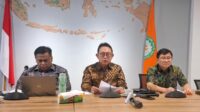
PALMOILMAGAZINE, JAKARTA – PT Agrinas Palma Nusantara (Persero) delivered a strong performance in the 2025 fiscal year, posting an operating surplus of IDR2.86 trillion from its government-assigned management of state-owned plantation assets.
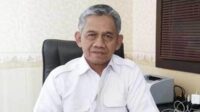
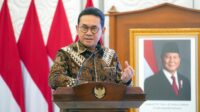
President Director Mohammad Abdul Ghani said the achievement marks a significant milestone in the company’s transformation and reinforces its role as a professional manager of state plantation assets capable of creating long-term value.
“This achievement provides a solid foundation for APN to strengthen its role as a state plantation asset manager that creates added value while delivering sustainable benefits for the nation and society,” Abdul Ghani said in a statement received by Palmoilmagazine.com on Thursday (July 9, 2026).
Also Read: Agrinas Palma Nusantara Explores Green Energy Development Partnership with Korean Consortium
The IDR2.86 trillion operating surplus was generated from the company’s government mandate to manage plantation assets and should not be regarded as corporate profit.
Separately, Agrinas Palma Nusantara posted a net profit of IDR27.9 billion from its construction consulting services business, reflecting earnings from its commercial operations.
Together, these results highlight the company’s ability to balance its dual mandate—maintaining commercial business performance while professionally, productively, and transparently managing state-owned plantation assets.
Also Read: Agrinas Sets New Sustainable Palm Oil Strategy to Increase Indonesia’s Production
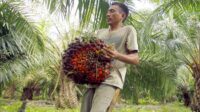
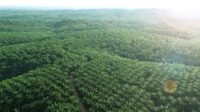
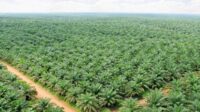
During 2025, APN managed approximately 1.7 million hectares of plantation land. As additional government assignments were entrusted to the company, the managed area expanded significantly to 4.11 million hectares, including around 730,000 hectares of planted oil palm area.
The expanded portfolio strengthens APN’s position as one of Indonesia’s largest plantation asset managers and provides a solid foundation for improving plantation productivity while maximizing the value of state-owned assets.
According to Abdul Ghani, the company’s transformation extends beyond productivity improvements. APN is also committed to integrating environmental, social, and governance (ESG) principles into its plantation management practices.
Also Read: KPBN CPO Prices Rose 0.82% on Tuesday (July 7), Bursa Malaysia Closed Slightly Lower
“Our transformation focuses on building plantations that are productive, environmentally responsible, and socially inclusive. We believe that sound governance, sustainable plantation practices, and strong partnerships with local communities are essential to generating optimal long-term value,” he said.
To support this transformation, APN continues to implement a range of strategic initiatives, including strengthening asset legality, enhancing corporate security, improving procurement and commercial governance, and developing organizational capabilities and human resources.
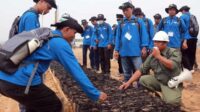
The company is also expanding partnerships with smallholders, cooperatives, and communities surrounding its operational areas, while reinforcing the implementation of Good Agricultural Practices (GAP) and accelerating the downstream development of priority food commodities as part of its long-term growth strategy. (P1)