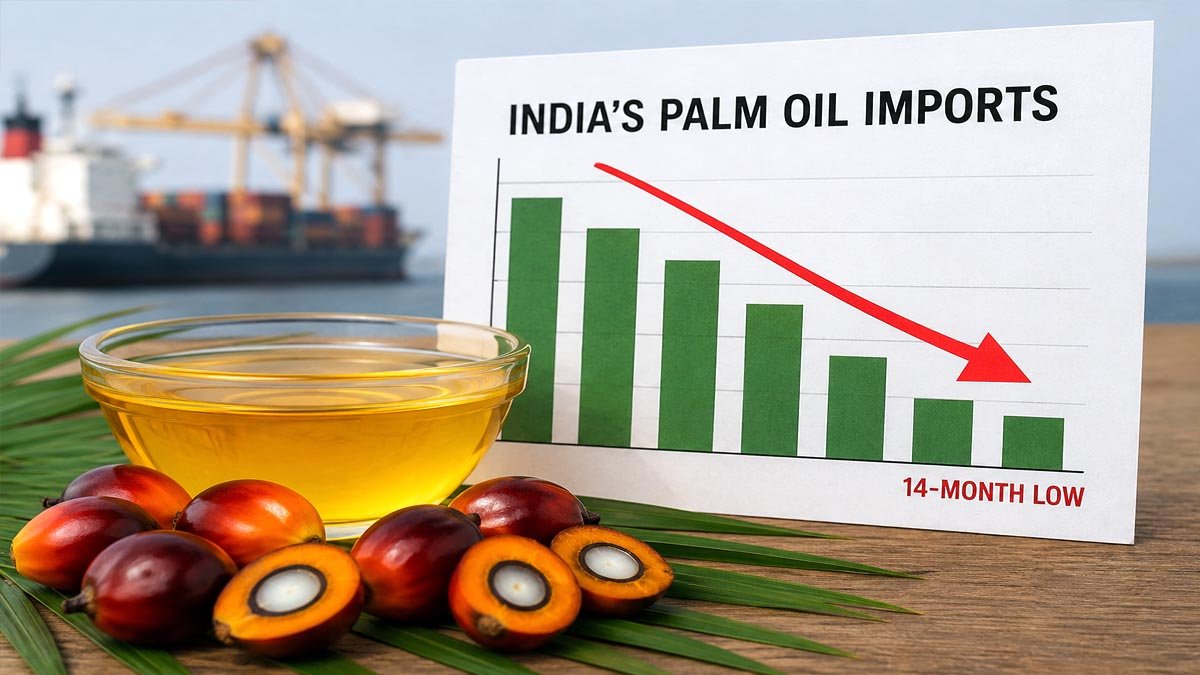
PALMOILMAGAZINE, MUMBAI – India’s palm oil imports fell to their lowest level in 14 months in June 2026 as domestic demand softened and palm oil’s price advantage over competing vegetable oils narrowed. The decline is expected to increase palm oil inventories in Indonesia and Malaysia while adding downward pressure to crude palm oil (CPO) futures on the Bursa Malaysia.
According to The Economic Times on Tuesday (July 7, 2026), five traders estimate that India’s palm oil imports in June totaled only 492,000 metric tons, down about 10.5 percent from the previous month. This figure marks the lowest level since April 2025.
Imports of other edible oils also declined during the month. Soybean oil (soyoil) imports were estimated to have dropped 23% month-on-month to 381,000 tons, while sunflower oil imports fell 17.5% to 244,000 tons, their lowest level in three months.
Also Read: KPBN CPO Prices Rose 0.82% on Tuesday (July 7), Bursa Malaysia Closed Slightly Lower
As a result, India’s total edible oil imports are estimated to have declined 16.6% from May to around 1.1 million tons in June. The figures exclude duty-free edible oil supplies entering India overland from Nepal.
As the world’s largest importer of edible oils, India is a key export market for palm oil producers Indonesia and Malaysia. A sustained slowdown in Indian purchases could lead to rising inventories in producing countries and weigh on international CPO prices.
Rajesh Patel, Managing Partner at GGN Research in Rajkot, Gujarat, said palm oil demand has remained subdued in recent months as distributors limited purchases in anticipation of lower prices.
According to Patel, the cautious buying pattern has prompted refiners to scale back import volumes. In addition to pricing factors, demand has also been affected by cooking gas shortages, higher fuel costs, and an extreme heatwave across India.
India, one of the world’s largest importers of liquefied petroleum gas (LPG), is currently facing energy supply constraints. To prioritize household consumption, the government has reduced gas allocations to industrial users while raising commercial LPG prices.
Palm oil has also become less attractive because its price discount relative to soybean oil has narrowed considerably. A Mumbai-based trader noted that palm oil is now trading at a discount of less than US$50 per ton to soybean oil, prompting many processors to adopt a more cautious purchasing strategy.
Also Read: India’s Vegetable Oil Imports Climb 8%, Soybean Oil Gains Ground Against Palm Oil
India sources the majority of its palm oil imports from Indonesia and Malaysia, while soybean oil and sunflower oil are primarily supplied by Argentina, Brazil, Russia, and Ukraine.
Market participants are expected to closely monitor India’s import demand in the coming weeks, as shifts in buying activity from the world’s largest edible oil importer often have a significant impact on global palm oil prices and the export performance of major producing countries. (P2)