PALMOILMAGAZINE, JAKARTA – Indonesia’s new natural-resource export governance scheme can close leakage, improve trade data, strengthen the retention of export proceeds and restore discipline in commodity trade. For palm oil, however, the reform must be implemented through Danantara Sumberdaya Indonesia (DSI) as a transparent, audited and market-capable governance platform, not as a commercial choke point.
The President has announced that exports of selected commodities, beginning with palm oil, coal and ferroalloys, will be channelled through an SOE export vehicle. The stated objectives are legitimate: strengthen monitoring, prevent under-invoicing and transfer pricing, reduce leakage and optimise state revenue. Yet palm oil is not a simple bulk commodity. Indonesia exports crude palm oil, refined products, oleochemicals, biodiesel-linked materials and many derivatives, each with distinct buyer specifications, payment terms, sustainability claims and destination-market compliance requirements. A poorly designed single channel risks disrupting relationships built over many years.
|
“The state is right to demand full visibility over volumes, prices, export earnings and taxes. Under-invoicing and transfer pricing are governance failures that reduce the national benefit from natural resources. But the remedy must be precise. A single export desk without clear safeguards can shift one governance problem into another: delay, opacity, price distortion and loss of buyer relationships.” – Dr. M. Windrawan Inantha, observer of Indonesian palm oil and sustainability |
Also Read: Palm Oil as a Self-Sufficiency Model and Engine of Economic Growth
The critical phrase in the President’s statement is ‘marketing facility.’ If DSI is designed as a verifiable, digital, audited and transparent platform, it can improve export data, detect abnormal pricing and strengthen national bargaining power. If it replaces market capability without sufficient commercial discipline, it will weaken export performance. International experience, from Ghana’s cocoa system to Nigeria’s historical marketing boards and Canada’s wheat single desk, consistently shows that state marketing can succeed when institutions are credible and pricing is transparent, and fail when administered prices diverge from market realities.
EUDR Makes Palm Oil Traceability More Complex, Not Simpler
The new system must not dilute ISPO, RSPO, ISCC or EU Deforestation Regulation (EUDR) due-diligence requirements. EUDR requires operators serving the EU market to demonstrate that products are deforestation-free and legally produced, supported by due-diligence information that can withstand regulatory review.
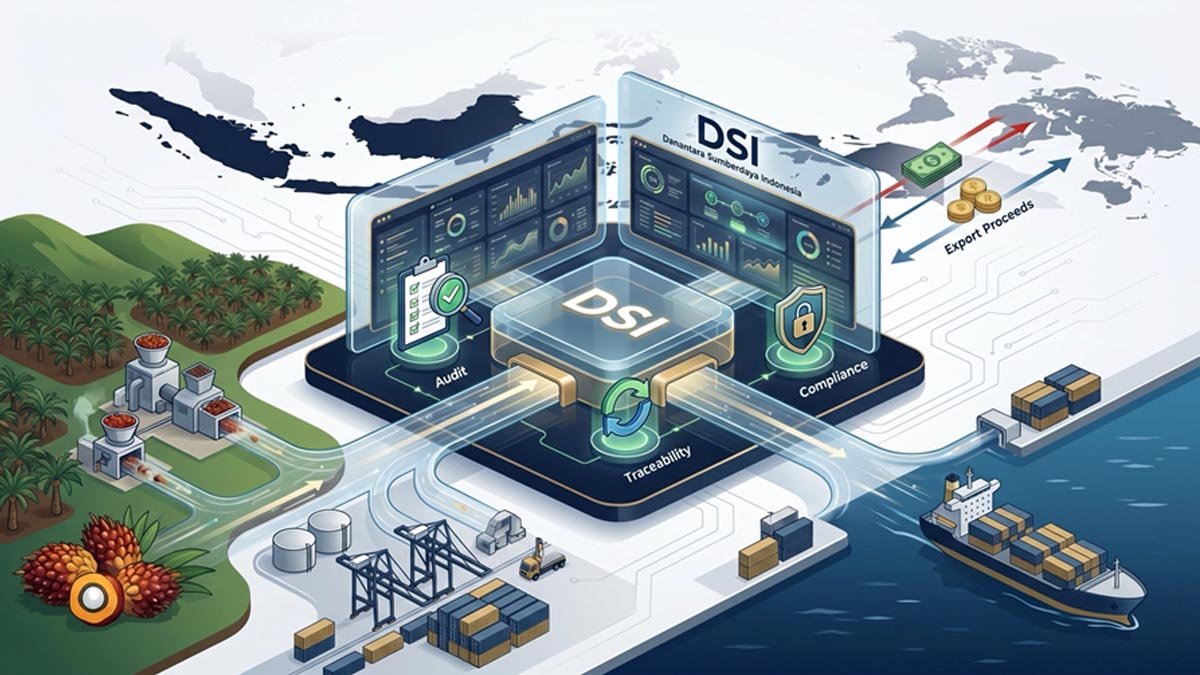
Palm oil supply chains are technically complex. One shipment of refined product can be linked to multiple mills, estates, smallholder groups, refineries and vessels. Under EUDR, this complexity cannot be resolved by a single invoice or a general assurance letter. If DSI becomes the export marketing facility, it must carry traceability data: origin information, geolocation-linked evidence, chain-of-custody records, certification status and buyer-specific compliance documents, not only commercial price data.
|
“Under EUDR, traceability is not a document attached at the end of a shipment. It is a chain of evidence. If Indonesia centralises export marketing without preserving origin data and certification claim integrity, the system may become administratively stronger but commercially weaker.” – Dr. M. Windrawan Inantha, observer of Indonesian palm oil and sustainability |
DSI Should Be Certification-Ready
If DSI handles or markets certified palm oil or products sold with sustainability claims, it must become a recognised supply-chain actor in the relevant certification schemes. For RSPO, ISCC and buyer-specific programmes, the ability to transfer certified claims depends on recognised system rules, chain-of-custody certification and auditable documentation. DSI sitting between exporters and buyers without the proper certification status could unintentionally break the traceability chain and weaken the credibility of Indonesian certified palm oil.
DSI should interface with ISPO records, RSPO and ISCC requirements, customs data, banking records and buyer due-diligence systems, with a clear claims governance protocol defining which party owns and transfers sustainability claims, how volumes are allocated and how double counting is prevented.
Also Read: Palm Oil: A Valuable Energy Resource Supporting Nutrition in Developing Countries
Implementation Safeguards Required Before Full Commercial Displacement
The Government should publish the final regulation and implementing rules immediately, including transition schedule, treatment of existing contracts, pricing formula, service fees, payment pass-through period and dispute mechanism. A phased approach is essential:
- Start with monitored data consolidation, digital clearing and mandatory reporting — before full single-desk commercial displacement.
- Protect existing contracts and buyer relationships during transition, including shipment schedules, payment terms and quality obligations.
- Establish transparent pricing and service-fee rules so DSI does not become an opaque margin collector.
- Maintain exporter access to sustainability platforms, certification bodies and buyer portals.
- Require independent audit of export values, transaction records, certification documents and payment flows.
- Protect smallholders by ensuring new documentation requirements do not depress fresh fruit bunch prices or exclude smallholders from export-linked supply chains.
Also Read: Prabowo Plans to Use Recovered State Funds for School and Healthcare Facility Upgrades
The policy should begin with strong reporting, customs-banking integration and independent audit. A full single-desk trading model should proceed only after pilot results confirm it does not reduce competitiveness, delay shipments, weaken traceability or harm smallholders.
This is a decisive moment for Indonesia’s palm oil governance. The Government should move forward on three principles: transparency first, market discipline always, and protection for smallholders and legitimate business actors at every stage.
|
“Indonesia should not choose between state oversight and market capability. It needs both. The new export governance system must make every shipment visible, every dollar traceable, every origin record credible and every compliance document reliable, while preserving the commercial relationships and technical expertise that keep Indonesian palm oil competitive.” – Dr. M. Windrawan Inantha, observer of Indonesian palm oil and sustainability |
Author: Dr. M. Windrawan Inantha
Dr. M. Windrawan Inantha is an observer of Indonesian palm oil, sustainability standards and natural-resource governance, focusing on market transformation, traceability and the interaction between public regulation and voluntary sustainability systems. He is affiliated with CECT Sustainability, Universitas Trisakti