PALMOILMAGAZINE, JAKARTA – The Indonesian PIR Oil Palm Farmers Association or Asosiasi Petani Kelapa Sawit Perusahaan Inti Rakyat (Aspekpir) has expressed support for the proposal to make the smallholder palm oil replanting program (PSR) mandatory, provided it is accompanied by regulatory reforms and stronger institutional support for farmers.
Chairman of Aspekpir, Setiyono, said the former Perkebunan Inti Rakyat (PIR) scheme had proven highly successful in developing Indonesia’s palm oil industry while also creating employment opportunities across rural regions.
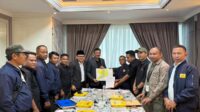
“If the old PIR program had failed, the palm oil industry would never have grown this large. Unfortunately, after the reform era, the scheme no longer operated optimally,” Setiyono said during a discussion organized by the Agricultural Journalists Forum (Forwatan) in Jakarta on Tuesday (19/5/2026), attended by Palmoilmagazine.com.
Also Read: Government Sees Smallholder Replanting as Key to Boost Palm Oil Productivity
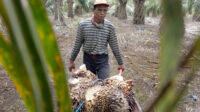
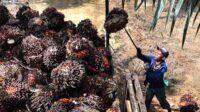
According to him, many plasma plantations, particularly in Riau Province, are now aging and urgently require replanting because most of them were established during the 1980s.
Setiyono noted that farmers generally support the PSR program, including the possibility of making it mandatory in the future. However, he stressed that implementation must be backed by clear land mapping and stronger legal protection for smallholders.
“Aspekpir supports mandatory PSR, but farmer institutions and mapping systems must be strengthened first. Farmers should not be abandoned when they face land legality problems,” he said.
Also Read: GAPKI Highlights Administrative Challenges in Accessing PSR Funds
He highlighted that many plasma plantations holding formal land ownership certificates are currently categorized as forest areas. This situation has become a major obstacle in both the PSR application process and the legalization of smallholder plantations.
Setiyono urged the government to immediately resolve overlapping land issues to ensure that smallholder palm oil replanting can move forward more effectively.
“The most important thing is actually improving the regulations. During the PIR era, there was a joint decree signed by three ministers and everything worked well. Now, because large funding is involved, more parties have entered the process and it has become increasingly complicated,” he explained.
Also Read: KPBN CPO Prices Rise to IDR 15,388/Kg as Malaysian Palm Oil Market Extends Rally
According to Setiyono, the success of the PSR program will not depend solely on financial assistance, but also on legal certainty, simpler bureaucracy, and regulations that genuinely favor smallholders.
He expressed hope that the government would strengthen partnership schemes similar to those implemented during the PIR era, enabling the replanting program to boost productivity while maintaining the long-term sustainability of Indonesia’s palm oil industry. (A3)