

PALMOILMAGAZINE, JAKARTA – Indonesia’s palm oil industry has spent too many years on the defensive. While the world accelerates toward a low-carbon economy, the sector remains trapped in old debates over deforestation. Yet amid rising global demand for green development, palm oil landscapes hold significant untapped potential for decarbonization, environmental services monetization, and carbon-based economic value.
Today’s global trade environment is increasingly shaped by sustainability requirements. In Europe, palm oil remains under scrutiny, with growing focus on carbon footprints, deforestation-free supply chains, and reputational risk. As a result, Indonesia’s palm oil sector often finds itself in a permanent defensive position before the court of global markets.
Whenever environmental issues arise—from forest fires to floods—palm oil is frequently blamed first. Companies then spend enormous time, capital, and energy responding to accusations, strengthening green credentials, partnering with advocacy groups, and complying with shifting market demands. In doing so, the industry often overlooks one critical reality: palm oil can also be part of the climate solution.
Over the past several years, green issues have evolved into a new economic commodity. Carbon reduction and ecosystem services now carry measurable financial value. Indonesia has launched its own carbon exchange, while international voluntary carbon markets continue to expand.
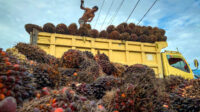
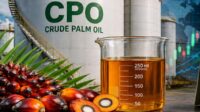
This creates a strategic moment for Indonesia. For too long, the palm oil sector has focused almost exclusively on crude palm oil (CPO) output, export volumes, and price cycles. Palm oil has been viewed mainly as a food and energy commodity.
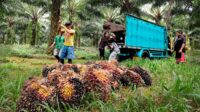
But plantations are also ecological infrastructure. They absorb carbon, store biomass, maintain land cover, and—when responsibly managed—can become part of climate mitigation systems.
Also Read: GAPKI and the Government Strengthen National Preparedness to Mitigate Forest Fire Risks
From a technical and scientific perspective, palm oil plantations possess carbon management potential. Their vegetation can maintain carbon stocks, increase sequestration, and serve as relatively stable carbon reservoirs during their productive life cycle.
Studies indicate palm oil plantations can absorb up to 64.5 tons of carbon per hectare annually, with biomass carbon stocks ranging from around 40 to 64.5 tons per hectare. In some degraded land scenarios, palm oil may offer stronger carbon sink functions than unmanaged scrubland.
This creates a clear strategic choice for the industry: remain trapped in endless defense, or begin harvesting economic value from palm oil’s role in global climate mitigation.
Also Read: GAPKI Marks 45 Years, Reaffirms Strategic Role in Indonesia’s Palm Oil Industry
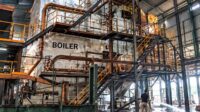
One of the greatest overlooked opportunities lies in Palm Oil Mill Effluent (POME). Traditionally treated as an environmental burden because it releases methane—a greenhouse gas far more potent than CO2—POME can instead become a source of value.
With methane capture systems, emissions can be collected and converted into biogas while simultaneously generating certified emission reductions. A palm oil mill processing 60 tons of fresh fruit bunches per hour could potentially reduce emissions by up to 100,000 tons of CO2 equivalent annually.
Carbon prices on Indonesia’s exchange may still range around US$2–3 per ton, but international voluntary markets often trade at US$10–15 per ton or more depending on project quality. That means a single well-managed mill could create substantial annual carbon revenue.
Also Read: Palm Oil as a Self-Sufficiency Model and Engine of Economic Growth
Now multiply that across hundreds or even thousands of mills nationwide. Add electricity generation or renewable fuel substitution, and the opportunity becomes far larger. This is not only a climate strategy—it is revenue diversification and a buffer when CPO prices weaken.
In the new economy, emissions efficiency is a business line.
Plantations are often criticized as monoculture systems that reduce biodiversity. Some criticism reflects older practices that lacked strong regulatory or global sustainability standards. But modern plantation management can evolve.
Also Read: Polemic Over Land Use Rights Becomes an Obstacle to Palm Oil Investment
Palm oil land can generate more than oil. Every hectare that sequesters carbon may also generate environmental service value.
This does not justify opening primary forests. Global decarbonization requires adherence to no deforestation, no peat, no exploitation (NDPE) principles. But for land already converted and responsibly managed, carbon accounting opens legitimate new economic pathways.
The mindset must shift—from merely counting tons of CPO to counting carbon that is sequestered, emissions that are avoided, and stocks that are preserved.
Many plantations already contain High Conservation Value (HCV) zones, river buffers, wildlife corridors, and forest pockets. Historically, these areas were often viewed as production costs. That thinking is outdated.
Through biodiversity credit mechanisms, protected ecosystems and conserved endemic species can hold real market value. ESG-focused investors no longer look only at administrative compliance such as certification. They increasingly demand measurable impact backed by credible science.
Does the wildlife corridor function? How many species are monitored? How many hectares of habitat have been restored? Markets are beginning to price these answers. Companies that can provide verified data may secure premium valuations and stronger investor confidence.
Also Read: Agrinas and the Future of Sustainable Palm Oil in Indonesia
In other words, conservation is no longer a cost center. It is becoming part of corporate strategy.
Indonesia is the world’s largest palm oil producer. The scale that once made it a target of criticism could become a major competitive advantage in the low-carbon economy. If governance, Measurement Reporting and Verification (MRV) systems, and national regulations are built strongly, Indonesia can emerge as a leading player in tropical landscape carbon markets.
If government, industry, and stakeholders can integrate smallholders into collective carbon schemes, connect mills through methane capture systems, and verify conservation zones to global standards, Indonesian palm oil can become a credible model for participation in the world’s carbon and biodiversity markets.
Also Read: Palm Oil as a Pillar of Indonesia Emas 2045: Through Food and Energy Self-Sufficiency
The next chapter of palm oil should not be written only in tons of production—but in tons of value created through sustainability. (*)
By Edi Suhardi, Sustainable Palm Oil Analyst and Head of Positive Campaigns, GAPKI