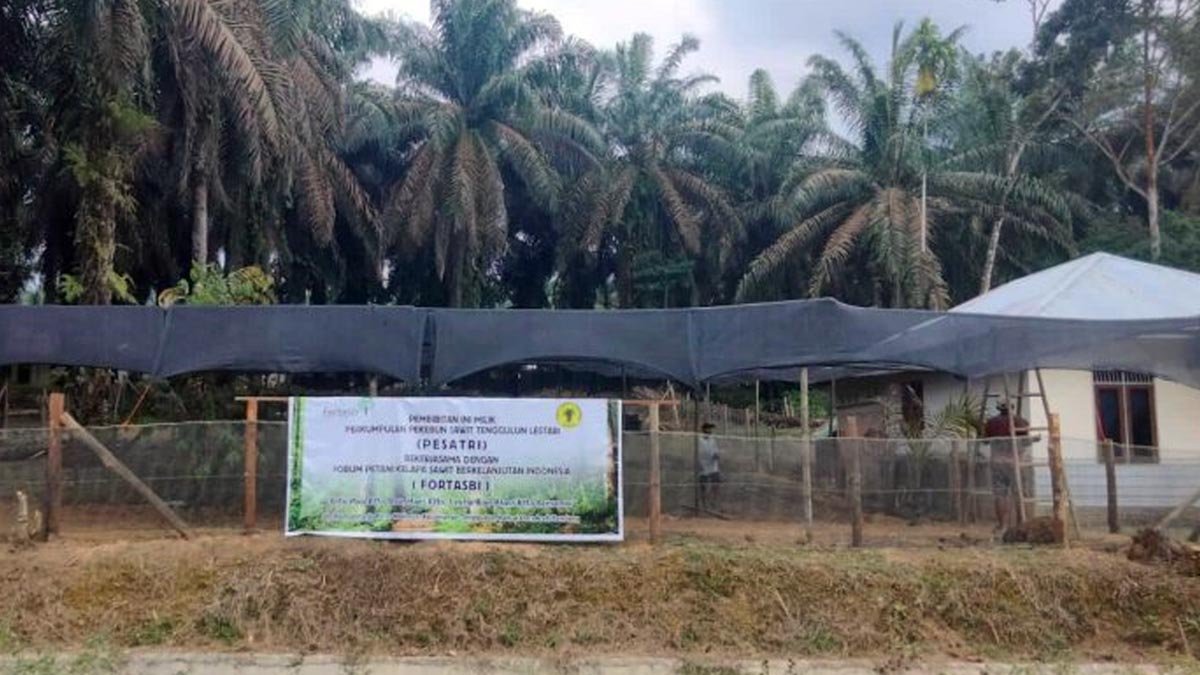
PALMOILMAGAZINE, ACEH TAMIANG – Efforts to advance sustainable palm oil in Indonesia are expanding beyond on-farm practices into broader landscape restoration. The Indonesian Sustainable Palm Oil Farmers Forum (FORTASBI), in partnership with the Tenggulun Lestari Oil Palm Farmers Association (PESATRI) in Aceh Tamiang, has initiated a farmer-led land protection and rehabilitation program aimed at building a more resilient, regenerative, and environmentally friendly plantation ecosystem.
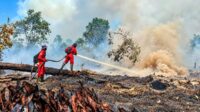
The initiative emerged in the aftermath of severe flooding that struck parts of Aceh, including Aceh Tamiang, in late 2025. The disaster was not solely attributed to extreme weather but also linked to upstream landscape changes, forest cover degradation, and land-use conversion that have reduced environmental carrying capacity.
In response, FORTASBI and PESATRI are developing a land management model that goes beyond improving oil palm productivity. The approach integrates conservation, biodiversity, and ecosystem rehabilitation as core elements of smallholder plantation governance.
Also Read: Jambi FFB Prices Edge Up to IDR 3,903/kg in Early May Amid Stable Market
One of the key actions underway is the establishment of nurseries for forest and endemic fruit tree species native to Aceh. These nurseries will support revegetation programs in degraded lands and high conservation value areas. Seedlings being cultivated include mango, mangosteen, durian, benzoin, teak, petai, jengkol, alem, cinnamon, and rambutan.
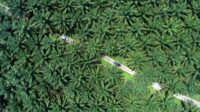
This approach aims to promote agro-biodiversity and agro-ecological farming systems, transforming oil palm plantations from monoculture landscapes into more diverse ecosystems. By integrating various plant species, the model seeks to improve soil quality, enhance water retention, preserve biodiversity, and strengthen landscape resilience to climate change.
Head of FORTASBI Secretariat, Rukaiyah Rafik, said the land protection and rehabilitation model currently being implemented will be scaled up across FORTASBI’s network nationwide.
Also Read: Indonesian CPO Rises to IDR 15,625/kg as Global Rally Gains Momentum
“The ongoing protection and rehabilitation model will continue to be developed among our members and promoted as an agro-biodiversity model. This is part of our effort to guide independent smallholders from certification processes toward sustainable landscape management,” she stated on Tuesday (May 5, 2026).
FORTASBI emphasized that independent smallholders play a critical role in Indonesia’s conservation agenda. With approximately 2.7 million farmers managing nearly 41 percent of the country’s total oil palm plantation area, their involvement represents a significant force in accelerating ecosystem recovery through community-based rehabilitation programs.
In addition to land restoration, FORTASBI is also developing protection models for high conservation value (HCV) and high carbon stock (HCS) areas within and surrounding smallholder plantations. This effort is expected to contribute meaningfully to climate change mitigation.
Also Read: BPDP Expands 2026 Research Grants Beyond Palm Oil, Opens Funding for Coconut and Cocoa
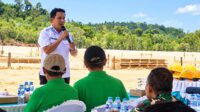
PESATRI Secretary Putra Gunawan welcomed the collaboration, highlighting that environmental rehabilitation is a crucial step following the recent disaster and a testament to smallholders’ commitment to responsible plantation management.
“We hope this initiative will deliver real environmental benefits and help reduce or prevent future disasters. We are very pleased to collaborate and optimistic about the program’s success,” he said.
As sustainable palm oil certification has evolved over the past decade, independent smallholders are now entering a new phase—from merely complying with supply chain standards to actively participating in the development of healthier, more resilient, and sustainable plantation landscapes for future generations. (P2)