PALMOILMAGAZINE, JAKARTA — Crude palm oil (CPO) prices at PT Kharisma Pemasaran Bersama Nusantara (KPBN) recorded a withdrawal (WD) during trading on Thursday (May 7, 2026), with the highest bid reaching IDR 15,222/kg.
The domestic CPO price therefore declined by IDR 50/kg compared to Wednesday’s (May 6, 2026) level of IDR 15,575/kg.
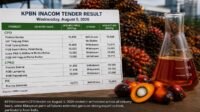
According to information obtained by Palmoilmagazine.com from KPBN, the Franco Dumai CPO price opened at IDR 15,350/kg before ending in withdrawal with the highest offer at IDR 15,222/kg. Meanwhile, the Loco Parindu CPO contract opened at IDR 15,000/kg and was also withdrawn with the highest bid recorded at IDR 14,782/kg.
Also Read: From Tanzania to Indonesia: A Joint Effort to Develop More Resilient Palm Oil
The weaker domestic market mirrored the decline in CPO futures on the Bursa Malaysia Derivatives Exchange, which extended losses for a second consecutive session on Thursday.
Reported by Reuters, the benchmark July 2026 CPO contract on Bursa Malaysia fell by RM20 per ton, or approximately 0.44 percent, to RM4,559 per ton during the midday break.
Pressure on the palm oil market was driven by a combination of external factors, including weaker global soybean oil prices, the strengthening Malaysian ringgit, and expectations of higher Malaysian palm oil production in April 2026.
Also Read: Tanzania Ambassador Highlights Indonesia Partnership in Oil Palm Genetic Resource Development
In addition, the narrowing price spread between palm oil and gas oil reduced CPO’s competitiveness as a feedstock for the energy sector, particularly biodiesel production. Negative market sentiment was further exacerbated by a sharp decline in global crude oil prices during the previous trading session, which broadly pressured commodity markets.
A Reuters survey previously indicated that Malaysia’s palm oil inventories and exports were expected to decline in April. However, production is projected to rise significantly as seasonal output recovers following lower production levels earlier this year.
Market participants are now awaiting the release of monthly supply and demand data from the Malaysian Palm Oil Board (MPOB) on May 11. The report is expected to provide an important indicator for short-term CPO price direction, particularly regarding Malaysia’s stock levels, production, and exports as one of the world’s largest palm oil producers.
Similar pressure was also seen across regional vegetable oil markets. The most active soybean oil contract on the Dalian exchange fell 1.14 percent, while palm oil futures on the same exchange declined 1.48 percent. In the United States, soybean oil prices on the Chicago Board of Trade (CBOT) also weakened by 0.32 percent.
The developments indicate that bearish sentiment continues to weigh on the global vegetable oil market, although traders remain focused on upcoming MPOB data for clearer signals on market fundamentals heading into next week. (P3)