PALMOILMAGAZINE, JAKARTA – The Plantation Fund Management Agency (BPDP) has officially broadened the scope of its 2026 Research Grant program, marking a significant shift in Indonesia’s plantation research landscape. In addition to oil palm, the program will now cover two other strategic commodities—coconut and cocoa—signaling a more inclusive approach to innovation in the sector.
The move is expected to unlock wider participation from universities, research institutions, and industry players seeking to develop applied solutions for Indonesia’s key plantation commodities.
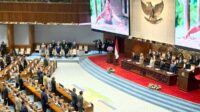
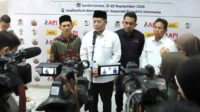
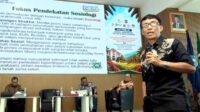
Rahmat Widiana, Head of BPDP’s Research Fund Distribution Division, announced the policy during the Webinar Call for Proposal for the 2026 Research Grant held on April 30, 2026. He noted that the expansion aligns with Presidential Regulation No. 132 of 2024, which strengthens BPDP’s mandate to support a broader range of strategic plantation commodities.
Also Read: Palm Oil as a Self-Sufficiency Model and Engine of Economic Growth
“Starting in 2026, our research scope will no longer be limited to palm oil. It will also include coconut and cocoa, creating far greater opportunities for academia, research institutions, and industry to contribute,” Rahmat said.
Open Competition Without Commodity Quotas
Unlike conventional funding schemes, BPDP will not allocate research funds based on commodity-specific quotas. Proposals across oil palm, coconut, and cocoa will compete on equal footing, assessed on quality, relevance, innovation, and potential impact.
According to Rahmat, this approach is designed to foster fair and healthy competition, ensuring that only the most impactful and well-prepared proposals receive funding.
“There is no fixed quota for palm oil, coconut, or cocoa. Opportunities remain wide open as long as proposals meet the criteria and address industry and societal needs,” he emphasized.
BPDP reiterated that funded research must go beyond academic exploration and demonstrate clear pathways toward real-world implementation. The agency is particularly focused on projects that can enhance industry competitiveness while improving the livelihoods of farmers across the three commodities.
Rahmat stressed that research outcomes should not stop at academic publications but must progress toward higher levels of technological readiness to enable industry adoption.
“If research only ends at academic papers or journals, its impact is limited. We are pushing for research that can be accelerated into real implementation and deliver tangible benefits,” he said.
Also Read: Palm Oil and Decarbonization
Broader Participation Expected
Since its launch in 2016 through 2025, BPDP’s research program has funded around 55 projects from 30 universities. With the addition of coconut and cocoa, participation is expected to expand significantly, particularly from institutions located in commodity-producing regions.
To support this, BPDP plans to conduct cluster-based outreach programs across various regions, ensuring that information about the Call for Proposal reaches a wider pool of potential applicants. However, the agency emphasized that these outreach efforts will remain coordinated and non-exclusive to maintain the integrity and independence of the selection process.
Also Read: Indonesia Raises May 2026 CPO Reference Price to USD 1,049.58/MT, Export Duty Set at USD 178
Strict Selection, Administrative Compliance Critical
Despite the expanded opportunities, BPDP underscored that the selection process will remain rigorous. Notably, many proposals fail not due to weak substance but because of administrative non-compliance.
Proposals must be submitted through officially recognized institutions—such as universities, government bodies, regional administrations, or legally registered private research institutions—and not by individuals.
Additionally, principal investigators must not be enrolled in ongoing academic studies and are only allowed to lead one proposal per funding cycle.
Also Read: Agrinas Sets New Sustainable Palm Oil Strategy to Increase Indonesia’s Production
“Many strong proposals fail at the administrative stage. That’s why completeness and strict adherence to requirements are critical,” Rahmat warned.
With the submission deadline set for June 30, 2026, BPDP is urging researchers, academics, and industry stakeholders to make the most of the remaining time to prepare robust, practical, and high-impact proposals.
The expansion of the 2026 Research Grant ultimately reflects a broader ambition: to reshape Indonesia’s plantation research ecosystem into one that is more inclusive, competitive, and driven by real-world outcomes—not only for palm oil, but also for coconut and cocoa industries nationwide. (P2)