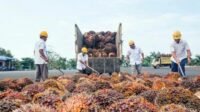
PALMOILMAGAZINE, JAKARTA — The Indonesian government has uncovered a significant leakage in state revenue from one of its most strategic industries. Finance Minister Purbaya Yudhi Sadewa disclosed that at least ten palm oil companies have been detected engaging in under-invoicing practices, reporting export values far below their real transaction prices — in some cases by as much as 50 percent.
The findings emerged from an integrated data analysis conducted by the National Logistics Ecosystem through the Indonesia National Single Window (INSW/LNSW), which consolidates export-import information across multiple ministries and state agencies.
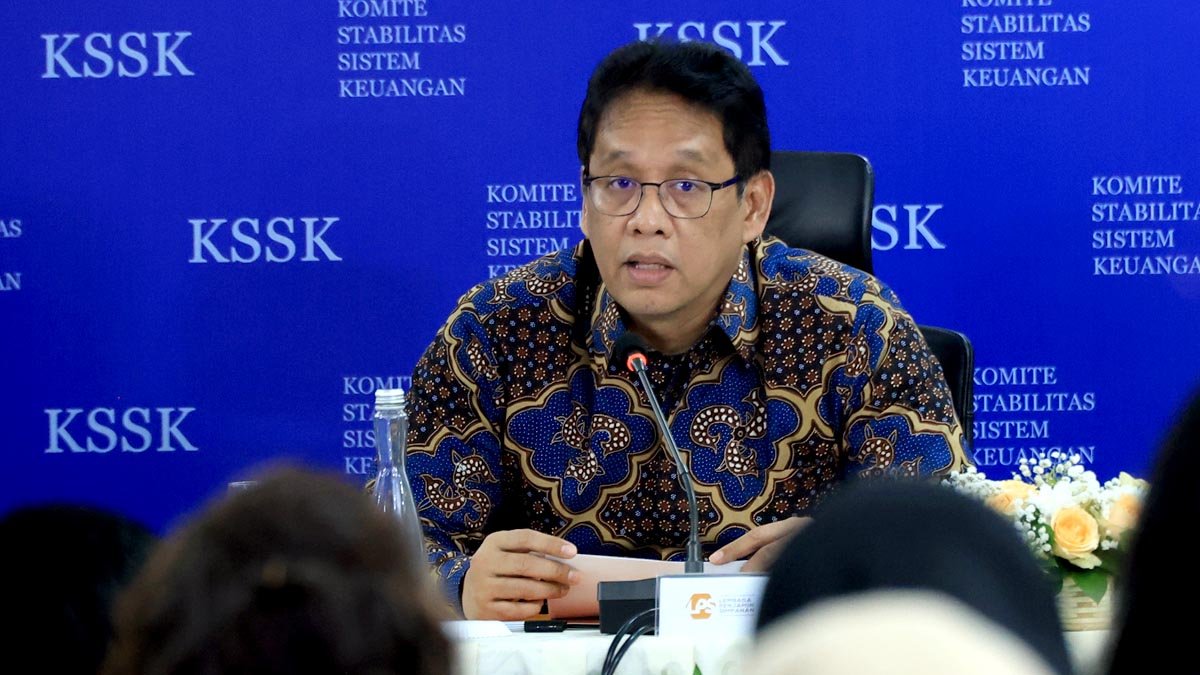
“We can clearly detect palm oil exporters that are under-invoicing their shipments — in some cases cutting reported values by half. We will pursue this seriously, and they will no longer be able to play games,” Purbaya told reporters at the Ministry of Finance office in Jakarta on Thursday (January 8, 2026).
However, the former Chairman of the Deposit Insurance Corporation (LPS) declined to disclose the names of the companies involved, citing that enforcement and investigative processes are still underway.
Beyond palm oil, the finance minister also revealed broader irregularities involving foreign nationals from China operating in the steel and construction materials sectors. According to Purbaya, some businesses were found selling goods directly in cash transactions without collecting or remitting value-added tax (VAT).
“In steel alone, the potential state loss is estimated at over IDR 4 trillion per year. That is enormous and involves many companies,” he said, stressing that firm legal action would follow.
Purbaya expressed concern over what he described as weak early detection by tax and customs authorities, noting that several fully foreign-owned companies had been operating in a “semi-illegal” manner with little oversight.
“What troubles me is how some entirely foreign-owned businesses can operate here as if the tax authorities simply closed their eyes,” he remarked.
He confirmed that President Prabowo Subianto has been fully briefed on the under-invoicing findings, including allegations of negligence by certain officials. Purbaya emphasized his commitment to implementing the president’s directives firmly and measurably.
Also Read: West Java Lawmakers Highlight Oil Palm Expansion Risks, Push for Environment-Friendly Crop Shift
“I have only been in this position for four months. If after six months there is no real implementation, then I should be considered the one who failed. That is why I am making sure we move decisively under the president’s instructions,” he said.
Threat to Domestic Industry
According to the Directorate General of Customs and Excise, under-invoicing is a customs violation in which companies declare import or export values far below actual transaction prices. The practice not only erodes state revenue from duties and taxes, but also distorts domestic markets, allowing imported goods to be sold at artificially cheap prices that undermine local industries.
Indonesia has introduced stricter rules to combat the practice through Finance Ministry Regulation No. 96/2023, which governs customs, excise, and taxation for traded parcels. The regulation implements a self-assessment system supported by penalties and fines if under-invoicing is detected.
With enhanced data integration and a stronger enforcement push, the government says it aims to suppress export and import value manipulation, protect state revenue, and safeguard the competitiveness of national industries. (P2)