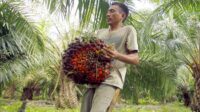
PALMOILMAGAZINE, JAKARTA – The palm oil industry is often measured in production volumes and export figures. Yet behind the millions of tons produced annually lies a deeper story—one of diversity and large-scale social integration.
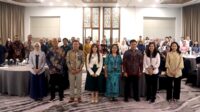
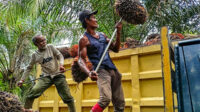
As one of the world’s major plantation companies, PTPN IV PalmCo is home to 69,455 employees from diverse ethnic and cultural backgrounds. Company demographic data as of December 2025 shows that at least 55 ethnic groups are represented across its corporate ecosystem.
The composition mirrors the breadth of the Indonesian archipelago—from Javanese, Batak, Malay, Dayak, Minang, and Bugis communities to representatives from Eastern Indonesia, including Ambon, Flores, and Papua. This diversity has transformed PTPN IV PalmCo into what many describe as a “Miniature Indonesia,” growing within plantation hubs across remote regions.
Also Read: Aceh Jaya Begins Oil Palm Development for Former GAM Combatants
Diversity as a Strategic Corporate Strength
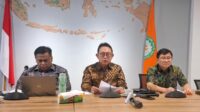
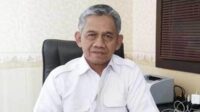
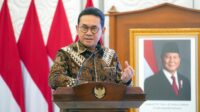
President Director of PTPN IV PalmCo, Jatmiko K. Santosa, emphasized that the company’s pluralistic demographic structure is not accidental. It is a strategic strength consciously managed by leadership.
“PTPN IV PalmCo truly reflects a Miniature Indonesia. Many of our plantations are located in remote areas. Because local populations are limited, workers come from various islands. That is where cultural encounters take place,” said Jatmiko, as quoted by Palmoilmagazine.com from Antara, Thursday
According to Jatmiko, the blending of cultures fosters resilient and complementary work teams. He described how the diligence often associated with Javanese workers combines with the assertiveness and strong spirit of Batak employees, alongside the warmth of Malay culture and the wisdom of local communities.
Also Read: Lampung Authorities Foil Shipment of 5,250 Undocumented Oil Palm Seeds at Radin Inten II Airport
“When these positive traits are integrated with the company’s core values (AKHLAK), the result is an exceptionally productive work culture,” he said.
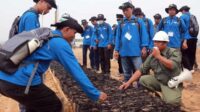
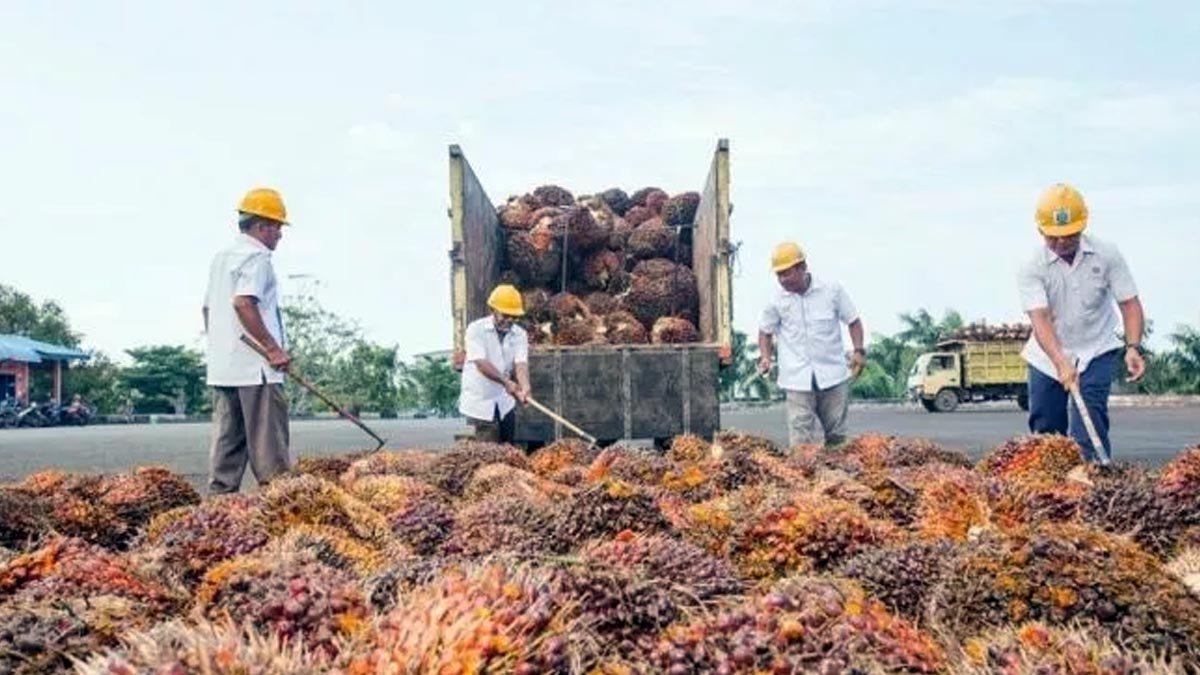
He also highlighted the natural culture of tolerance within plantation operations. During Eid al-Fitr, mills continue operating with support from non-Muslim employees. Conversely, during Christmas, Muslim workers help maintain production continuity. “Operations never stop, and solidarity grows stronger,” he added.
Aligned with Academic and Policy Perspectives
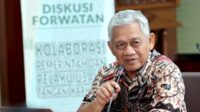
The “Miniature Indonesia” phenomenon within PTPN IV PalmCo aligns with views expressed by Dr. Tungkot Sipayung, Executive Director of the Palm Oil Agribusiness Strategic Policy Institute (PASPI), who frequently underscores palm oil’s role as an engine of economic redistribution.
PASPI’s analysis suggests that the palm oil industry naturally creates new economic growth centers, attracting cross-provincial labor migration. When properly managed, such plural social structures can generate social balancing—reducing conflict potential while promoting competency-based performance.
This approach is also consistent with the Modern Agribusiness System concept advanced by national plantation figure Bungaran Saragih. In this framework, agribusiness competitiveness no longer relies solely on land and technology, but increasingly on strong industrial human capital.
Also Read: Apical Calls for Aligned Standards and Traceability to Accelerate SAF Growth in Asia Pacific
The cultural transformation within PTPN IV PalmCo—integrating 55 ethnic groups into a unified professional entity—reflects a tangible shift from traditional agriculture toward adaptive, globally competitive agribusiness corporations.
Meanwhile, Professor of Agribusiness at IPB University, Bayu Krisnamurthi, has consistently emphasized the importance of social sustainability in meeting global market standards. The harmonization of thousands of workers across ethnicities and religions within PTPN IV PalmCo serves as empirical evidence of commitment to non-discrimination and equal opportunity—key components in sustainability certifications such as ISPO and RSPO.
Strengthened by a Productive-Age Workforce
From a demographic standpoint, the company’s human capital is reinforced by a strong productive-age base. Employees aged 31–40 account for 27% of the workforce, while those aged 41–50 represent 41%.
With a foundation built on cultural diversity and a dominant productive-age workforce, management remains confident that this social capital will serve as a critical driver in supporting national food and energy resilience through palm oil.
Beyond production and export statistics, the story of 55 ethnic groups working side by side within PTPN IV PalmCo reveals another face of Indonesia’s palm oil industry—not merely as a strategic commodity sector, but as a platform for unity and national integration. (P2)