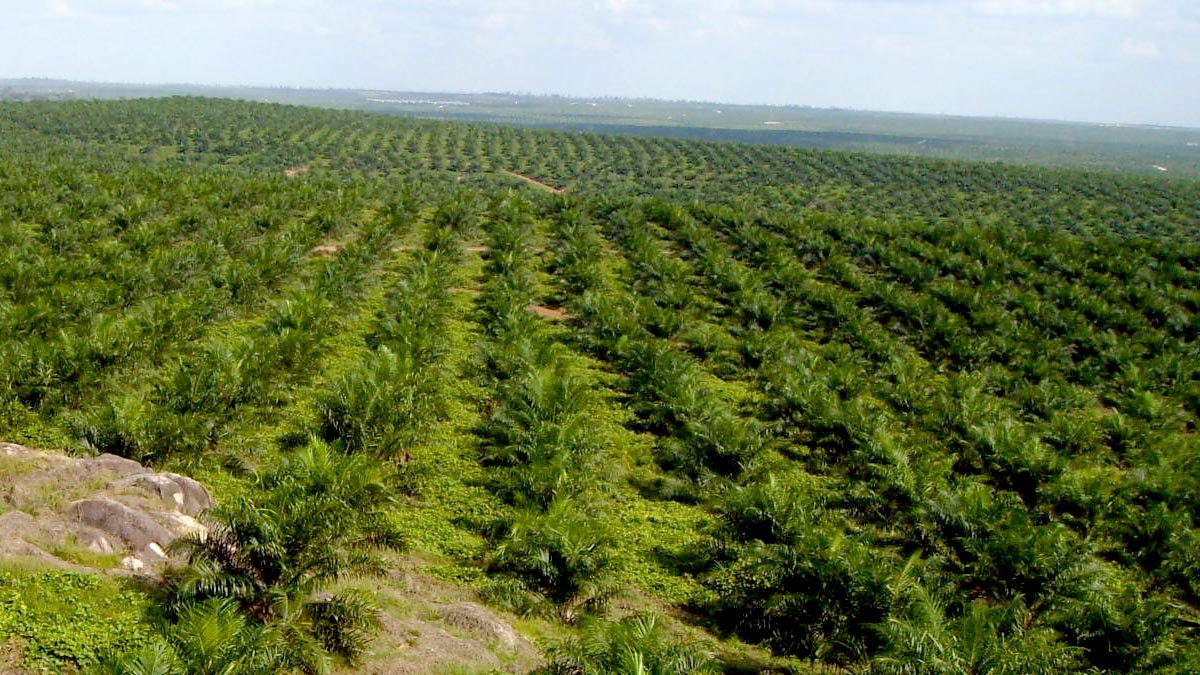
PALMOILMAGAZINE, Jakarta – The Center for Strategic and International Studies (CSIS), together with several non-governmental organizations (NGOs), has released a working paper titled “Cap on Oil Palm Acreage in Indonesia Based on Environmental Carrying Capacity for Decarbonisation Strategies.” The study underscores the importance of limiting oil palm plantation expansion based on environmental carrying capacity to support Indonesia’s national decarbonization strategy.
The paper argues that the transition toward renewable energy is a crucial step for Indonesia, especially as fossil fuels still dominate the country’s energy consumption. The Indonesian government has set a target for renewable energy to account for 44% of the national energy mix by 2030, as part of its commitment under the Just Energy Transition Partnership (JETP).
Palm-Based Biofuel Remains Key to Energy Transition
The report highlights palm oil–based biodiesel as a strategic solution for reducing carbon emissions due to its relatively carbon-neutral characteristics. Oil palm plants absorb carbon dioxide during their growth cycle, helping offset emissions released when biofuel is used.
Indonesia has steadily increased its biodiesel blending mandate, starting from B1 in 2008, expanding to B35 in 2023, and aiming to implement B50 by 2029 as part of efforts to achieve net-zero emissions by 2060.
However, the study warns that expanding oil palm plantations without clear land-use limits based on environmental capacity could create pressure on forests and ecosystems.
Also Read: Palm Acid Oil Gains Ground in Europe Amid Biofuel and Oleochemical Expansion
“Palm oil–based biofuel plays an important role in Indonesia’s decarbonization strategy. Yet without proper land limits guided by environmental carrying capacity, plantation expansion could place additional strain on forests and environmental quality,” the CSIS research team noted in the working paper.
While palm oil remains the primary feedstock for Indonesia’s biofuel program, the study cautions that uncontrolled plantation expansion could increase risks such as deforestation, forest fires, and the degradation of environmental services.
The research found that Indonesia’s forest area has declined by about 11% over the past 19 years, equivalent to 9.79 million hectares. Approximately 32% of this lost forest area has been converted into oil palm plantations, with large-scale industrial plantations contributing more to land conversion than smallholder developments.
The study stresses that achieving national biofuel targets must be accompanied by accurate land-use planning to ensure that forest conservation and climate resilience are not compromised.
Supporting Indonesia’s Emission Reduction Targets
Using the framework of Enhanced Nationally Determined Contribution (ENDC) targets, the research integrates land-use requirements with carbon emission estimates through the Ecological Footprint (EF) Calculator and Support Vector Machine (SVM) modeling.
This approach is designed to ensure that biofuel development aligns with Indonesia’s commitment to reduce greenhouse gas emissions by 31.89% independently, or up to 43.20% with international support by 2030.
Also Read: Indonesia Presses EU to Honor WTO Decision on Palm Oil Trade Dispute
According to the research team, adopting an environmental carrying capacity approach is essential to ensure that increasing biodiesel production from palm oil remains consistent with Indonesia’s climate commitments.
The findings are expected to contribute to the development of sustainable biofuel policies, balancing national energy needs with environmental protection while strengthening the role of the palm oil sector in Indonesia’s energy transition and global climate action. (P2)