PALMOILMAGAZINE, JAKARTA – Agriculture Minister Andi Amran Sulaiman has firmly stated that palm-based cooking oil must remain affordable and readily available in the domestic market, especially as Indonesia enters the Ramadan period. As the world’s largest palm oil producer, he emphasized, Indonesia has no shortage of raw materials to justify price spikes.
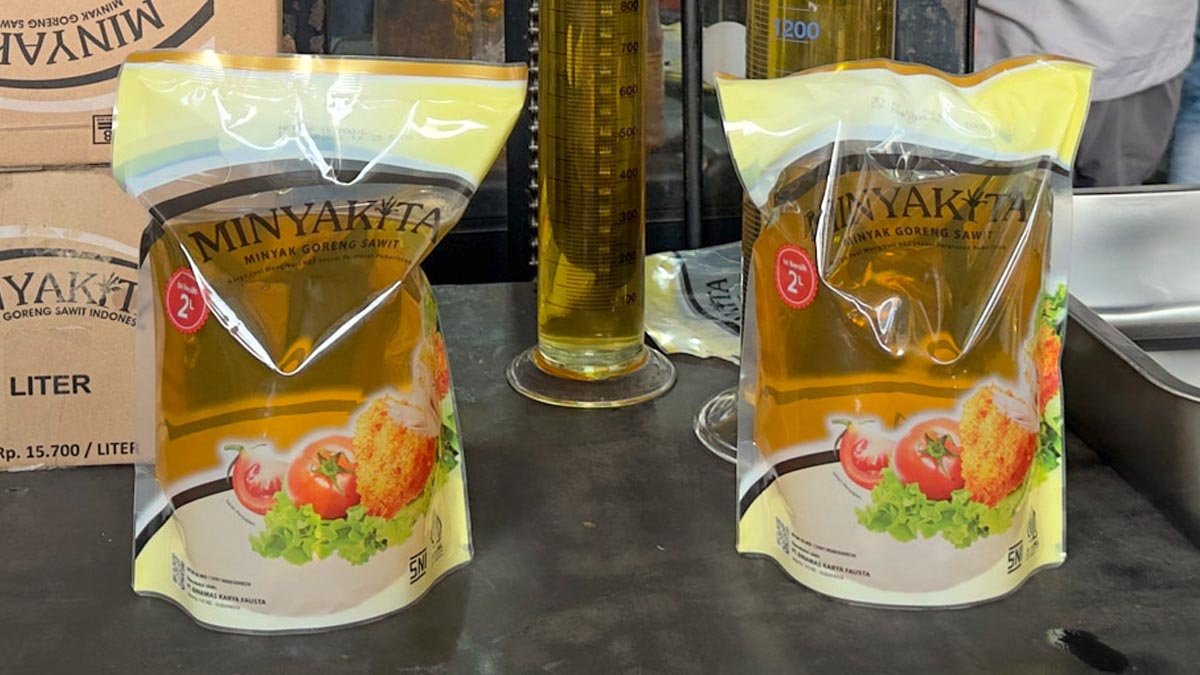
As quoted by Palmoilmagazine.com from Antara on Monday (March 1, 2026), the minister made the remarks during a surprise inspection at Kebayoran Market in Jakarta on Saturday. During the visit, he found that the government-backed cooking oil brand MinyaKita was being sold above its official retail price ceiling (HET).
MinyaKita, which should retail at Rp15,700 per liter, was discovered selling for as high as Rp19,000 per liter. The minister immediately instructed law enforcement authorities to investigate the distribution chain, tracing the issue back to distributors and producers.
Also Read: KPBN and Bursa Malaysia CPO Prices Strengthen Amid Rising Crude Oil Prices and Middle East Tensions
Focus on Distributors and Producers
The minister stressed that enforcement efforts would target distributors and producers rather than small retailers. During the inspection, he even purchased two packs of MinyaKita as evidence to support further investigation.
He described the domestic price increase as an anomaly, noting that global supply and demand dynamics for palm oil and crude palm oil (CPO) remain stable.
Indonesia accounts for approximately 58% of global palm oil production and 56% of global exports. Given this dominance, he argued, there is no rational basis for cooking oil prices to surge in the domestic market.
Also Read: APKSM Strengthens Smallholder Readiness for ISPO and RSPO Certification in West Kotawaringin
Data from Statistics Indonesia (BPS) show that exports of CPO and its derivatives from January to December 2025 reached US$24.42 billion, marking a 21.83% increase compared to US$20.05 billion in the same period the previous year.
These figures underscore the strategic importance of Indonesia’s palm oil industry in the global market—while reinforcing expectations that domestic consumers should also benefit through stable and affordable cooking oil prices.
Through tighter distribution monitoring, sustained market operations, and firm legal action against violations, the government aims to maintain cooking oil price stability, particularly as demand rises during the holy month of Ramadan. (P2)