The land cultivation right for plantations also needs to be strengthened. The omnibus law on job creation, which has been highly praised by foreign investors, does contain provisions for strengthening the legal protection and improving the investment climate. But the current handling of palm oil task-force that downgrading land-cultivation titles (HGU) and Plantation Business Licence (IUP) should be avoided.
In this context we expect that the government handling of the status of 3.3 million ha of oil palm estates which a recent government audit uncovered to operate with shady licences, as their concessions are alleged to overlap with forest areas, should be amicable. After all, this was caused by overlaps of regulations and palm oil companies obtained their HGU legally after the status of the land was certified as clear and clean.
The government also would be well advised not to repeat the mistake of the market-distortion measures it took in the first quarter of 2022 to cope with the skyrocketing cooking oil prices. It is better for the government to take fiscal friendly policies to address wild price fluctuations because fighting against the market mechanism is a futile exercise.
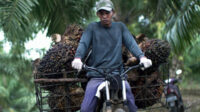
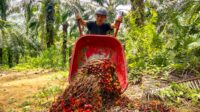
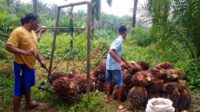
Secondly, about 42 percent of the estimated 16.5 million hectare palm oil plantations acreage is owned by smallholders and more than half of them have been very old with very low productivity. The government has tried to address the problem by financing smallholders’ plantations but it has been able to replant only 15 percent of the 185,000 ha annual target due to unnecessary bureaucracies. Many farmers also are not able to fulfil the administrative requirements to get the government replanting subsidy.
We suggest that the fully-subsidised replanting program be supplemented with a program whereby the government supplies high-yield oil palm seedlings to farmers who actually can financially afford to replant their plantations but cannot do so due to administrative problems. The government also needs to empower smallholders to adopt best farm practices through the expansion of farm extension services.
Thirdly, the government and plantation companies need to cooperate in speeding up the intensification program in oil palm plantations to raise the crop yield which now averages only 11 tons per hectare or just 44 percent of the potential productivity.
Lastly, the EU enforcement of the Deforestation-free Regulation on farm commodities, notably palm oil, cocoa, rubber, wood and those which compete directly with European agricultural products, should jolt the government, palm oil industry and other stakeholders to strengthen their cooperation to improve the governance of sustainable palm oil and to improve Indonesia’s position in the international trade relations.
By : Eddy Martono
Chairman of the Indonesia Palm Oil Association (GAPKI). The views in this article are personal