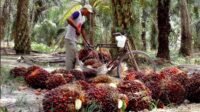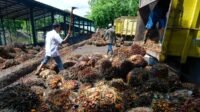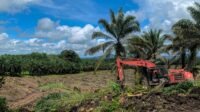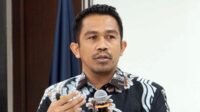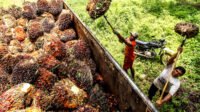
PALMOILMAGAZINE, JAKARTA — The Head of the Center for Law and Conflict Resolution (PURAKA), Ahmad Zazali, has raised concerns over a growing number of agrarian conflicts involving PT Agrinas Palma Nusantara (APN), the state-appointed company managing oil palm plantations seized by the Forest Area Enforcement Task Force (Satgas PKH).
Zazali warned that unresolved disputes across several regions could undermine the government’s law enforcement agenda and national food sovereignty goals, potentially triggering prolonged social tensions.
“Based on developments through late 2025 and early 2026, PT Agrinas Palma Nusantara has been facing conflicts in multiple regions, including Riau, Jambi, Central Kalimantan, and West Kalimantan,” Zazali told Palmoilmagazine.com on Monday (January 26, 2026).
Also Read: Deputy Trade Minister Highlights Traceability and Sustainability in Visit to PT SMART Marunda
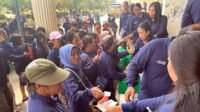
In Riau alone, he noted, the disputes involve indigenous communities such as the Talang Mamak, Sakai, and Tambusai. These cases, he said, serve as a warning that managing seized plantations cannot focus solely on production targets, but must prioritize fair governance and avoid violence on the ground.
In response, Zazali outlined a series of strategic recommendations for President Prabowo Subianto to ensure a comprehensive resolution of conflicts related to plantations taken over by Satgas PKH and managed by Agrinas.
Audit Agrinas’ Operational Partnerships, Involve BPK and the Attorney General
Zazali’s first recommendation is a full evaluation of Agrinas’ Operational Cooperation (KSO) scheme. He urged the President to instruct the Supreme Audit Agency (BPK) and the Attorney General’s Office to conduct an investigative audit into Agrinas’ operations, including the legality of land transfers from Satgas PKH.
Public scrutiny, he said, has highlighted the risk that the KSO model could generate new conflicts and raises questions about Agrinas’ seriousness in managing seized land responsibly. “We must ensure that no new actors merely replace old oligarchies without improving the welfare of surrounding communities,” Zazali stressed.
Also Read: Indonesia Allocates 15.6 Million Kiloliters of Biodiesel for 2026, B40 Mandate Moves Forward
Prioritize Restorative Justice Over Security Approaches
Zazali emphasized that agrarian conflicts cannot be resolved through security-based measures alone. He called on Satgas PKH and Agrinas to prioritize open dialogue and genuine partnerships with indigenous and local communities.
He cited reports of violent incidents in Agrinas’ KSO areas, including an alleged clash in Bengkalis Regency, Riau, which resulted in injuries and damage to vehicles.
Accordingly, Zazali urged a comprehensive remapping of indigenous land rights to ensure communities are not sidelined in the management of seized plantations, but instead recognized as key partners.
Also Read: RSPO–FONAP Reciprocal Membership Marks New Phase of Sustainable Palm Oil Collaboration in Europe
Re-Verify Seized Land Up to One Million Hectares
Transparency and land validation were also highlighted as critical steps. Zazali pointed to the need for a re-verification of land handed over by Satgas PKH to Agrinas, reportedly covering between 674,000 hectares and more than one million hectares.
Such verification, he said, is essential to confirm that the land is truly clean and clear, amid widespread allegations of overlaps with community-owned land that have fueled social friction.
Beyond land issues, Zazali argued that Agrinas’ management structure must also be reviewed. He suggested a management overhaul if serious negligence or repeated failures to address conflicts are identified.
Safeguard Workers’ and Local Communities’ Rights
In his final recommendation, Zazali urged the government to ensure strong protection for plantation workers, indigenous peoples, and local communities affected by the transfer of land management to Agrinas.
He stressed that corporate performance should not be judged solely on financial gains. “The company’s orientation must balance economic achievements with real social impacts on the ground,” he said, referring to reports that Agrinas recorded a net profit of IDR 1.6 trillion in 2025.
Zazali concluded that resolving these conflicts is essential to prevent the national food security agenda under the Asta Cita program from sacrificing the rights of local communities.
He expressed hope that President Prabowo will ensure forest area enforcement policies are implemented with firm legal authority, while remaining fair and empowering for affected communities. “With these measures, the food security mission should not come at the expense of local communities’ rights, but instead strengthen and empower them,” he concluded. (P2)