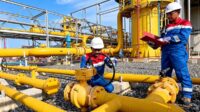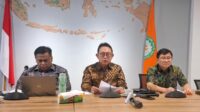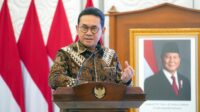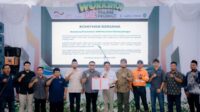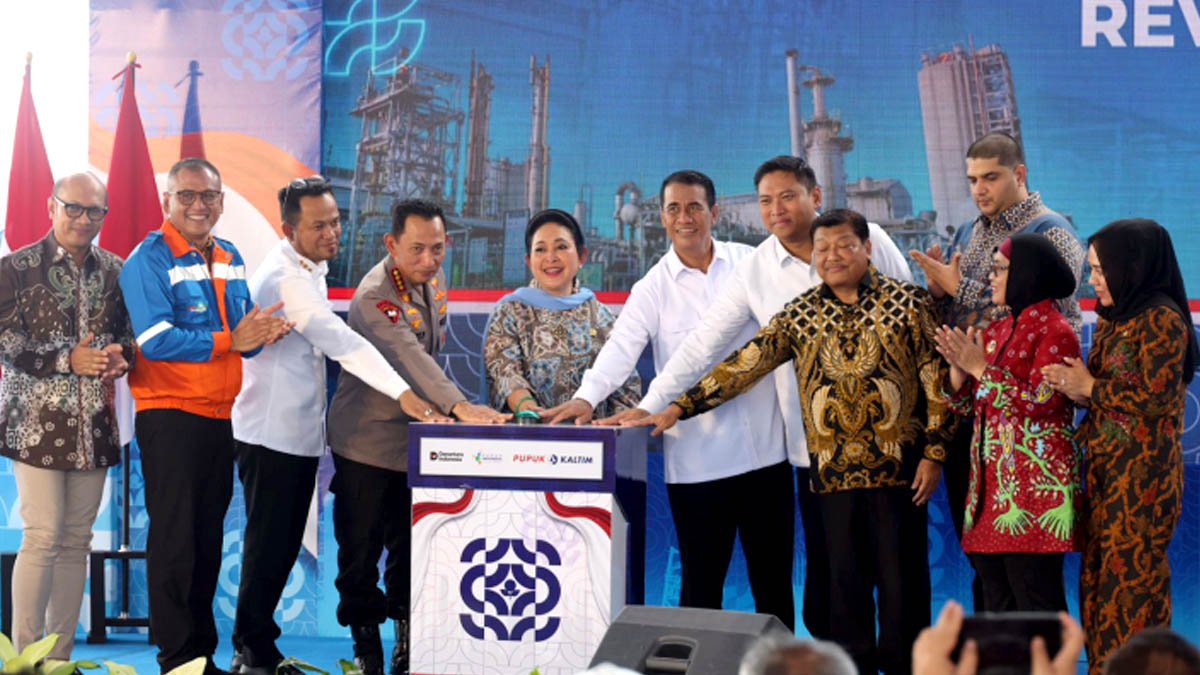
PALMOILMAGAZINE, BONTANG – Indonesia’s Minister of Agriculture Andi Amran Sulaiman attended the inauguration of the revamping of Ammonia Plant-2 at PT Pupuk Kalimantan Timur (Pupuk Kaltim), a subsidiary of PT Pupuk Indonesia Holding Company (PIHC), in Bontang, East Kalimantan, on Thursday (Jan 29, 2026). The project marks a major milestone in strengthening Indonesia’s fertilizer industry through higher efficiency, modern technology, and sustainable operations to support national food self-sufficiency.
Amran stressed that revitalizing fertilizer facilities is a cornerstone of modern and sustainable agriculture. The revamp has delivered an efficiency gain of up to 16%, equivalent to annual cost savings of around IDR 200 billion, while also cutting emissions by approximately 110,000 tons of CO₂ equivalent per year.
According to the minister, upgrading fertilizer plants has a direct impact on boosting national agricultural output, reducing production costs, and reinforcing food security and self-sufficiency.
Also Read: Indonesia Raises February CPO Reference Price, Export Duty and Levy Increase
“This revamp delivers efficiency gains of around 16%. On behalf of 160 million Indonesian farmers, we thank Pupuk Indonesia. Our production has leapt forward, creating a clear delta in output. The additional economic value reached IDR 132 trillion in 2025,” Amran said, as quoted by Palmoilmagazine.com from the Ministry of Agriculture on Monday (Feb 2).
He emphasized that timely availability and adequate supply of fertilizers are decisive factors in agricultural productivity. Even a one-week delay in fertilizer distribution, he warned, can wipe out up to one ton of yield per hectare, significantly affecting farmers’ incomes nationwide.
“If fertilizer delivery is delayed by just one week, farmers can lose one ton of production. In 2023–2024, shortages and delays forced Indonesia to import 7 million tons of fertilizer worth nearly IDR 100 trillion. Thanks to the strong performance of Pupuk Indonesia and Pupuk Kaltim, production has increased and generated value of IDR 132 trillion,” he explained.
Also Read: KPBN Inacom CPO Prices Fall 0.98% on Friday (Jan 30), Malaysian Palm Oil Market Softens
Amran added that, with a stronger domestic fertilizer industry and close coordination across sectors, Indonesia’s food self-sufficiency target could be achieved earlier than the initial four-year timeline. The government, he said, remains committed to accelerating agricultural downstreaming, reducing reliance on imports, and expanding exports of value-added products.
“Our vision is to downstream all agricultural commodities. Stop imports, push exports of finished products. We want Indonesia to influence global markets, become a world food hub, and ensure the prosperity of our farmers,” Amran said.
Meanwhile, Chairwoman of House Commission IV, Siti Hediati Hariyadi (Titiek Soeharto), underlined the fertilizer industry’s strategic role in safeguarding national food sovereignty.
Also Read: Riau Independent FFB Palm Prices Edge Higher in Late January Pricing Period
“From the very beginning, Indonesia has upheld one fundamental principle: we must not depend on other nations for food. That is why the fertilizer industry was built as a strategic state instrument—so our fields remain planted, farmers continue producing, and national food sovereignty is preserved,” she said.
Titiek noted that the revamp of Ammonia Plant-2 goes beyond a technological upgrade. It represents a strategic decision to strengthen food security while transforming the fertilizer industry into one that is more efficient, competitive, and environmentally responsible.
“Modern technology enhances energy and natural gas efficiency while reducing emissions by around 110,000 tons of CO₂ equivalent per year. This proves that industrial development can go hand in hand with environmental responsibility,” she added.
Also Read: Jambi FFB Palm Prices Strengthen in Early February Pricing Period
In the same event, PIHC President Director Rahmad Pribadi explained that the revamp is part of a broader fertilizer industry revitalization plan, which includes the refurbishment and construction of seven plants over the next five years. The program aims to build a more efficient and sustainable fertilizer industry, keep fertilizer prices affordable for farmers, and strengthen the foundations of national food self-sufficiency.
“This revamp is not only operationally important, but also carries strong historical value. Plant-2 was inaugurated on October 29, 1984, by President Soeharto when Indonesia achieved food self-sufficiency. Now it is being revamped at a time when President Prabowo has announced that Indonesia has once again reached food self-sufficiency,” Rahmad said.
Following the revamp, the plant is expected to reduce gas consumption by up to 4 MMBtu per ton of ammonia, cut carbon emissions by around 110,000 tons of CO₂ per year, and deliver further production cost savings through improved efficiency.
With the inauguration of the revamped facility, the government reaffirmed its commitment to strengthening Indonesia’s fertilizer industry as a key pillar of food self-sufficiency. Through technological modernization, energy efficiency, and emissions reduction, the project is expected to drive sustainable agricultural productivity, improve farmer welfare, and enhance Indonesia’s competitiveness on the global stage. (P3)