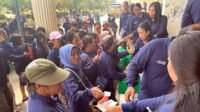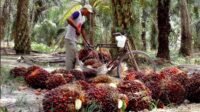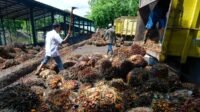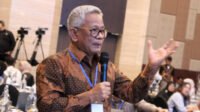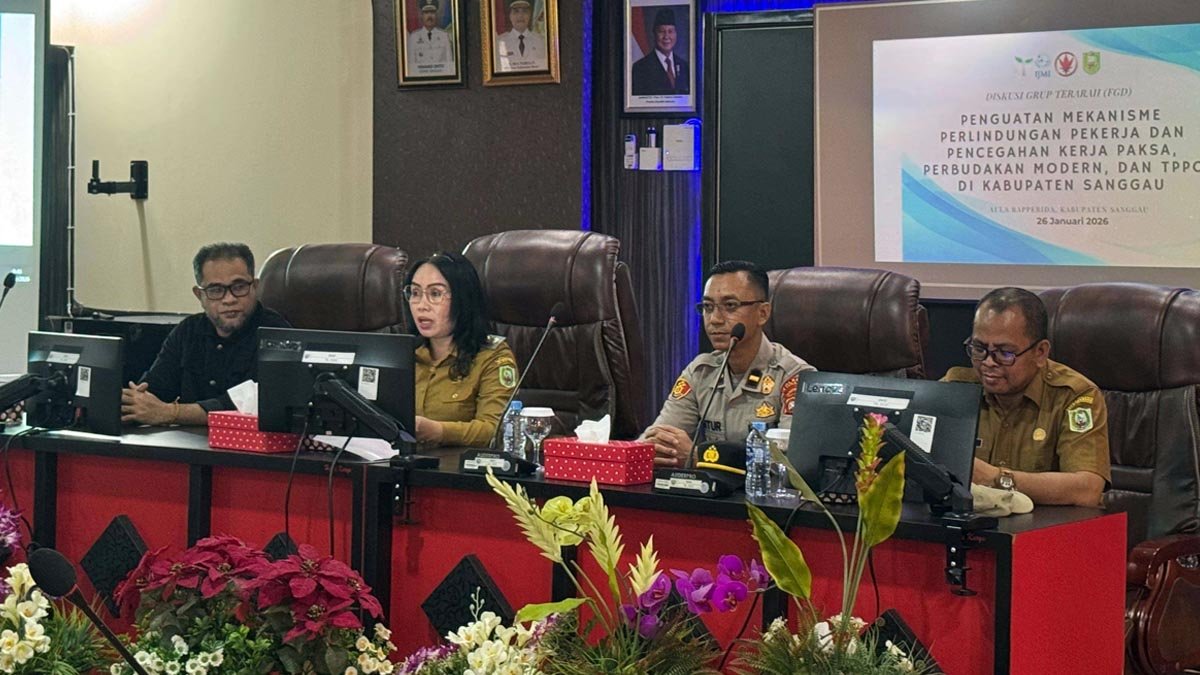
PALMOILMAGAZINE, SANGGAU — The Sanggau Regency Government has reaffirmed its commitment to strengthening labor protection in the palm oil plantation sector, amid persistent vulnerabilities to worker exploitation in remote plantation areas. The issue was highlighted during a Focus Group Discussion (FGD) on Mapping Stakeholders to Strengthen Worker Protection Mechanisms and Prevent Forced Labor, Modern Slavery, and Human Trafficking (TPPO), held at the Bapperida Office Hall of Sanggau Regency on Monday.
The discussion was officially opened by Deputy Regent of Sanggau, Susana Herpena, S.Sos., M.H., who stressed that while the palm oil industry plays a strategic role in both the national and regional economy, it continues to face serious challenges in fulfilling workers’ rights.
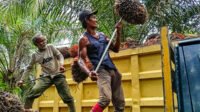
According to Susana, labor protection in plantation areas remains a critical issue, particularly in estates located far from government centers and public services. These conditions, she said, increase the risk of workers facing various forms of vulnerability.
Also Read: Deputy Trade Minister Highlights Traceability and Sustainability in Visit to PT SMART Marunda
“The palm oil sector is strategic for the economy, but labor protection—especially in remote plantations—remains a major challenge,” Susana said, as quoted by Palmoilmagazine.com from the Sanggau Regency Government on Tuesday (January 27, 2026).
She noted that limited access to transportation, worker assistance services, and labor inspections can heighten the risk of exploitation. Such vulnerabilities may range from workplace violence to indications of human trafficking practices.
Susana emphasized that strengthening worker protection mechanisms cannot be carried out by a single institution alone. Cross-stakeholder collaboration, she said, is essential to building a more effective and responsive protection system.
Also Read: Sustainable Palm Oil: A Fatamorgana?
“Stronger synergy among stakeholders is needed to ensure plantation workers do not become a group that is vulnerable to exploitation,” she asserted.
She further explained that Sanggau Regency already has a Task Force for the Prevention and Handling of Human Trafficking (TPPO). Going forward, the task force will be reinforced through the formulation of a Regional Action Plan, which will serve as a working guideline and strengthen coordination at the field level.
Through this FGD, the Sanggau Regency Government hopes to clearly map the roles, authorities, and responsibilities of each stakeholder involved. This, in turn, is expected to make efforts to protect the rights of palm oil plantation workers more focused, structured, and measurable.
Also Read: Indonesia Allocates 15.6 Million Kiloliters of Biodiesel for 2026, B40 Mandate Moves Forward
The local government also underlined that this initiative aligns with Sanggau’s regional development vision—“Advanced, Sustainable, and Just Sanggau”—which places social justice and the protection of vulnerable groups at the core of its development agenda.
On the same occasion, the Sanggau Regency Government expressed its appreciation to Teraju Indonesia and the Integritas Justitia Madani Indonesia Foundation (IJMI) for facilitating the forum. The administration described the FGD as a concrete example of collaborative support in strengthening the protection of workers’ rights in the palm oil sector. (A3)