

PALMOILMAGAZINE, JAKARTA — Palm oil is increasingly being viewed as more than just an agricultural commodity, evolving into a strategic instrument within the global geopolitical and geoeconomic landscape. As the world shifts from fossil-based energy toward renewable sources, palm oil’s strategic relevance in international relations is becoming more pronounced.
This view was expressed by Prof. Zulkarnain, a lecturer at the Faculty of Agriculture, Mulawarman University, and Coordinator for East Kalimantan–North Kalimantan of the Indonesian Palm Oil Community, during a seminar at UPN Veteran Yogyakarta on January 22, 2026.
According to Prof. Zulkarnain, in today’s global economic dynamics, agricultural commodities are no longer perceived solely as production outputs to meet basic needs. Instead, they have become strategic instruments that shape power relations among countries. The global energy transition has pushed plant-based commodities, including palm oil, into the arena of international political and policy competition.
Also Read: PalmCo Boosts Smallholder Partnerships, Absorbs 3.25 Million Tons of FFB in 2025
“The shift from fossil energy to renewable energy has transformed agriculture’s geopolitical and geoeconomic position into that of a strategic commodity influencing global geopolitics. Palm oil is now part of an international contest of interests,” he said.
Palm Oil Dominance Triggers Global Regulatory Pressure
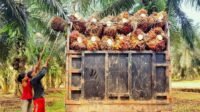
Prof. Zulkarnain explained that palm oil is the world’s largest contributor to global vegetable oil supply, with productivity levels far exceeding comparable commodities. Its role is critical across food, energy, and global manufacturing industries.
However, this dominance has also made palm oil a target of criticism, tighter regulations, and policy disputes at the international level. Such pressures, he noted, are a clear indication that palm oil has transformed into a global strategic issue, rather than merely a plantation commodity.
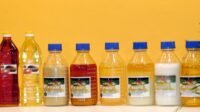
He added that the number of major global vegetable oil producers is relatively limited, while Indonesia holds a distinct advantage due to its ability to produce vegetable oils year-round—particularly palm oil and its wide range of downstream products.
Constitutional and Legal Basis for Strategic Status
In his presentation, Prof. Zulkarnain emphasized that constitutionally, commodities related to food and energy are directly linked to the livelihood of the people. As such, palm oil deserves to be recognized as a national strategic commodity under state control.
He referred to the 1945 Constitution of the Republic of Indonesia, notably Article 33 paragraph (2), which states that vital production sectors affecting the lives of the people shall be controlled by the state, and Article 33 paragraph (4), which mandates that the national economy be organized based on economic democracy, sustainability, and self-reliance.
Also Read: Indonesia Allocates 15.6 Million Kiloliters of Biodiesel for 2026, B40 Mandate Moves Forward
In addition, food security aspects are governed by Law No. 18 of 2012 on Food, while the use of palm oil as a feedstock for renewable energy is linked to Law No. 30 of 2007 on Energy and its implementing regulations.
Palm Oil Seen as Strengthening Economic Sovereignty
Based on various technical, environmental, social, cultural, and economic studies, palm oil plantations are widely regarded as having a positive impact on regional and national economic development, as well as on community livelihoods. These benefits are also seen as strengthening Indonesia’s bargaining position in the global geoeconomic arena.
Against this backdrop, academics are calling for cross-disciplinary collaboration among experts to formulate and propose a policy framework urging the government to explicitly designate palm oil as a national strategic commodity within Indonesia’s legal and regulatory system.
Such a designation is considered crucial as a long-term policy foundation to reinforce food and energy sovereignty, while enhancing the competitiveness of Indonesia’s economy based on domestic resources. (P2)