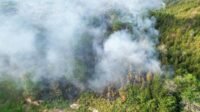
The latest waves of wildfires again speak volumes about the need for common actions to prevent land and forest fires. Blaming and vilification of particular farm commodities, such as palm oil in the tropical region of the Global South for fires and haze is a big blunder.
The world has committed to preventing the increase in temperatures to 1.5 degrees Celsius above pre-industrial levels to stave off severe climate disruption that could exacerbate hunger, conflict and drought worldwide. The United Nations Framework Convention on Climate Change (UNFCCC) recognizes the Common but Differentiated Responsibilities and Respective Capabilities (CBDR–RC) that acknowledge the different capabilities and differing responsibilities of individual countries in addressing climate change. This UN institution also acknowledges that developed countries have been developing, deforesting and emitting carbon much for much longer.
Read More : Sampoerna Kayoe inaugurated Ecotourism in Jambi: Fulfilling Environmental Commitment
Therefore, developed countries and the Global North are committed to achieving net-zero emissions by 2050, such as the US, Canada and the European Union. While the Global South varies between 2060 and 2070, Indonesia and China have pledged to achieve it by 2060, while India has set a more pragmatic target of 2070.
How to achieve net-zero emissions when all the blame is directed at the Global South?
The current environmental and climate crisis calls for non-discriminatory action and shared responsibility to address the issues. Scapegoating any particular party will not solve the problems. The most effective way is to craft global and regional cooperation to address the root causes and help prevent recurrences.
The case also is a reminder that Indonesia and Malaysia may soon go into an El Nino cycle, which may cause forest fires and transboundary haze. Historically, when forest fires have occurred, the palm oil industry has been an easy target of the blame. With built-in perceptions and pressure from environmentalists, palm oil companies will be subject to allegations and investigations by law enforcement bodies. Sometimes, false accusations will cost companies dearly in terms of reputation and financial losses.