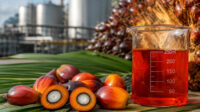
PALMOILMAGAZINE, JAKARTA – Indonesia’s smallholder palm oil replanting program (Peremajaan Sawit Rakyat/PSR) is increasingly viewed as the most realistic strategy to sustain the growth of the national palm oil industry amid limited land availability and mounting global pressure against plantation expansion. The government believes improving smallholder productivity is essential to supporting the country’s food and energy security agenda, including the B50 biodiesel program.
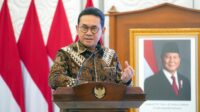
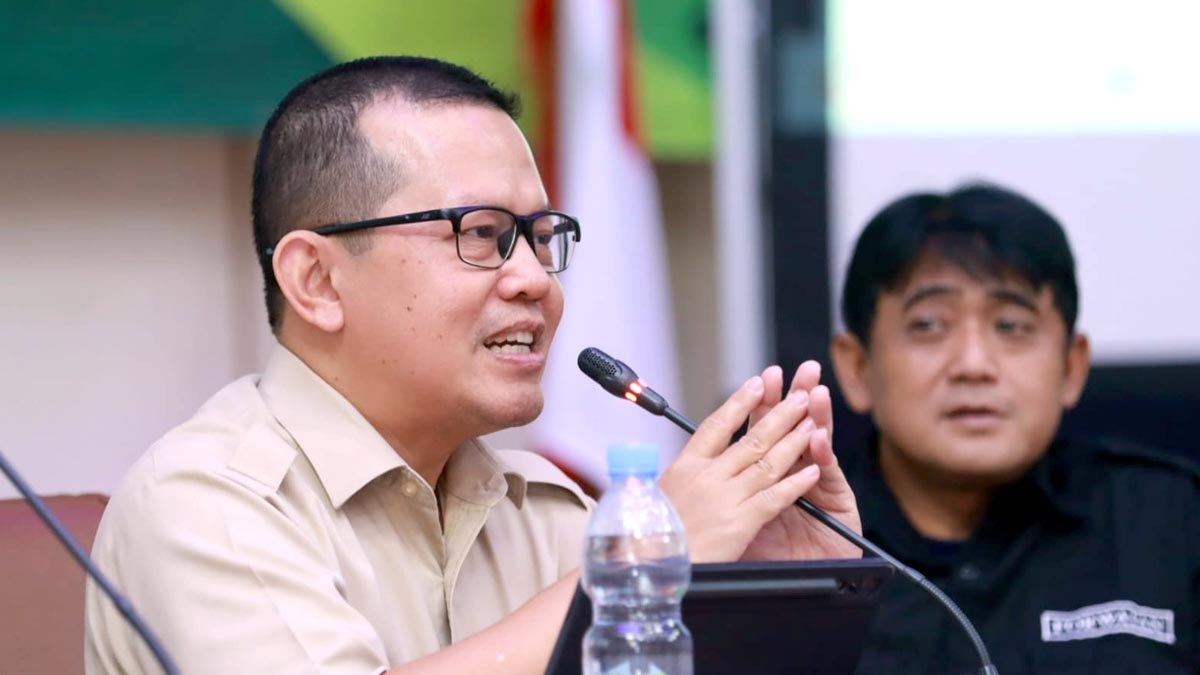
Iim Mucharam, Director of Oil Palm and Palmae Crops at the Ministry of Agriculture, said further expansion of oil palm plantations is becoming increasingly difficult due to limited land resources and growing international scrutiny over new land clearing.
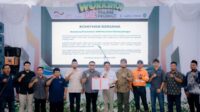
“Expansion is no longer possible because land is limited and there is international pressure along with various global issues. That is why PSR has become the key,” Iim said during a discussion organized by the Agricultural Journalists Forum (Forwatan) titled “Mandatory PSR: A Solution to Boost Productivity” at the Ministry of Agriculture in Jakarta on Tuesday (19/5/2026), attended by Palmoilmagazine.com.
Also Read: KPBN CPO Prices Rise to IDR15,300/kg as Global Crude Oil Rally Supports Palm Market
According to Iim, Indonesia still has significant room to increase national palm oil production because around 41% of the country’s oil palm plantations belong to smallholders. Government data shows Indonesia’s total oil palm plantation area reached 16.8 million hectares in 2025, with approximately 51% managed by private companies and the remainder dominated by smallholder farmers.
“Just imagine, 41% of 16 million hectares represents enormous potential,” he said.
The government recorded that total technical recommendations for the PSR program have reached 423,305 hectares. Of that figure, land clearing and chipping activities covered 316,359 hectares, while replanting realization reached 295,691 hectares.
Also Read: Government Prioritizes BPDP Support for ISPO-Certified Palm Oil Smallholders
To accelerate the program, financial support from the Plantation Fund Management Agency (BPDP) has continued to increase. Replanting assistance, which stood at IDR 25 million per hectare during 2017–2019, rose to IDR 30 million per hectare between 2020 and August 2024, before increasing further to IDR 60 million per hectare starting September 2024.
Despite the larger funding support, Iim emphasized that the PSR program was originally designed as a voluntary initiative. As a result, proposals to make PSR mandatory would still require stronger regulations and broader coordination among ministries and institutions.
“It cannot immediately become fully mandatory because there are still regulatory and other unresolved issues,” he explained.
Also Read: West Kalimantan FFB Prices Rise in Second Half of May 2026, Prime-Age Trees Reach IDR 3,705.96/Kg
He admitted that PSR implementation has consistently fallen short of government targets. Annual targets were eventually adjusted to around 50,000 hectares to make them more realistic.
“We have to be objective. The funds are actually available through BPDP, but many factors are preventing the program from running optimally,” he said.
According to Iim, land legality issues, overlapping forest-area classifications, and weak smallholder data remain major obstacles to accelerating the PSR program. The government is also still struggling to obtain comprehensive and detailed data on independent oil palm farmers.
Also Read: Malaysia’s Palm Oil Stocks Rise to 2.30 Million Tons in April 2026 as CPO Output Surges
“When the President pushes for B50 biodiesel targets and higher productivity among smallholders, compared to opening new land, this is clearly a much longer-term challenge,” he said. (P3)