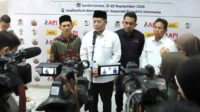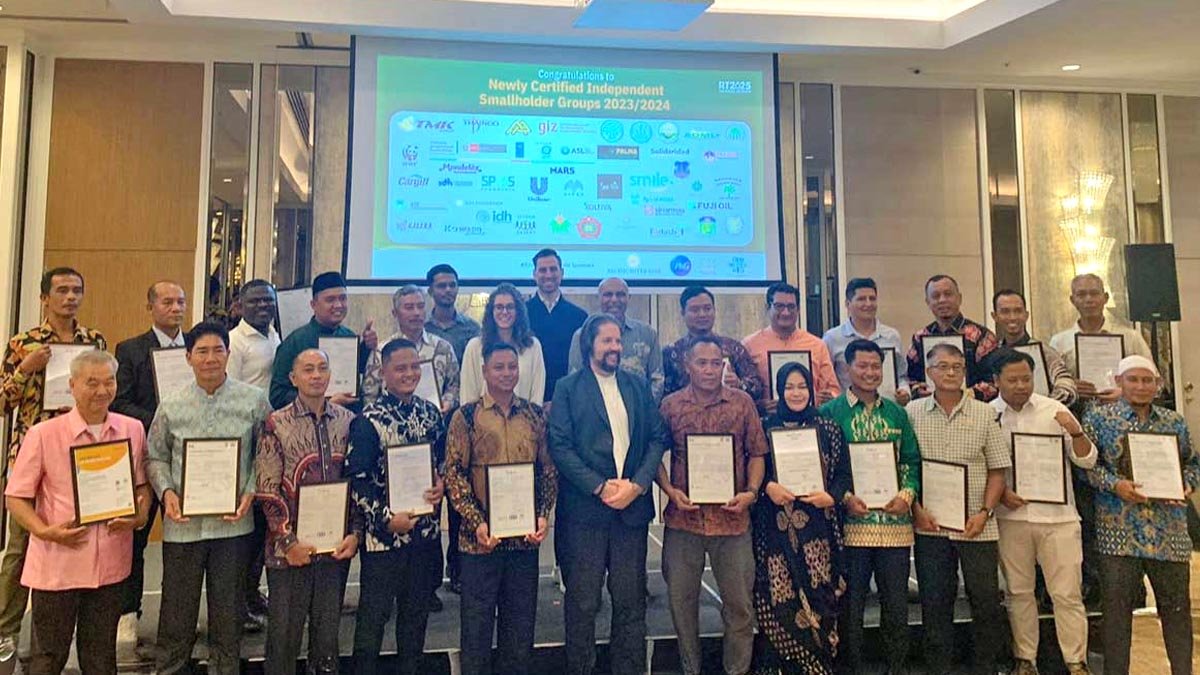
PALMOILMAGAZINE, KUALA LUMPUR — Who would have thought that the journey of a trader and independent palm oil farmer from Subulussalam, Aceh, would one day reach an international stage? That’s the inspiring story of Risniati Tarigan, who stood proudly on stage at the Roundtable on Sustainable Palm Oil (RSPO) Conference in Kuala Lumpur this week.
Representing CV Perangin-angin Group (CV PAG) — a farmer cooperative of 299 independent smallholders managing over 650 hectares of sustainable oil palm plantations — Risniati received the RSPO certification that officially recognizes their commitment to sustainability.
This certification signifies more than just compliance; it’s proof that their palm oil is legal, deforestation-free, socially responsible, and environmentally sound. CV PAG is now the third farmer group certified under Sinar Mas Agribusiness and Food’s Sawit Terampil program, following successful certifications in North Aceh (2023) and Langkat, North Sumatra (2024). Altogether, over 800 smallholders managing 1,600 hectares have now achieved certification through this initiative.
Also Read:
Opening Access to Sustainable Markets
Independent smallholders produce nearly half of Indonesia’s total palm oil output. Yet many still face long-standing challenges — unclear land legality, limited technical knowledge, and lack of access to certified markets.
This is where Sawit Terampil steps in. The program helps farmers improve agricultural practices, secure land legality through the Smallholder Cultivation Registration (STDB), and prepare for RSPO certification.
Run by Sinar Mas Agribusiness and Food, Sawit Terampil offers more than short-term training — it provides long-term mentorship. By adopting Good Agricultural Practices (GAP), smallholders are guided to boost productivity, cut production costs, and strengthen their farmer organizations.
“Our harvests are now better, costs are lower, and our farmer organization has become stronger,” said a member of CV PAG, as quoted in an official statement received by Palmoilmagazine.com on Thursday (November 6, 2025).
Also Read: Close the Gap: Support Certified Smallholders through Direct Buying and Fair Credit Purchases
Risniati’s Journey: From Trader to Empowered Farmer
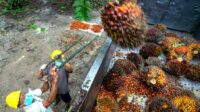
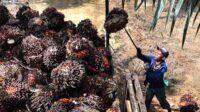
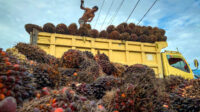
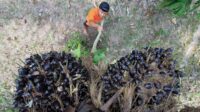
Risniati wears two hats — she manages her own farm while also serving as a fresh fruit bunch (FFB) trader, collecting FFB from nearly 100 smallholders in Subulussalam.
“As a farmer, I want to produce better-quality fruit that won’t be rejected by mills. High-quality fruit means better prices for both farmers and traders,” she explained.
For her, the Sawit Terampil training is not just about quality standards but also about how to grow better fruit from their own farms. “Now, everything is more transparent between farmers and collectors. FFB prices depend on quality — and that motivates us to keep improving,” she added.
Sinar Mas’ Commitment to Empowering Smallholders
By 2025, Sinar Mas Agribusiness and Food has trained over 11,000 smallholders through Sawit Terampil as part of its Collective for Impact sustainability framework. The goal is to reach 100,000 independent farmers by 2035.
According to Helena Delima Lumban Gaol, Head of Smallholder Innovation at Sinar Mas Agribusiness and Food, consistent support is crucial:
“Sawit Terampil proves that smallholders need more than just short-term training. They need partners who walk alongside them — improving practices, securing legality, and opening access to certified markets. This collaboration not only improves livelihoods but also supports RSPO’s mission to make sustainable palm oil accessible for all.”
About Sinar Mas Agribusiness and Food
Under the umbrella of Golden Agri-Resources (GAR), Sinar Mas Agribusiness and Food is one of the world’s largest palm oil companies, with over half a million hectares of plantations, including plasma schemes. The company runs an integrated supply chain, from cultivating and processing fresh fruit bunches (FFB) to producing downstream products such as cooking oil, margarine, shortening, and biodiesel.
Founded in 1996 and listed on the Singapore Exchange since 1999, GAR had a market capitalization of USD 2.5 billion as of June 2025. Its subsidiary PT SMART Tbk has been listed on the Indonesia Stock Exchange since 1992.
The story of Risniati and CV PAG is a powerful reminder that sustainable palm oil is not just an industry slogan — it’s a living, growing movement rooted in smallholder farms across Indonesia, bringing fairness, opportunity, and hope to communities ready to embrace change. (P2)