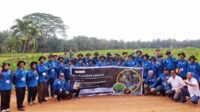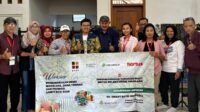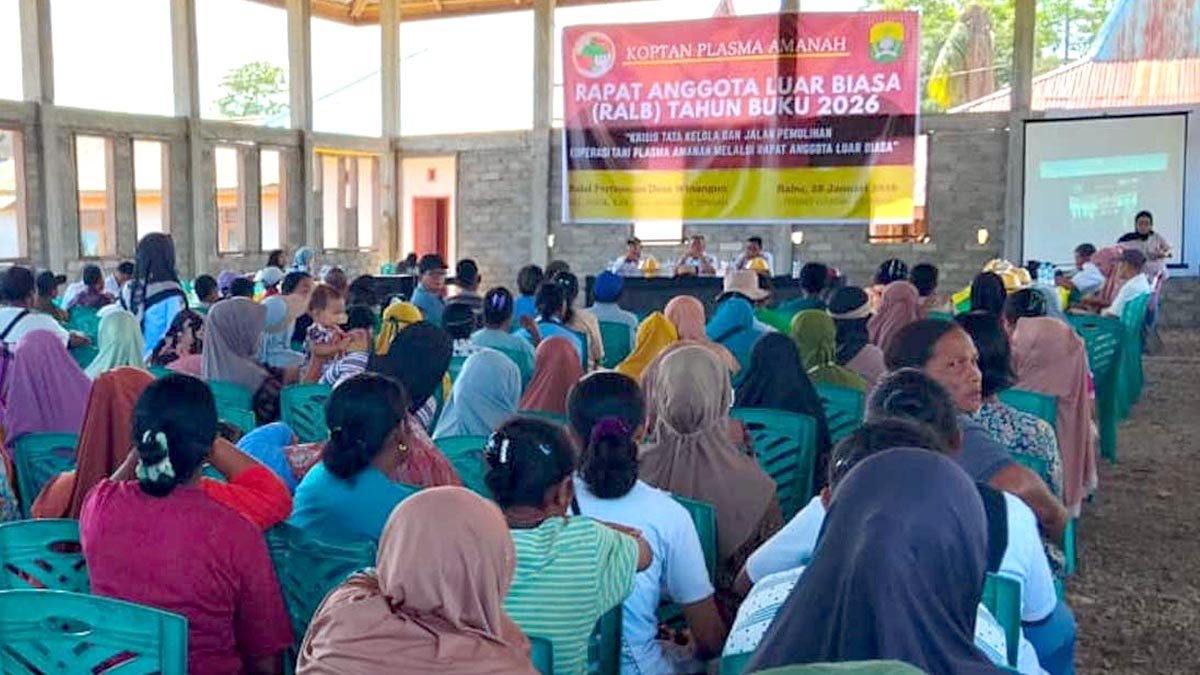
PALMOILMAGAZINE, BUOL — An Extraordinary Members’ Meeting (RALB) of the Amanah Plasma Farmers Cooperative, held at the Winangun Village Hall in Bukal Sub-district, Buol Regency, Central Sulawesi, on Wednesday (January 28, 2026), marked a critical turning point for members seeking to overhaul the governance of the palm oil plasma cooperative after years of what they described as an accountability crisis.
The RALB was convened after a majority of members concluded that the previous management had failed to fulfill the cooperative’s basic obligations, particularly the regular and transparent conduct of the Annual Members’ Meeting (RAT). For more than three years, members had repeatedly pushed for the RAT to be held—both directly to the management and through facilitation by village, sub-district, and regional governments—but those efforts produced no results.
One member emphasized during the forum that the RALB was not driven by personal conflict, but rather by an organizational correction. According to the member, the objective was to return the cooperative to its foundational principles and ensure compliance with prevailing laws and regulations.
Also Read: PalmCo Boosts Smallholder Partnerships, Absorbs 3.25 Million Tons of FFB in 2025
As stated in an official release cited by Palmoilmagazine.com on Sunday (February 1, 2026), the process leading up to the RALB involved a lengthy series of steps. The formation of the organizing committee stemmed from a members’ meeting facilitated by the Bukal sub-district administration on January 12, 2026. During that meeting, members collectively agreed that an extraordinary meeting was the legitimate mechanism to rescue the cooperative from prolonged management stagnation.
The committee then distributed invitations to all members in Winangun and Mooyong villages. Invitations were delivered directly, announced through local media, and published online. To maximize participation, members who were unable to attend in person were also given access via the Zoom platform.
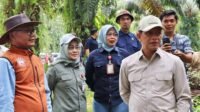
The RALB ran from 10:00 a.m. to 3:57 p.m. Central Indonesia Time (WITA) and was attended by regional government representatives, including the heads of Winangun and Mooyong villages, the Head of Bukal Sub-district, the Head of the Buol Regency Cooperative Office, and the Regional Secretary of Buol Regency. Their presence was seen as providing legitimacy to the meeting while ensuring it proceeded in accordance with applicable regulations.
Also Read: PT Pipit Citra Perdana Distributes SHP to Plasma Cooperative, 2025 Performance Turns Positive
During the opening session, participants ratified the meeting’s rules of procedure and elected the chair of the session. The organizing committee also presented the legal basis and chronology behind the failure to hold RATs in recent years, including a formal rejection of the RAT conducted on January 19, 2026. The forum deemed that meeting procedurally flawed, citing shortcomings in member participation, transparency, and compliance with the cooperative’s bylaws (AD/ART).
The core agenda of the RALB was the election of new management and a supervisory board. The election was conducted openly and led by the session chair approved by the forum. As a result, the meeting appointed Seniwati, S.Si as Chair, Boyadi as Vice Chair, Kasmir Is Makakeno as Secretary, Heronimus Leo as Deputy Secretary, and Marsowan as Treasurer.
The Supervisory Board was also formed, with Japardin appointed as Chair, alongside members Rafael Raja and Akarius Sambu.
The newly elected management immediately received a mandate from the forum to carry out an administrative and financial audit, inventory cooperative assets, and reorganize membership data. They were also tasked with advocating for members’ economic interests within the palm oil plasma partnership scheme, which many members believe has yet to deliver fair outcomes for smallholder farmers.
For members, the RALB represented more than a leadership reshuffle—it marked a decisive moment in institutional reform. They expressed hope that the cooperative would once again function as a transparent, member-oriented collective economic vehicle that genuinely serves farmers’ interests.
The RALB of the Amanah Plasma Farmers Cooperative stands as an example of how internal cooperative mechanisms can be used as a legitimate means of correction when management is deemed to have strayed from its mandate. Through a formal and participatory forum, members sought to reclaim control of their economic organization in a lawful and democratic manner. (P2)