PALMOILMAGAZINE, JAKARTA — The Indonesian Palm Oil Smallholders Forum Association (POPSI) has welcomed President Prabowo Subianto’s statement describing palm oil as a “miracle crop,” saying the recognition reflects the commodity’s strategic role in generating a wide range of downstream products and supporting national priorities, including food and energy self-sufficiency.
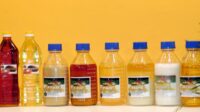
POPSI noted that palm oil underpins numerous everyday products—from biscuits and cooking oil to soap and wall paint—while also playing a vital role in Indonesia’s renewable energy agenda.
POPSI Chairman Mansuetus Darto said praise for palm oil is not new. However, he argued that positive rhetoric about the industry’s strategic importance has yet to be fully matched by state policies on the ground, particularly toward small-scale farmers.
Also Read: West Java’s Palm Oil Debate: POPSI Warns Farmers at Risk Without Mill Support
“There have been many speeches praising how important and strategic palm oil is. But in practice, state policies toward palm oil smallholders do not yet reflect the same level of appreciation,” Mansuetus said in a statement received by Palmoilmagazine.com on Thursday (Feb 5, 2026).
He stressed that recognizing palm oil as a miracle crop must be accompanied by concrete protection of farmers’ rights, as well as safeguards for economic and environmental sustainability.
“If palm oil is considered the backbone of energy and food security, then palm oil farmers—especially smallholders—must be the most protected,” he said.
Rising Uncertainty for Smallholders
Mansuetus warned that smallholders are currently facing growing uncertainty. POPSI has recorded an increasingly bleak situation for smallholder palm oil cultivation, driven by plantation and harvest seizures that often occur without dialogue or comprehensive resolution.
He highlighted four critical issues. First, the practice of plantation seizures, which he said should be preceded by dialogue and the offering of solutions, particularly in cases involving forest area claims. Spatial planning references and land status, he argued, must be clear, non-overlapping, and respectful of community rights, including those of Indigenous peoples.
Also Read: Bappenas and CSES Seal MoU to Accelerate Low-Emission and Sustainable Palm Oil Development
Second, Mansuetus pointed to escalating social conflicts on the ground without adequate resolution mechanisms. Many disputes, he said, involve local communities and operational cooperation partners (KSO), yet transparent, swift, and fair conflict-resolution frameworks remain lacking.
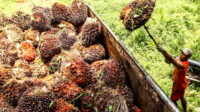
Third, smallholder plantations are being swept up in seizure actions. Farms that have long served as the primary source of household income are directly affected.
“For smallholders, the seizure of plantations means cutting off livelihoods and paralyzing the rural economy,” Mansuetus said.
Also Read: PalmCo Boosts Smallholder Partnerships, Absorbs 3.25 Million Tons of FFB in 2025
Fourth, POPSI raised concerns over governance within KSO arrangements, citing a lack of transparency and accountability. The association questioned the credibility standards applied to KSO operators managing seized plantations, including transparency in the handling of escrow funds.
“Does the state truly receive the remaining funds after KSO deductions? We must ensure that temporary management of plantations with unresolved legal status does not lead to leakage and even greater losses for the state,” he said.
Turning Rhetoric into Policy Action
Previously, President Prabowo Subianto reaffirmed that palm oil is a national strategic commodity, playing a major role in driving economic growth, strengthening energy security, and reinforcing Indonesia’s position in the global supply chain. He described palm oil as a miracle crop due to its broad benefits and high economic value.
For POPSI, the statement should serve as a turning point—ensuring that palm oil’s “miracle” is reflected not only in export figures and foreign exchange earnings, but also in fair and tangible benefits for smallholder farmers across Indonesia.
“The true measure of palm oil as a miracle crop lies in whether its benefits are shared justly, especially with the smallholders who sustain the industry at its roots,” Mansuetus concluded. (P2)