PALMOILMAGAZINE, JAKARTA – Solidaridad Indonesia, a civil society organization active in the upstream palm oil sector, has reaffirmed its commitment to supporting smallholder farmers in obtaining Indonesian Sustainable Palm Oil (ISPO) certification.
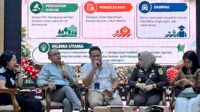
According to Edy Dwi Hartono, Head of Program Development at Solidaridad Indonesia, the level of ISPO certification among smallholders remains very low. “Only about 1 percent of the total 2.5 million smallholder farmers—managing around 6.9 million hectares of land—have achieved ISPO certification. This is a major challenge that we must address together,” he stated during a Forum Wartawan Pertanian (Forwatan) discussion in Wisma Tani Jakarta on Wednesday (June 4, 2025), as reported by Palmoilmagazine.com.
Solidaridad currently operates in several key regions, including West, Central, and East Kalimantan, as well as Lampung. While the organization also supports other commodities, palm oil remains its primary focus.
Also Read:
Through the Reclaim Sustainability project, Solidaridad assists farmers in adopting sustainable practices, improving both plantation governance and compliance with ISPO and RSPO certification requirements. Between 2019 and 2024, the organization trained 24,687 farmers. It also mapped 6,929 land parcels covering a total of 8,955 hectares and facilitated the issuance of 4,862 Cultivation Registration Letters (STDB).
In terms of certification outcomes, Solidaridad reported that 220 assisted farmers have obtained ISPO certification to date. Meanwhile, 1,023 farmers have been certified under RSPO, and 2,463 under Regen Agri.
Solidaridad also supports the implementation of Presidential Regulation No. 16 of 2025 on ISPO, particularly by strengthening multi-stakeholder collaboration and enhancing smallholder readiness. In West Kalimantan, for example, the organization partners with the Keling Kumang Credit Union Cooperative, SPKS (Indonesian Oil Palm Smallholders Union), and local farmer associations to build institutional capacity toward certification.
Regarding funding (Article 16), Solidaridad offers support through training and land mapping but currently lacks financial resources to cover certification audit costs. “We hope the Palm Oil Plantation Fund Management Agency (BPDPKS) can accelerate the certification process by providing funding support,” Edy added.
As part of its capacity-building efforts (Article 3), Solidaridad regularly organizes focus group discussions (FGDs) and field schools to improve farmers’ understanding of sustainable cultivation, including social and environmental aspects.
In the area of policy advocacy (Article 23), Solidaridad collaborates with Apkasindo, SPKS, and the Keling Kumang Consortium. Through initiatives such as Recruitability, it facilitates stakeholder dialogue—including with PPHBUN and BPDPKS—to promote ISPO certification acceleration.
“National-level understanding of ISPO is fairly strong. However, significant gaps in awareness still exist at the regional level,” Edy concluded. (P3)