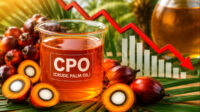
PALMOILMAGAZINE, JAKARTA – Global crude palm oil (CPO) prices came under renewed pressure at the start of the week, reflecting broader weakness across energy and vegetable oil markets. On the Bursa Malaysia Derivatives, the benchmark CPO futures contract posted a notable decline, driven by negative external sentiment.
According to Reuters, the June delivery CPO futures contract fell by RM81 per ton, or 1.78%, to RM4,474 per metric ton during Tuesday’s (April 15, 2026) midday trading session. The drop extends a downward trend largely influenced by global macro factors.
A key driver behind the decline was the weakening of global crude oil prices. Brent crude oil slipped 0.99% to US$98.38 per barrel, reducing palm oil’s competitiveness as a biodiesel feedstock. Lower fossil fuel prices tend to dampen demand for biofuels, putting additional pressure on palm oil markets.
Also Read: Strong Demand Fuels Double-Digit Growth Outlook for India’s Edible Oil and FMCG Sectors
Domestically, the softer trend was mirrored in Indonesia’s spot market. Prices set by PT Kharisma Pemasaran Bersama Nusantara (KPBN) stood at IDR 15,325 per kilogram on Tuesday (April 14, 2026), down by IDR 310/kg or 1.38% compared to the previous day’s level of IDR 16,635/kg.
Across other vegetable oil markets, price movements were similarly bearish. On the Dalian Commodity Exchange, the most active soybean oil contract declined 0.73%, while palm oil futures dropped a steeper 1.62%. Meanwhile, soybean oil prices on the Chicago Board of Trade also fell by 0.78%.
Additional pressure stemmed from weakening demand, particularly from India, one of the world’s largest palm oil importers. Imports in March fell nearly 19% from the previous month, hitting the lowest level in three months. The decline was attributed to previously elevated tropical oil prices, prompting buyers to delay purchases.
Also Read: Thailand Tightens CPO Exports to Safeguard Domestic Supply Amid Rising Energy Demand
Taken together, softer energy prices, declining competing vegetable oils, and reduced global demand have weighed on CPO performance. Market participants are now closely watching crude oil price movements and import demand trends from key markets to gauge the direction of palm oil prices in the near term. (P3)