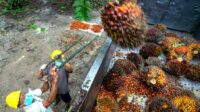
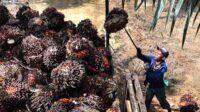
PALMOILMAGAZINE, JAKARTA — Amid growing global discussions on climate change and the shift toward sustainable agriculture, independent smallholder palm oil farmers often go unnoticed. Yet, these farmers are on the front lines of implementing eco-friendly agricultural practices that significantly contribute to climate crisis mitigation.
One of the most crucial contributions from independent palm oil farmers is their role in carbon sequestration through sustainable land management. Like many other crops, oil palm naturally absorbs carbon dioxide (CO₂) through photosynthesis. However, the real climate potential lies in how the land is managed—particularly through regenerative practices that enhance soil carbon stocks.
In practice, many smallholders have transitioned to using organic fertilizers made from livestock waste. Manure is processed into compost or biogas, producing lower methane emissions and enriching soil with organic carbon. This method has proven effective in boosting soil fertility while reducing dependence on expensive chemical fertilizers.
Also Read: FORTASBI and BenihBaik Launch Forest Conservation Fundraising Campaign in Ketapang
Interestingly, plantation waste such as weeds, palm fronds, and empty fruit bunches is also being repurposed as livestock feed. This integrated farming model creates a closed-loop system where livestock and plantation activities support each other.
According to an official release quoted by Palmoilmagazine.com on Saturday, August 2, 2025, this regenerative farming initiative is driven by the Indonesian Sustainable Palm Oil Farmers Forum (FORTASBI). Since 2022, FORTASBI has been running a program to identify and apply regenerative agriculture as a key climate mitigation strategy in the smallholder palm oil sector. The program is now actively implemented by farmer groups within the FORTASBI network.
Thirteen villages across two regions—Forum Petani Swadaya Merlung Renah Mendaluh (FPS-MRM) and the Berkah Mandah Lestari Farmers’ Association (APBML)—have become implementation sites. In the FPS-MRM region, participating villages include Sungai Rotan, Rantau Benar, Pulau Pauh, Lubuk Terap, and Merlung. Meanwhile, APBML has rolled out the program in Taman Raja, Pematang Tembesu, Pelabuhan Dagang, Gemuruh, Tanjung Tayas, Suban, Lubuk Lawas, and Lubuk Bernai.
Results from this initiative demonstrate tangible impacts: the use of organic fertilizer has helped lower production costs, improve soil structure and fertility, and increase palm oil yields. Livestock and plantation waste, once considered worthless, has become a key resource in building healthier, safer, and more sustainable farming systems.
Beyond economic benefits, these waste-utilization practices contribute to reduced greenhouse gas emissions. The techniques are relatively simple and can be implemented using locally available resources around the farms.
This initiative proves that independent smallholders are not just producers—they are change-makers in the global fight against climate change. With the right policy support, their efforts could become a cornerstone of a fairer and more sustainable palm oil industry. (P2)